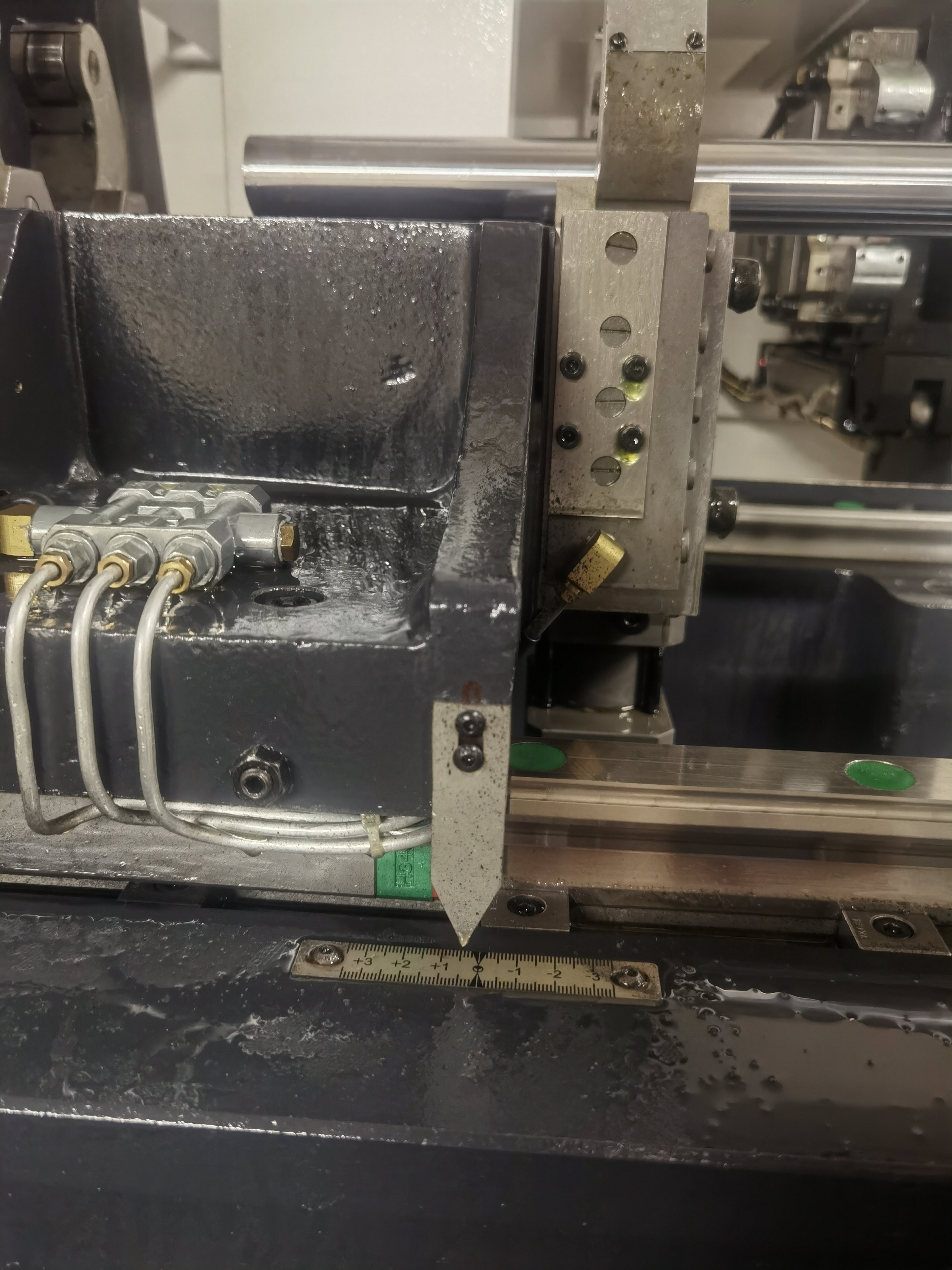
Agricultural and forestry equipment is a steady market for deep hole drilling. Tractors, harvesters, loaders, and loggers all use hydraulic cylinders for their working functions. Every cylinder needs a drilled bore, and every rod needs a drilled hole if it’s hollow for weight reduction.
I’ve worked on components for several agricultural and forestry equipment manufacturers. The work is similar to construction equipment but with some differences in volume and pricing.
The Cylinder Work
Agricultural cylinders span a wide size range. A tractor’s three-point hitch cylinder might have a 60mm bore through 400mm of barrel. A large forestry loader cylinder might have a 150mm bore through 2 meters. I’ve also seen specialty cylinders in combine harvesters that go up to 200mm bore through 3 meters of barrel length.
The volumes are moderate. A popular tractor model might sell thousands of units per year, but the cylinder quantities are less than automotive volumes. Most agricultural cylinder work falls in the range of 500-5000 units per year for a given design.
The barrel material is usually a medium-carbon steel like 1045 or 4140. Some applications use induction-hardened barrels for wear resistance, but most use standard steel with a honed bore. I’ve had good results with 4140 annealed to 18-22 HRC for most agricultural cylinder barrels.
Equipment Types Used in This Sector
I’ve worked with several types of deep hole drilling equipment in agricultural shops. The equipment choice depends on the component size and production volume. Here is my breakdown of what I have seen in the field:
| Equipment Type | Typical Bore Range | Best For | L/D Ratio | Typical Machine Cost |
|---|---|---|---|---|
| Horizontal BTA machine | 30-200 mm | Cylinder barrels | Up to 100:1 | $150,000 - $400,000 |
| Vertical gun drill | 3-40 mm | Rod drilling, small components | Up to 250:1 | $80,000 - $200,000 |
| Single-spindle BTA | 20-100 mm | Medium-volume cylinder work | Up to 150:1 | $120,000 - $300,000 |
| Twin-spindle machine | 15-80 mm | High-volume smaller cylinders | Up to 80:1 | $200,000 - $450,000 |
| Modified lathe with BTA | 50-200 mm | Large forestry cylinders | Up to 60:1 | $50,000 - $100,000 |
I have seen modified lathes in smaller agricultural shops where the capital budget is tight. They work but the cycle times are longer and the surface finish consistency is harder to maintain. For production work, I recommend a dedicated BTA machine.
Material Grades and Their Machinability
Different material grades show up in agricultural cylinder work. I keep this reference on my shop wall:
| Material Grade | Hardness (HRC/HRB) | Typical Use | Cutting Speed (m/min) | Feed Rate (mm/rev) | My Experience |
|---|---|---|---|---|---|
| 1026 DOM | 15-20 HRB | Light-duty barrels | 80-100 | 0.10-0.18 | Easy drilling, good finish |
| 1045 | 18-22 HRC | General cylinder barrels | 75-90 | 0.10-0.16 | Most common, predictable |
| 4140 annealed | 20-25 HRC | High-pressure cylinders | 70-85 | 0.08-0.14 | Tougher, lower feeds needed |
| 4340 | 25-32 HRC | Forestry equipment | 60-75 | 0.06-0.12 | Requires higher coolant pressure |
| Induction-hardened 1045 | 55-60 HRC case | Wear-resistant barrels | 50-65 | 0.03-0.08 | Two-step feed, ramped transition |
Parameters for Agricultural Cylinders
For a typical agricultural cylinder barrel in 1045 steel:
| Parameter | Value |
|---|---|
| Cutting speed | 70-90 m/min |
| Feed rate | 0.10-0.18 mm/rev |
| Coolant pressure | 250-400 psi |
| Coolant flow rate | 80-120 L/min |
| Process | BTA drilling |
| Typical surface finish | Ra 1.0-1.6 μm |
| Expected straightness | 0.1-0.3 mm/m |
These parameters are similar to general hydraulic cylinder work. The feed rate at the higher end works when the material is consistent. I always verify with a test cut first because steel batches vary more than people expect.
I recently had a batch of 1045 that arrived at 28 HRC instead of the spec 20 HRC. The spindle load jumped from 55% to 75% on the first part. I dropped the feed from 0.16 to 0.12 mm/rev and the load came back to 62%. If I had not caught it, I would have scrapped the carbide guide pads.
Rod Drilling
Many agricultural cylinders use hollow rods for weight reduction. A hollow rod on a large tractor or forestry implement reduces the load on the cylinder mounts and the structure. I have drilled rods up to 2.5 meters long for large forestry equipment.
The rod material is often case-hardened steel with a chrome-plated surface — typically 1045 or 4140 induction-hardened to 55-60 HRC on the OD with a softer core at 20-25 HRC. The case hardening creates a hard outer layer with a softer core. I’ve found that the drilling parameters need to account for the two hardness zones.
At the entry, the drill passes through the case-hardened layer at about 55-60 HRC. This requires a lower feed — about 0.03 mm/rev — to prevent edge chipping. Once the drill is through the hard layer and into the softer core, I increase the feed to the normal rate.
The transition from hard to soft material can cause the drill to grab if the feed change isn’t smooth. I use a ramped feed transition over about 5mm of depth. The CNC macro looks like this: G1 Z-5.0 F0.03, then G1 Z-10.0 F0.05, then ramp up to F0.10 over the next 5 mm.
I cover rod drilling in more detail in my guide on drilling hollow rods for hydraulic cylinders. It is a different process from barrel drilling because the starting surface is round and often hard.
Seasonal Demand
Agricultural equipment manufacturing is seasonal. The busiest production periods are typically winter and early spring, when dealers are stocking up for the planting and growing season. During these periods, cylinder suppliers need to deliver large quantities on tight schedules.
The seasonal demand means that drilling capacity needs to be available when the orders come in. I’ve seen shops run two shifts during peak agricultural season and one shift during the rest of the year. I always advise my clients to over-invest in tooling inventory before the peak season — nothing kills a production run like waiting for a BTA head to ship while the machine sits idle.
Material Handling
Agricultural components are often larger and heavier than industrial components. A large forestry cylinder barrel might weigh 100kg or more. The shop needs lifting equipment to handle these parts safely.
I’ve seen shops that specialize in agricultural work use overhead cranes or gantry lifts for barrel handling. Manual handling of large cylinders is a safety risk and slows down production. I recommend a powered roller feed table for barrels over 50 kg — it cuts load/unload time by about 40% and eliminates back injuries.
More details on machine setup considerations are in my article on deep hole drilling machine selection.
Quality Requirements
The quality requirements for agricultural cylinders are functional rather than cosmetic. The bore needs to be straight and smooth enough for the piston seals to work reliably. Surface finish of Ra 1.6μm is typically acceptable.
The pressure test is the final quality check. The cylinder is pressurized to 1.5x the working pressure and checked for leakage. If it passes, the bore quality is adequate regardless of the as-drilled surface finish.
I measure bore roughness at three points along the barrel — entry, middle, and exit. The mid-section is usually the roughest due to chip accumulation. If the exit is rougher than the entry, the BTA head is wearing on one side.
What Makes Agricultural Work Different
Agricultural work is less demanding than aerospace or medical work in terms of tolerances, but the parts are larger and the volumes are higher than typical job shop work. The price pressure is real — agricultural equipment manufacturers are cost-conscious. I have seen margins of 15-25% on agricultural cylinder work compared to 30-40% on aerospace work.
The shops I’ve seen succeed in this market have efficient production processes and reliable machines. The margins don’t allow for rework or scrap, so getting the process right the first time is essential. I tell every shop owner who asks: invest in coolant filtration before you invest in a fancy machine. Clean coolant at 20-micron filtration has saved more parts than any spindle upgrade I have ever seen.
Key Takeaways
- Agricultural cylinder work uses BTA drilling for barrel bores from 30-200 mm in medium-carbon steels like 1045 and 4140.
- Rod drilling requires a two-step feed strategy to handle the case-hardened outer layer, with a ramped transition over 5 mm of depth.
- Equipment selection ranges from modified lathes for large, low-volume work to dedicated BTA machines for production runs.
- Quality requirements are functional — Ra 1.6 μm finish and pressure test at 1.5x working pressure — rather than cosmetic.
- Seasonal demand means planning tooling inventory ahead of the winter and spring peak seasons.
- The margins are tighter than aerospace work, so getting the process right the first time is critical to profitability.