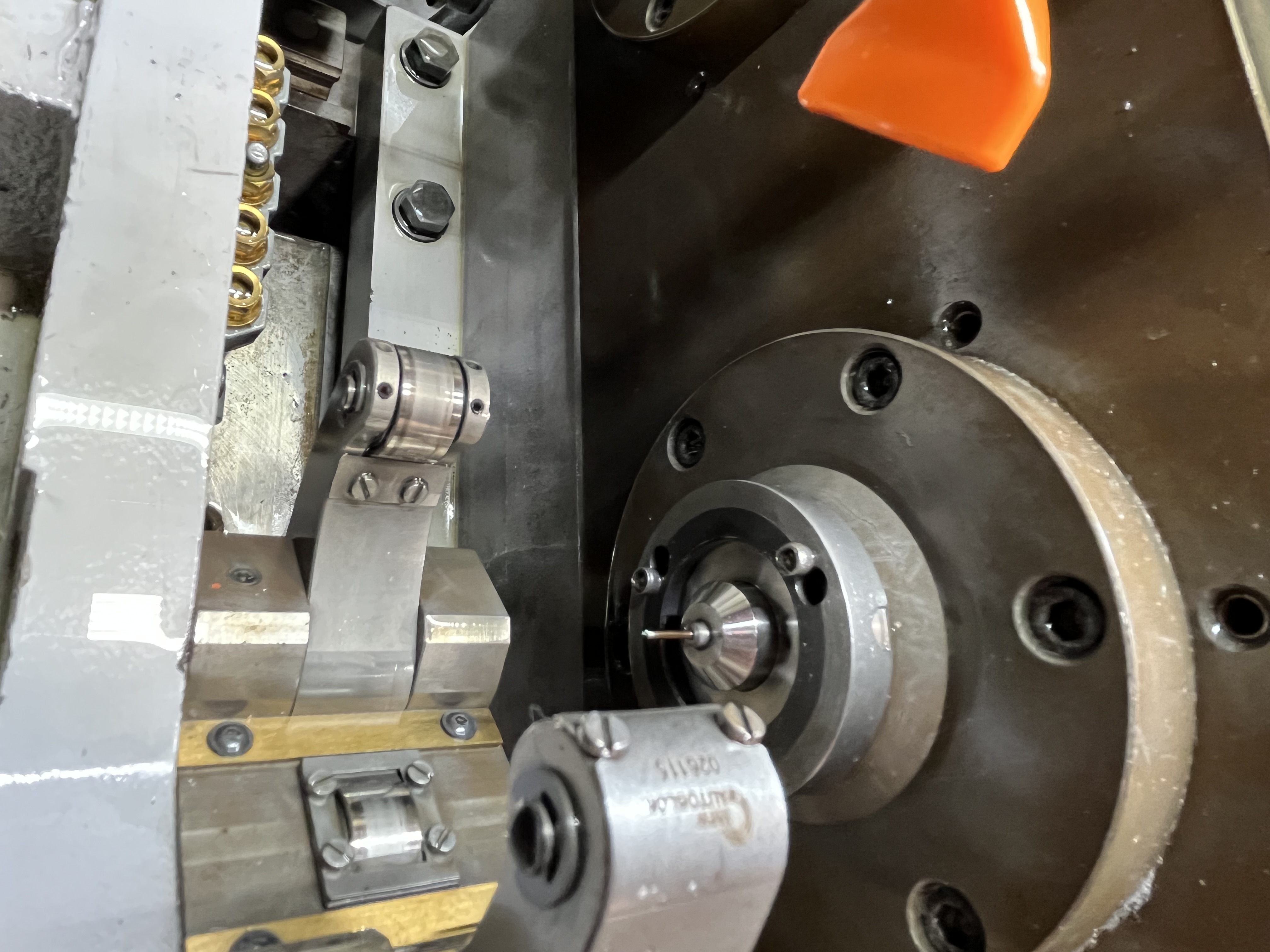
Brake components and couplings are not the first parts that come to mind when I think about deep hole drilling. But over the years, I have done a surprising amount of work on brake calipers, master cylinders, coupling hubs, and universal joints.
These components share two characteristics: they need tight bore tolerances for fitment, and they are often made from castings or forgings that present unique drilling challenges.
Brake Caliper Drilling
A brake caliper has two critical bores: the piston bore and the fluid passage. The piston bore is 30-60mm in diameter and 50-100mm deep. The fluid passage is a smaller hole – 4-10mm – that connects the master cylinder to the caliper.
The piston bore needs a surface finish of 0.4-0.8 Ra for the piston seal to work properly. I achieve this by gun drilling with coolant pressure of 800-1000 psi, followed by a honing pass if the customer requires better than 0.4 Ra.
Brake Caliper Parameters
| Parameter | Piston Bore | Fluid Passage |
|---|---|---|
| Diameter | 30-60mm | 4-10mm |
| Depth | 50-100mm | 100-400mm |
| Cutting speed | 80-110 m/min | 60-80 m/min |
| Feed rate | 0.08-0.14 mm/rev | 0.03-0.06 mm/rev |
| Coolant pressure | 800-1000 psi | 1000-1500 psi |
| Material | Ductile iron / 6061 aluminum | Ductile iron / 6061 aluminum |
Brake calipers are often made from ductile iron (ASTM A536) or cast aluminum (A356 or 6061). The ductile iron is easy to drill – the graphite content acts as a lubricant. The aluminum needs sharp tools and high coolant flow to prevent chip welding.
Master Cylinder and Booster Bores
Brake master cylinders and vacuum boosters need a straight, smooth bore for the piston to travel through. The bore diameter is 20-40mm and the length is 100-300mm.
The tolerance on a master cylinder bore is tight – typically H8 (0.039mm for a 25mm bore) or better. The surface finish needs to be 0.4 Ra or below for the rubber seal to work without leaking.
I gun drill master cylinder bores in a single pass, then burnish. The burnishing is essential – it creates a surface that the rubber seal can slide on without excessive wear.
Master Cylinder Parameters
| Parameter | Value |
|---|---|
| Bore diameter | 20-40mm |
| Depth | 100-300mm |
| Cutting speed | 80-100 m/min |
| Feed rate | 0.06-0.10 mm/rev |
| Coolant pressure | 600-1000 psi |
| Post-drill finish | Roller burnish to 0.2-0.4 Ra |
Coupling and Universal Joint Bores
Coupling hubs, flange yokes, and universal joint crosses all need precision bores for bearings and fasteners. These are typically short bores – 30-150mm deep – but they need to be concentric with the external features.
The material is usually forged steel (4140 or 4340) or ductile iron. The forging scale on the raw material can be problematic if I do not machine the entry surface first.
Coupling Component Parameters
| Component | Bore Dia | Depth | Material | Speed | Feed |
|---|---|---|---|---|---|
| Coupling hub | 20-80mm | 50-150mm | 4140 forged | 70-90 m/min | 0.08-0.14 mm/rev |
| Flange yoke | 15-50mm | 40-120mm | 4340 forged | 65-85 m/min | 0.06-0.12 mm/rev |
| U-joint cross | 8-25mm | 30-80mm | 8620 forged | 70-90 m/min | 0.05-0.10 mm/rev |
Cross-Hole Drilling in Brake Components
Many brake components have cross-holes that intersect the main bore. A brake caliper, for example, has a fluid passage that intersects the piston bore at a right angle.
Drilling a cross-hole that intersects an existing bore is similar to what I described in my gear and transmission article. The feed needs to drop when the drill approaches the existing bore and resume after passing through. I reduce the feed by 30-50% for the intersection.
Disc Brake Rotor Boring
Brake rotors are not typical deep hole drilling parts since they are flat and thin. But some large commercial vehicle brake rotors (for trucks, buses, and heavy equipment) have drilled cooling passages or wear-indicating bores.
These are simple short holes – 5-15mm diameter, 20-50mm deep – but I mention them because the grey cast iron used in brake rotors is one of the most abrasive materials I drill. The free graphite in the iron makes it seem easy, but the hard carbide particles in the microstructure wear tools quickly.
Rotor Drilling Parameters
| Parameter | Grey Cast Iron (G3000/G3500) |
|---|---|
| Cutting speed | 80-120 m/min |
| Feed rate | 0.08-0.15 mm/rev |
| Coolant pressure | 300-500 psi |
| Expected tool life | 500-1000 holes per drill |
Key Takeaways
- Brake caliper piston bores need 0.4-0.8 Ra finish – burnishing is critical for seal life
- Master cylinder bores require roller burnishing for the rubber seal to work properly
- Forged coupling components need the entry surface machined to remove scale
- Cross-hole intersections need 30-50% feed reduction near the existing bore
- Grey cast iron brake rotors are abrasive despite the free graphite – expect limited tool life
For related topics, see my articles on casting and forging and gear and transmission.