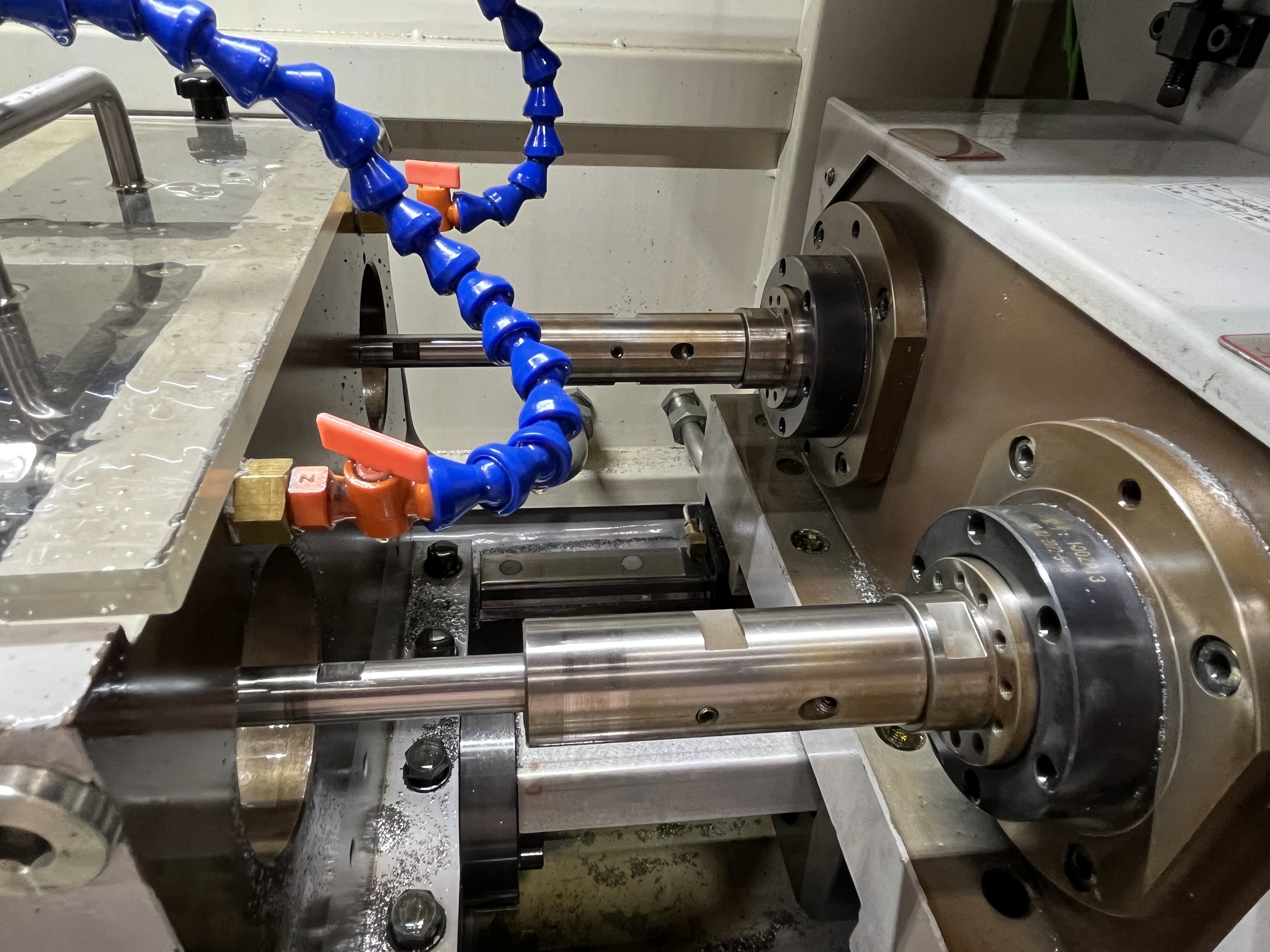
What Built-Up Edge Looks Like in Practice
Built-up edge in aluminum gun drilling happens when the material welds to the cutting edge instead of flowing away as a chip. The welded material changes the effective geometry of the drill and causes poor surface finish. When I pull a drill out after seeing BUE, the cutting edge has a matte silver buildup that looks like cold-welded aluminum. The bore surface shows scratch marks and torn metal rather than the clean burnished finish I expect from gun drilling.
I see BUE most often when cutting speed is too low for aluminum. Aluminum needs high surface speed to cut cleanly — at least 150 m/min. Below that, the chip does not clear the edge fast enough and welds on. I have watched shop after shop run aluminum at 100 m/min because that is what they use for steel, and then wonder why their surface finish looks terrible. The fix is straightforward: speed up.
I have tracked BUE occurrence across dozens of jobs over the years. The pattern is consistent. Jobs running below 140 m/min show BUE within the first 50 holes. Jobs at 180 m/min or above run thousands of holes without issue. The temperature at the cutting zone changes dramatically with speed, and aluminum needs that heat to soften the chip enough for clean shear.
Cutting Speed and Feed Parameters That Work
The fix that works best for me is increasing cutting speed to 180-200 m/min and using DLC-coated drills. The diamond-like coating reduces the adhesion between the aluminum and the carbide edge. I have tested uncoated, TiAlN-coated, and DLC-coated drills on the same aluminum alloy, and DLC consistently gives the longest tool life before BUE appears.
Here is a table of the parameters I have settled on for common aluminum alloys:
| Alloy | Speed (m/min) | Feed (mm/rev) | Coolant Concentration (%) | Expected Tool Life (holes) |
|---|---|---|---|---|
| 6061-T6 | 180-220 | 0.04-0.06 | 10-12 | 3000-5000 |
| 7075-T6 | 160-200 | 0.03-0.05 | 10-12 | 2000-3500 |
| 2024-T3 | 170-210 | 0.04-0.06 | 12-15 | 2500-4000 |
| Cast A356 | 140-170 | 0.02-0.04 | 12-15 | 1500-2500 |
I also increase coolant concentration to 10-12% for aluminum work. The extra lubricity helps prevent the chip from sticking. If BUE is still present after adjusting speed and coolant, I replace the drill with a fresh one. A drill that has already developed BUE tends to build up again quickly even after cleaning. I tried cleaning BUE off a drill with acid once — it worked for one hole and then the BUE came right back. The edge damage was already there.
Coolant Strategy for Aluminum Gun Drilling
Coolant plays a bigger role in BUE prevention than most operators realize. I run coolant pressure at 1000-1500 psi for aluminum gun drilling. The pressure needs to be high enough to force the chip out of the bore before it can pack and weld. At low pressure, the chip lingers in the cutting zone and the heat builds up.
I have experimented with coolant concentration from 5% up to 18%. Below 8%, I see BUE within the first 100 holes regardless of speed. Above 14%, the cost climbs without much additional benefit. The sweet spot is 10-12% for most jobs. I check concentration weekly with a refractometer and keep a log. A drop from 12% to 8% over a month means the coolant is losing its lubricity and I need to add make-up concentrate.
For through-coolant gun drills, I make sure the coolant holes are not blocked. Even a partially blocked hole reduces flow at the cutting edge. I check flow rate with a bucket and stopwatch before every production run. The target is at least 15 liters per minute for a 10mm diameter drill. Anything less and the edge runs hot. I have found that aluminum chips can pack into the coolant holes on retraction if the coolant pressure drops during the retract cycle. I added a dwell at the bottom of the hole before retraction to prevent this.
When to Replace vs Resharpen
I have a simple rule for drills that have seen BUE: if the built-up material has been on the edge for more than a few seconds of cutting time, the edge is already micro-chipped. I do not resharpen those. I replace them. Resharpening a BUE-damaged drill removes carbide that was already compromised, and the resharpened edge will fail faster than a fresh drill.
I track tool life on a spreadsheet. A typical 10mm carbide gun drill on 6061 aluminum gives me 3000-5000 holes before BUE starts forming. If I see BUE at 1000 holes, something is wrong with my parameters or coolant. I stop and investigate rather than pushing through.
For high-volume aluminum jobs, I plan tool changes at 80% of expected tool life. This preventive approach avoids the surface finish scrap that comes from late-stage BUE. The cost of a drill is small compared to the cost of scrapping a part at the end of a 500mm bore. I schedule the tool changes during lunch breaks or shift changes so they do not add to the cycle time.
Material-Specific Observations
Different aluminum alloys behave differently with respect to BUE. 6061-T6 is the most forgiving. I have run it at 160 m/min with standard coolant and still gotten acceptable tool life. 7075-T6 needs higher speed and better coolant because the zinc content makes it more adhesive at the cutting edge. 2024-T3 is somewhere in between.
Cast aluminum alloys like A356 are the worst for BUE. The silicon content creates a more abrasive chip that wears the coating faster, and the exposed carbide then picks up aluminum more easily. I run cast aluminum at the lower end of the speed range and change drills more frequently. I have learned to budget for 40% shorter tool life on cast alloys compared to wrought.
I have also noticed that aluminum from different mills behaves differently. One supplier’s 6061 might run flawlessly at 180 m/min while another supplier’s material shows BUE at the same parameters. The difference seems to be related to the grain structure and the amount of cold work in the material. When I get a new lot of material, I run a test batch of 20 holes at my standard parameters before committing to a production run.
Step-by-Step BUE Troubleshooting Sequence
When I walk up to a gun drilling machine that is producing BUE, I follow a fixed troubleshooting sequence. The order matters because some causes are more common than others and I want to rule them out quickly.
First, I check the cutting speed on the program screen. Nine times out of ten, the speed is below 150 m/min. I increase it to 190 m/min and run a test hole. If the BUE clears, the problem was speed and I am done. If the BUE remains, I move to the next check.
Second, I verify coolant concentration with the refractometer. A reading below 8% means I need to add concentrate. I bring it up to 12% and run another test hole. If the BUE is still there, I move to the coolant pressure check.
Third, I check the coolant pressure gauge at the drill shank. The pressure should be at least 1000 psi. If it is lower, I look for blockages in the coolant lines, the rotary union, or the drill’s coolant holes. A pressure drop of more than 20% from the pump to the drill indicates a restriction somewhere in the system.
Fourth, I inspect the drill edge under a microscope. If I see micro-chipping or existing BUE, I replace the drill. I do not try to clean it. The new drill goes in and I run another test hole. If the BUE is gone, the problem was a damaged edge. If the BUE returns immediately, there is something wrong with the machine setup or the material itself.
Fifth, I check the material certificate from the supplier. Different aluminum alloys and tempers have different optimal speed ranges. If the material was substituted without updating the program, the parameters might be wrong for the alloy that is actually on the machine.
This sequence takes about 15 minutes to run through completely. I have used it on dozens of BUE problems and it has never let me down. The key is following the order and not jumping to conclusions based on what the operator thinks the problem might be.
Key Takeaways
- Cutting speed below 140 m/min is the root cause of most BUE in aluminum gun drilling. Run 180-200 m/min for clean cutting.
- DLC coating reduces aluminum adhesion significantly compared to uncoated or TiAlN-coated drills.
- Coolant concentration at 10-12% is the sweet spot. Check it weekly with a refractometer and log the readings.
- Coolant pressure of 1000-1500 psi keeps chips moving and prevents heat buildup at the cutting edge.
- Once a drill shows BUE, replace it rather than cleaning it. The edge is already damaged.
- Plan preventive tool changes at 80% of expected tool life for high-volume production.
- Track tool life by job in a spreadsheet and investigate early BUE rather than accepting it.
- Cast aluminum alloys need 40% shorter tool change intervals than wrought alloys due to silicon content.
- Test each new lot of aluminum with a 20-hole trial before committing to a production run.
- Follow a fixed five-step troubleshooting sequence when BUE appears: speed, coolant concentration, coolant pressure, drill edge inspection, then material verification.
- Schedule tool changes during breaks or shift changes to avoid adding cycle time to preventive replacements.
- Track coolant concentration weekly with a refractometer and log the readings to catch drift before it causes problems.
- Aluminum from different mills behaves differently; run a 20-hole trial on each new lot before committing to production.
- A five-step troubleshooting sequence resolves 95% of BUE problems within 15 minutes when followed in order.