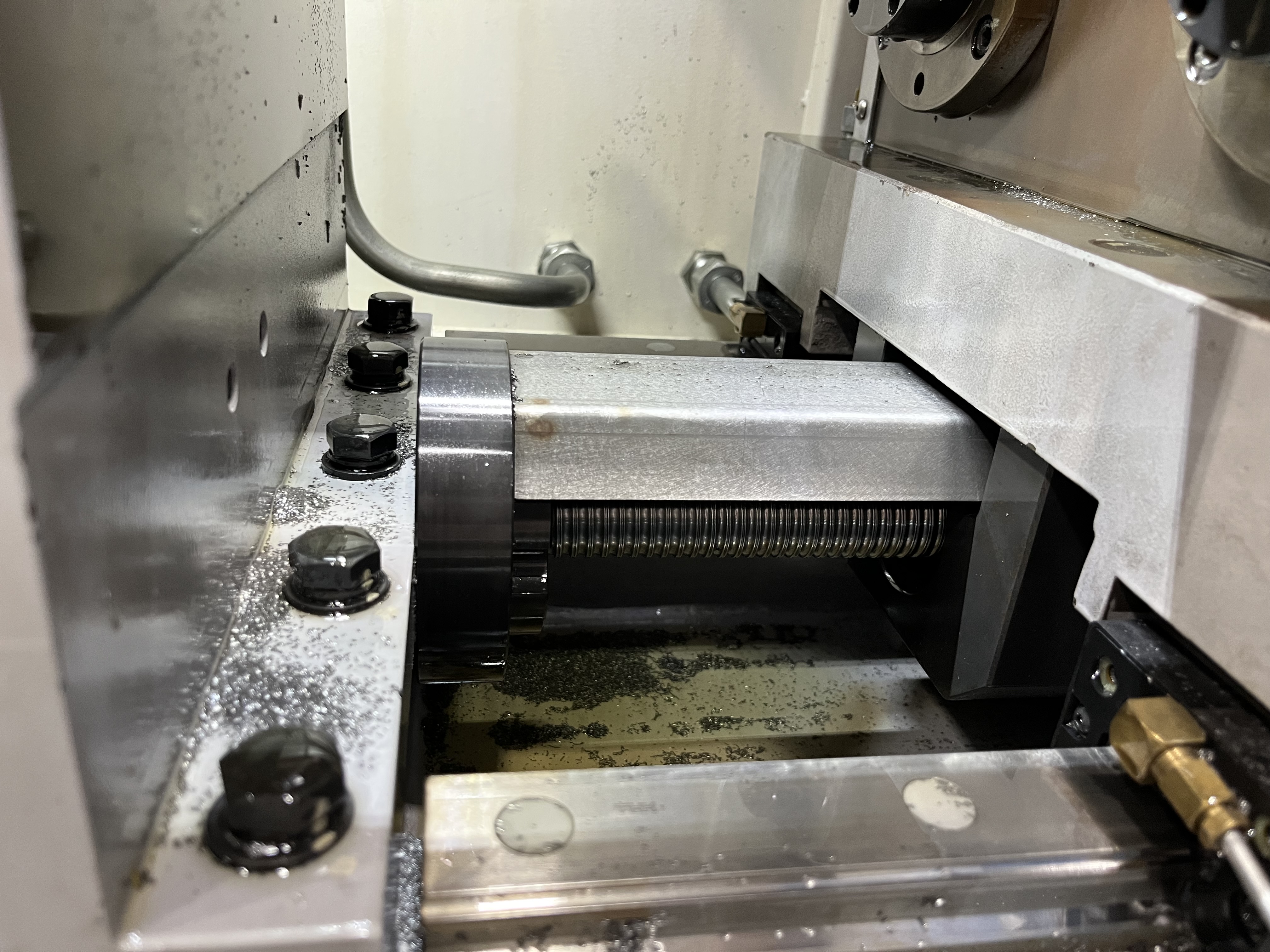
Chemical processing equipment operates in aggressive environments. Reactors, heat exchangers, columns, and piping must withstand corrosive chemicals at high temperatures and pressures. The deep hole drilling work in this industry centers on components made from corrosion-resistant alloys.
I have drilled components for chemical plants producing fertilizers, petrochemicals, specialty chemicals, and pharmaceuticals. The material grades and quality requirements vary by application, but the common thread is corrosion resistance. The tube sheet drilling described here builds on general heat exchanger tube sheet drilling with additional considerations for corrosion-resistant alloys.
Materials for Chemical Service
The material selection for chemical processing drilling is driven by the process chemistry. I have worked with a wide range of corrosion-resistant alloys:
| Material | Typical Application | Corrosion Resistance | Drilling Difficulty |
|---|---|---|---|
| 304L stainless | General process piping | Good for organic chemicals | Moderate |
| 316L stainless | Chloride-containing streams | Better pitting resistance | Moderate |
| 317L stainless | Higher chloride environments | Better than 316L | Moderate |
| Hastelloy C-276 | Severe corrosion, HCl | Excellent in reducing acids | High |
| Hastelloy B-3 | Hydrochloric acid service | Excellent in HCl | Very high |
| Titanium Grade 2 | Chlorine and seawater | Excellent in chlorides | High |
| Zirconium 702 | Strong acids and alkalis | Exceptional | Very high |
Each of these materials requires different drilling parameters. I have found that Hastelloy and zirconium are the most difficult to drill among the common chemical processing materials.
Heat Exchanger Tube Sheet Drilling
Heat exchangers are the most common component I have drilled for chemical processing. The tube sheet is a thick plate with hundreds or thousands of holes for the tubes.
For a chemical process heat exchanger tube sheet in 316L stainless:
| Parameter | Value |
|---|---|
| Tube sheet thickness | 50-300mm |
| Hole diameter | 12-38mm |
| Number of holes | 200-3000 |
| Hole pattern | Triangular or square |
| Pitch | 1.3-1.5x hole diameter |
| Straightness spec | 0.1mm per meter |
The key requirement in tube sheet drilling is hole position accuracy. Each hole must be within 0.1mm of its nominal position on the tube sheet face. If the holes are misaligned, the tubes will not fit through both tube sheets.
I use CNC gun drilling machines with a position accuracy of 0.02mm for tube sheet work. The machine drills each hole in sequence, and the position is verified at the first and last holes before production.
Drilling Parameters by Material
For different chemical processing alloys, I use these parameters:
316L stainless steel:
| Parameter | Value |
|---|---|
| Cutting speed | 55-75 m/min |
| Feed rate | 0.05-0.10 mm/rev |
| Coolant pressure | 800-1200 psi |
Hastelloy C-276:
| Parameter | Value |
|---|---|
| Cutting speed | 25-35 m/min |
| Feed rate | 0.04-0.07 mm/rev |
| Coolant pressure | 1000-1500 psi |
Titanium Grade 2:
| Parameter | Value |
|---|---|
| Cutting speed | 30-45 m/min |
| Feed rate | 0.03-0.06 mm/rev |
| Coolant pressure | 1500-2000 psi |
Hastelloy C-276 is the material I have the most experience with in chemical processing. It work-hardens aggressively, so the feed rate must be high enough to cut through the surface layer rather than rubbing on it.
Reactor Nozzle Bores
Reactor vessels have nozzles for process inlets, outlets, and instrument connections. These nozzles need bores that align with internal reactor components.
The challenge with reactor nozzle drilling is the geometry. The nozzle is often at an angle to the vessel wall, and the bore must be drilled through the nozzle and into the vessel wall. The drilling machine must position the tool at the correct angle and location.
I have used right-angle drilling heads for some reactor nozzle work. A right-angle head mounts on the machine spindle and positions the drill at 90 degrees to the machine axis. This allows drilling nozzles on the side of a reactor vessel without repositioning the part.
Surface Finish Requirements
The surface finish in chemical processing bores affects corrosion resistance and cleanliness. A rough bore surface can trap corrosive chemicals and accelerate localized corrosion.
For most chemical processing applications, I target:
- Ra 1.6um as-drilled for standard applications
- Ra 0.8um or better for clean-in-place (CIP) systems
- Ra 0.4um for ultra-clean applications
I have found that achieving Ra 0.8um in Hastelloy requires a two-pass process. The first pass is standard BTA or gun drilling. The second pass is a light finishing cut with a reamer or single-point boring tool.
Inspection and Quality
Chemical processing components are inspected to ASME Section VIII or similar pressure vessel standards. The inspection includes:
- Dimensional verification of all bores
- Surface finish measurement
- Borescope inspection
- Hydrostatic testing of the completed assembly
- Material certification verification
The hydrostatic test is the final validation. The completed vessel is pressurized with water to 1.3x the design pressure. Any leaks through the tube-to-tube sheet joints indicate a drilling or assembly problem.
Key Takeaways
- Hastelloy C-276 requires 25-35 m/min cutting speed and feed above 0.04 mm/rev to avoid work hardening
- Heat exchanger tube sheets need CNC gun drilling with 0.02mm position accuracy for hole pattern alignment
- Titanium Grade 2 for chemical processing needs 1500+ psi coolant pressure for chip control
- Reactor nozzle bores at angles require right-angle drilling heads or precise machine positioning
- Chemical processing bores above Ra 1.6um can trap corrosive chemicals and accelerate localized corrosion