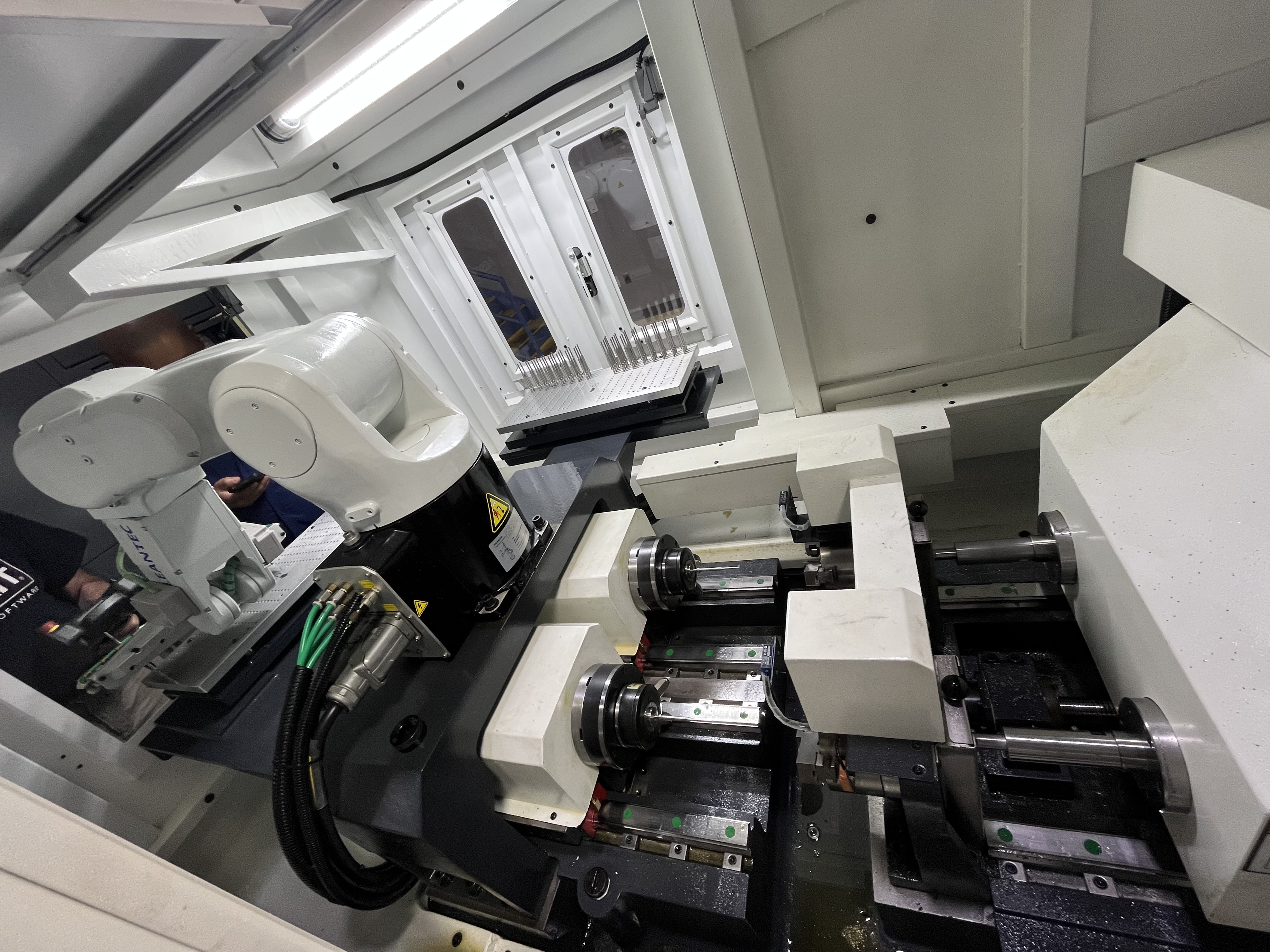
Construction and mining equipment is one of the biggest markets for deep hole drilling, even though most people do not think of it that way. Every hydraulic excavator, bulldozer, dump truck, and drill rig has cylinders that need deep drilled bores. The volumes are higher than aerospace, and the parts are bigger than automotive.
I have worked on cylinders for excavators, loaders, and mining trucks. The work has its own character.
Common Equipment Types and Their Cylinder Requirements
Different equipment types demand different cylinder sizes and drilling approaches. Here is what I have encountered:
| Equipment Type | Typical Cylinder Bore (mm) | Barrel Length (m) | Rod Diameter (mm) | Working Pressure (bar) | Cylinders per Machine |
|---|---|---|---|---|---|
| Mini excavator (1-5 ton) | 40-80 | 0.5-1.5 | 30-50 | 200-250 | 4-6 |
| Standard excavator (20-30 ton) | 100-160 | 1.5-3.0 | 60-100 | 250-300 | 6-8 |
| Large excavator (50-100 ton) | 160-250 | 2.0-4.0 | 100-150 | 300-350 | 6-10 |
| Bulldozer | 100-200 | 1.0-2.5 | 70-140 | 250-300 | 4-6 |
| Mining dump truck | 200-320 | 2.5-5.0 | 140-220 | 250-350 | 4-8 |
| Drill rig | 100-200 | 2.0-4.0 | 70-130 | 250-350 | 4-10 |
The hydraulic cylinder deep hole drilling guide covers the specific drilling techniques for these barrel sizes.
The Scale of It
A hydraulic cylinder for a large excavator might have a 200mm bore through 3 meters of barrel. The rod might be 120mm in diameter with a 30mm through-hole for weight reduction. These are not precision components in the aerospace sense, but they need to be straight and smooth.
The production volumes are moderate, hundreds to thousands of parts per year for a given model. That is high enough to justify dedicated tooling but not high enough for fully automated lines in most cases.
Material Grades
The barrel material is usually a medium-carbon steel like 42CrMo4 or E355 (ST52). The rod material is often case-hardened steel with a chrome-plated surface. Here are the grades I see most often:
| Component | Material Grade | Standard | Tensile Strength (MPa) | Yield Strength (MPa) | Hardness (HB) |
|---|---|---|---|---|---|
| Cylinder barrel | 42CrMo4 (QT) | EN 10083-3 | 850-1100 | 650-900 | 270-320 |
| Cylinder barrel | E355+SR (ST52) | EN 10305-1 | 580-640 | 450-540 | 175-220 |
| Piston rod | C45E (1045) | EN 10083-2 | 700-850 | 490-585 | 230-280 |
| Piston rod (hardened) | 42CrMo4 induction hardened | EN 10083-3 | 900-1100 | 750-900 | 52-58 HRC (surface) |
| Chrome plating on rod | Hard chrome per ISO 6158 | - | - | - | 900-1100 HV |
I prefer 42CrMo4 for heavy-duty excavator cylinders. The higher yield strength allows thinner barrel walls, which reduces weight and material cost. For standard equipment, E355 is sufficient and more cost-effective. The material selection guide for deep hole drilling has more details on matching material grades to drilling parameters.
Drilling Parameters
For drilling cylinder barrels:
| Parameter | 42CrMo4 (Low) | 42CrMo4 (High) | E355 (Low) | E355 (High) |
|---|---|---|---|---|
| Bore diameter | 100mm | 250mm | 100mm | 250mm |
| Cutting speed (m/min) | 65 | 85 | 70 | 95 |
| Feed rate (mm/rev) | 0.12 | 0.18 | 0.14 | 0.22 |
| Coolant pressure (psi) | 300 | 400 | 250 | 350 |
| Coolant flow (L/min) | 200 | 500 | 200 | 500 |
The feed rate at the high end works when the material is consistent. If the barrel is welded from rolled plate, the weld seam can cause tool deflection. I reduce feed by 20 percent through the weld zone.
Quality Standards and Inspection
Heavy equipment cylinders are built to ISO 6022 and DIN 24333 standards for 250 bar working pressure. The test pressure is 375 bar, 1.5 times the nominal rating.
| Quality Requirement | Typical Spec | Inspection Method |
|---|---|---|
| Bore diameter tolerance | H8 to H9 | Internal micrometer or air gauge |
| Surface finish (barrel bore) | Ra 0.8-1.6 um | Profilometer |
| Surface finish (rod OD) | Ra 0.2-0.4 um (chrome plated) | Profilometer |
| Straightness (barrel) | 0.1mm/m | Feel gauge or CMM |
| Pressure test | 375 bar / no leak | Hydrostatic test per ISO 10100 |
| Cleanliness | ISO 4406 class 20/18/15 | Particle count |
The pressure test is the final quality check. If the cylinder holds pressure without leaking past the piston seals, the bore is acceptable. If it leaks, the bore needs to be honed to improve the surface finish or correct the diameter.
I check straightness with a bore gauge or air tool after drilling. On large 3-meter barrels, I measure at three depths and compare the readings. A variation of more than 0.3mm over the length means the barrel needs rework.
Rod Drilling
Piston rods for heavy equipment are often drilled through the center for weight reduction, especially on large mining equipment where every kilogram counts.
The rod is usually a high-strength steel case-hardened to 55-60 HRC on the OD. The center is softer, maybe 30-35 HRC. The drill passes through the soft center, but the entry and exit surfaces are hard.
The hard surface at entry wears the drill cutting edge faster than the softer center material. I have learned to run a slightly lower feed at entry, about 0.03 mm/rev for the first 10mm, to reduce the impact loading on the edge.
The Chrome Plating Problem
Chrome plating on rod ODs creates a problem at the drill exit. When the drill breaks through the far end, the chrome surface chips and flakes. The flaked chrome falls into the bore and can scratch the surface as the drill retracts.
I have fixed this by using a backup support at the exit face. The backup is a piece of soft material, brass or aluminum, that the drill enters after breaking through. The backup catches the chrome chips and keeps them from falling into the bore.
The other approach is to drill before plating. Drill the rod, then chrome plate the OD. The drilling is easier without the chrome, and the plating process does not affect the bore diameter. This adds a manufacturing step but gives a better result.
What Is Different About This Work
Construction and mining cylinder work sits between job shop and production line. The volumes are not high enough for fully automated multi-spindle machines, but they are too high for general job shop equipment.
The shops I have seen succeed in this market use dedicated BTA machines sized for their typical cylinder range. A machine with 4-meter stroke capacity and 300mm maximum bore diameter covers most heavy equipment work.
The key to profitability is setup time reduction. On a job with 500 identical cylinders, saving 10 minutes per setup saves 80 hours over the order. That is a week of machine time.
Key Takeaways
Construction equipment cylinder drilling is a volume business with moderate tolerances. The material is usually 42CrMo4 or E355 steel with chrome-plated rods. BTA drilling at 65-95 m/min is the standard process for bores from 100-320mm through 1-5 meter barrels. Straightness of 0.1mm/m and surface finish Ra 0.8-1.6 um are the typical quality targets. Watch for chrome flaking at drill exit on plated rods. The profit is in setup time reduction and tool life optimization.