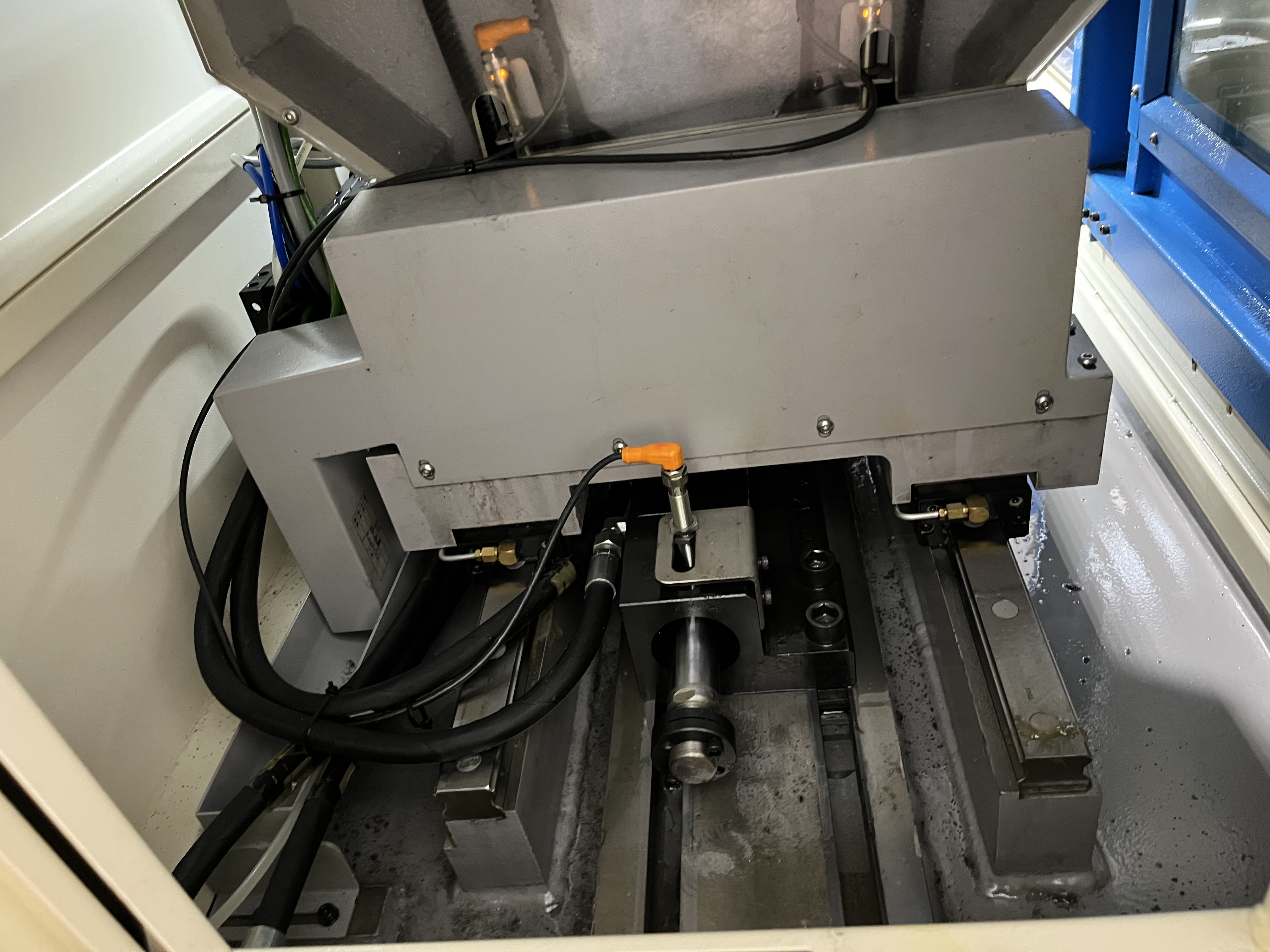
Titanium alloys – particularly Ti-6Al-4V (Grade 5) and Ti-6Al-4V ELI (Grade 23) – are widely used in aerospace, medical, and marine applications. They offer an excellent strength-to-weight ratio and corrosion resistance. Unfortunately, they also happen to be one of the most challenging materials to deep hole drill.
I have spent years dialing in titanium drilling parameters for everything from aircraft landing gear components to medical implants. What follows is what I have found works consistently.
Why Titanium Is Difficult to Deep Hole Drill
Titanium’s low thermal conductivity (about 7 W/m-K, compared to 50+ for steel) means the heat generated at the cutting edge stays concentrated there. The tool tip can hit 1000 degrees Celsius quickly, even with coolant flowing. This heat causes rapid flank wear and can lead to built-up edge that breaks the drill.
In my experience, the two factors that kill tool life on titanium are:
- Heat concentration – the chip carries away less than half the heat compared to steel
- Work hardening – titanium work-hardens if the feed drops below a critical threshold
The work hardening is particularly nasty. If I let the drill dwell or push too low a feed, the material surface hardens instantly. The next pass then has to cut through that hardened layer, which accelerates wear.
Cutting Parameters I Use
After many trials, these are the parameters I start with for titanium deep hole drilling:
Gun Drilling (single tube)
| Parameter | Ti-6Al-4V | Ti-6Al-4V ELI | CP-Titanium (Grade 2) |
|---|---|---|---|
| Cutting speed | 40-55 m/min | 45-60 m/min | 50-65 m/min |
| Feed rate | 0.025-0.045 mm/rev | 0.03-0.05 mm/rev | 0.04-0.06 mm/rev |
| Coolant pressure | 1000-1500 psi | 1000-1500 psi | 800-1200 psi |
| Coolant flow | 80-150 L/min | 80-150 L/min | 60-120 L/min |
BTA Drilling (larger diameters)
| Parameter | Ti-6Al-4V |
|---|---|
| Cutting speed | 35-50 m/min |
| Feed rate | 0.04-0.07 mm/rev |
| Coolant pressure | 1200-1800 psi |
| Coolant flow | 200-400 L/min |
I always start at the low end of the speed range and increase in increments of 5 m/min while monitoring tool wear. If the wear flats show more than 0.3mm after the first 100mm of drilling, I back the speed off.
Tooling Selection
For titanium, carbide grades with a cobalt content of 10-12% work best. The higher cobalt content improves toughness and thermal shock resistance. I use micrograin carbide with a TiAlN or AlTiN coating – the aluminum-rich coatings handle the high temperature better than standard TiN.
The drill geometry matters too. I prefer:
- Point angle: 130-140 degrees (steeper than the standard 120 degrees for steel)
- Helix angle: 30 degrees for gun drills
- Margin width: 0.8-1.0mm (wider margins help stabilize the drill in titanium’s low-modulus material)
Coolant Strategy
Coolant is everything in titanium deep hole drilling. I use a 5-8% semi-synthetic emulsion with extreme pressure (EP) additives. The EP additives – typically sulfur or phosphorus based – prevent the titanium from welding to the cutting edge.
The coolant temperature should be below 30 degrees Celsius at the nozzle. I have seen coolant systems that recirculate through the machine and heat up to 45 degrees. That warm coolant does not remove heat fast enough. For titanium, I run the coolant through a chiller before it reaches the drill.
I check the coolant filters every shift when drilling titanium. The fine, stringy titanium chips can clog filters quickly, and a drop in coolant pressure of 200 psi is enough to cause a tool failure.
Common Problems and Fixes
| Problem | Cause | Fix |
|---|---|---|
| Rapid flank wear | Speed too high | Reduce speed by 10% |
| Built-up edge | EP additive depleted | Change coolant batch |
| Chip packing | Feed too low | Increase feed to 0.04 mm/rev minimum |
| Chatter marks | Insufficient pressure | Increase coolant pressure by 200 psi |
| Drill breakage | Work hardened surface | Continuous feed, no dwelling |
Surface Finish Expectations
With good parameters, I can achieve a surface finish of 0.8-1.6 microns Ra in titanium. If I need better than that, I use a skive-and-roller burnish pass or a ball burnishing tool. The burnishing process compresses the surface and improves fatigue life, which is often the goal in titanium aerospace parts.
The straightness I typically hold is 0.05mm per 100mm of depth, or about 0.5mm per meter. Titanium’s low elastic modulus means the drill can wander more than in steel, so I use a guide bushing as close to the entry as possible.
Key Takeaways
- Start with conservative speeds (40-50 m/min) and increase carefully while watching flank wear
- Never let the feed drop below 0.025 mm/rev – titanium work-hardens instantly
- Coolant temperature matters more than coolant pressure – keep it under 30 degrees C
- Use micrograin carbide with TiAlN coating
- Continuous feed is critical – no dwell, no interruptions
For more on related topics, see my guides on heat treated components and thin wall tubing.