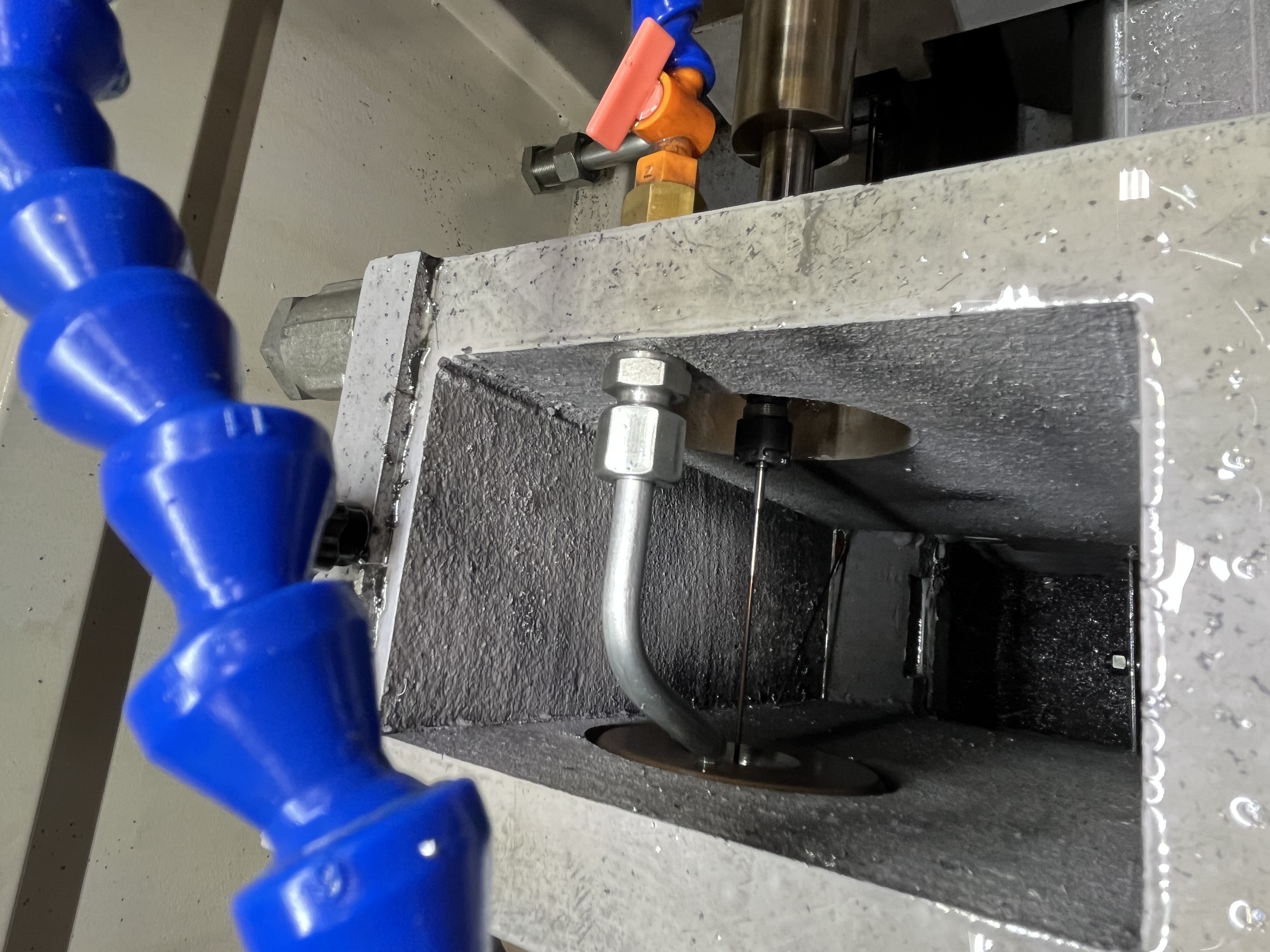
Fasteners are not the first thing that comes to mind for deep hole drilling, but I have drilled plenty of bolts and threaded rods that needed a through-hole for safety wiring, weight reduction, or lubrication passages. The applications range from aerospace fasteners to oil and gas stud bolts that need center bores for hydraulic tensioning.
The challenge is that fasteners are usually hardened, and they are mass-produced — so the deep hole drilling needs to be fast, consistent, and gentle on the threads. A bolt with crushed threads is scrap regardless of how good the through-hole is.
What Gets Drilled in Fastener Applications
I see three main categories of deep hole drilling on fasteners and threaded rods:
Safety wire holes. Bolts for aerospace and racing applications need a small cross-hole for safety wire. These are usually 2-3 mm diameter, drilled through the bolt head or shank at a right angle to the bolt axis. The hole depth is typically 5-15 mm, but the round surface entry makes positioning critical.
Weight reduction. Large threaded rods used in industrial applications sometimes need a through-hole to reduce weight. A 50 mm diameter rod that is 2 meters long weighs about 30 kg solid. Drilling a 25 mm through-hole removes about 8 kg — a significant weight saving for applications like oil platform tension rods or heavy equipment tie-bars.
Lubrication passages. Some fasteners need a drilled hole for grease or oil to reach a threaded joint. These are typically small diameter holes (2-6 mm) drilled through the center of the bolt or stud. The hole connects to cross-drilled ports at the thread area.
Hydraulic tensioning bores. In oil and gas applications, large stud bolts often need a center bore for hydraulic tensioning tools. These are gun-drilled through the full length of the stud, typically 6-12 mm diameter in bolts from 25 mm to 100 mm diameter.
Material Grades and Hardness
Most structural fasteners are heat-treated to significant hardness. Drilling these materials requires different parameters than standard structural steel. Here are the common material grades I encounter and their hardness ranges:
Common Fastener Material Grades for Deep Hole Drilling
| Grade | Specification | Hardness Range | Typical Application | Drilling Difficulty |
|---|---|---|---|---|
| B7 | ASTM A193 | 25-34 HRC | General oil and gas flanges, valves | Moderate |
| B16 | ASTM A193 | 25-35 HRC | High-temperature oil service | Moderate |
| L7 | ASTM A320 | 25-34 HRC | Low-temperature service | Moderate |
| B7M | ASTM A193 | 94-99 HRB (low) | Sour gas service (NACE MR0175) | Low |
| 2H nut | ASTM A194 | 24-34 HRC | Heavy hex nuts for B7/B16 | Moderate |
| Grade 8 | SAE J429 | 33-39 HRC | Automotive, heavy equipment | Moderate-Hard |
| Grade 10.9 | ISO 898-1 | 32-39 HRC | Metric structural | Moderate-Hard |
| Grade 12.9 | ISO 898-1 | 38-44 HRC | High-strength applications | Hard |
| Inconel 718 | ASTM B637 | 35-45 HRC | Aerospace, high-temp | Very Hard |
| Hastelloy | Various | 35-42 HRC | Chemical processing | Very Hard |
Deep Hole Drilling Parameters by Hardness
Based on my production experience gun drilling fastener materials:
| Hardness Range | Cutting Speed (m/min) | Feed (mm/rev) | Tool Coating | Coolant Pressure |
|---|---|---|---|---|
| 20-30 HRC (B7M, mild) | 50-70 | 0.03-0.06 | TiAlN | 60-100 bar |
| 25-34 HRC (B7, B16, L7) | 40-60 | 0.02-0.04 | TiAlN | 80-120 bar |
| 32-39 HRC (Grade 10.9) | 30-50 | 0.02-0.035 | AlTiN | 100-150 bar |
| 35-44 HRC (Grade 12.9) | 25-40 | 0.015-0.03 | AlTiN | 120-180 bar |
| 38-45 HRC (Inconel 718) | 12-18 | 0.01-0.02 | AlTiN | 200-250 bar |
| Case-hardened surface (50+ HRC) | 20-30 at surface | 0.01 through case | Sharp carbide | 150+ bar |
The Case-Hardening Problem
The main issue with case-hardened fasteners is the hard surface layer. The surface is 50-60 HRC for a depth of 0.5-2 mm, but the core is 25-35 HRC. When the gun drill breaks through the hard case into the soft core, the cutting forces change suddenly. The drill goes from cutting to rubbing in the transition zone.
I reduce feed by about 40% for the first 3 mm to get through the hard case without chipping the cutting edge. Once the drill is through the case and into the core material, I increase the feed to the normal rate for that core hardness. The reduced feed at entry adds about 5 seconds to the cycle but prevents edge chipping that would scrap the tool.
The same principle applies when the drill exits the far side of a fastener. The hard case at the exit can chip the cutting edge if the feed is too aggressive. I reduce feed for the last 3 mm of the hole as well.
Quality Requirements for Oil and Gas Fasteners
For API 20E fasteners used in oil and gas wellhead equipment, the quality requirements are strict:
- The center bore must be concentric with the stud axis within 0.5 mm TIR for most applications, tighter for hydraulic tensioning bores.
- Surface finish inside the bore should be 3.2 Ra or better to avoid stress concentration points.
- No burrs at the hole entry or exit — burrs interfere with thread gauging and can cause assembly problems.
- The hole must be free of sharp edges where it intersects cross-drilled ports — I break edges with a 0.5 mm chamfer tool.
Workholding Setup for Fasteners and Threaded Rods
Fasteners are small and round, which makes them hard to hold securely in a deep hole drilling machine. The holding method must protect the threads while providing enough grip to resist the cutting torque.
I use collet fixtures for bolts up to 25 mm diameter. The collet grips the unthreaded shank or a smooth section of the body. For hex-head bolts, the collet can grip the hex form directly.
For threaded rods, I use a steady rest with nylon or brass pads that contact the thread crests without deforming them. Steel pads will crush the threads and ruin the part. The pads are contoured to match the thread form and provide even support along the rod length.
For long stud bolts (1-2 meters), I support the free end with a tailstock center that engages a center drill hole in the end of the stud. The tailstock center prevents the rod from whipping as the gun drill enters.
Fixturing Guide
| Fastener Type | Recommended Fixture | Thread Protection | Max Length |
|---|---|---|---|
| Bolts under 25 mm | Collet on unthreaded shank | None needed on grip area | 300 mm |
| Bolts 25-50 mm | Split collet on hex head | None needed on grip area | 500 mm |
| Threaded rods under 25 mm | Nylon-padded V-block | Brass or nylon pads | 1000 mm |
| Threaded rods 25-50 mm | Steady rest + tailstock center | Contoured brass pads | 2000 mm |
| Large stud bolts 50+ mm | Full-length support with bushings | Bronze guide bushings | 4000 mm |
Cross-Hole Drilling for Safety Wire
Safety wire holes are cross-holes drilled through the side of a bolt, typically 2-3 mm diameter. These are short holes — 5-15 mm deep — but the drill has to enter a round surface at a right angle. Without proper preparation, the drill wanders on the curved surface and the hole position is inconsistent.
I spot drill a flat entry surface before drilling the cross-hole. The spot drill creates a flat 2-3 mm diameter landing that centers the drill at the correct position. Without the spot, the drill walks down the round surface and the hole ends up offset from the intended location.
For through cross-holes that intersect a center bore, I drill the cross-hole first and the center bore second. This sequence ensures the center bore deburrs the intersection of the cross-hole, leaving a clean passage for safety wire or lubrication.
For more on the cutting forces involved in drilling these hardened materials, see the cutting forces in gun drilling article. Also check the cobalt chrome drilling article for strategies that apply to the hardest fastener grades.
Key Takeaways
- Gun drilling fasteners is about managing hardened material (25-44 HRC typical) and protecting finished threads during fixturing.
- For B7 and B16 stud bolts (25-34 HRC), run cutting speed at 40-60 m/min, feed at 0.02-0.04 mm/rev, with TiAlN-coated carbide.
- Reduce feed by 40% for the first and last 3 mm of case-hardened fasteners to prevent edge chipping at the case-core transition.
- Center bores for oil and gas API 20E fasteners must be concentric within 0.5 mm TIR with 3.2 Ra surface finish.
- Use nylon, brass, or bronze pads for thread protection — steel pads crush threads and scrap the part.
- Drill cross-holes before center bores to get clean intersections for safety wire or lubrication passages.
- For long threaded rods (1-2+ meters), support the free end with a tailstock center to prevent whipping during drilling.
- The weight saving on a 50 mm x 2 m rod drilled to 25 mm through-bore is 8 kg — significant for weight-critical applications.