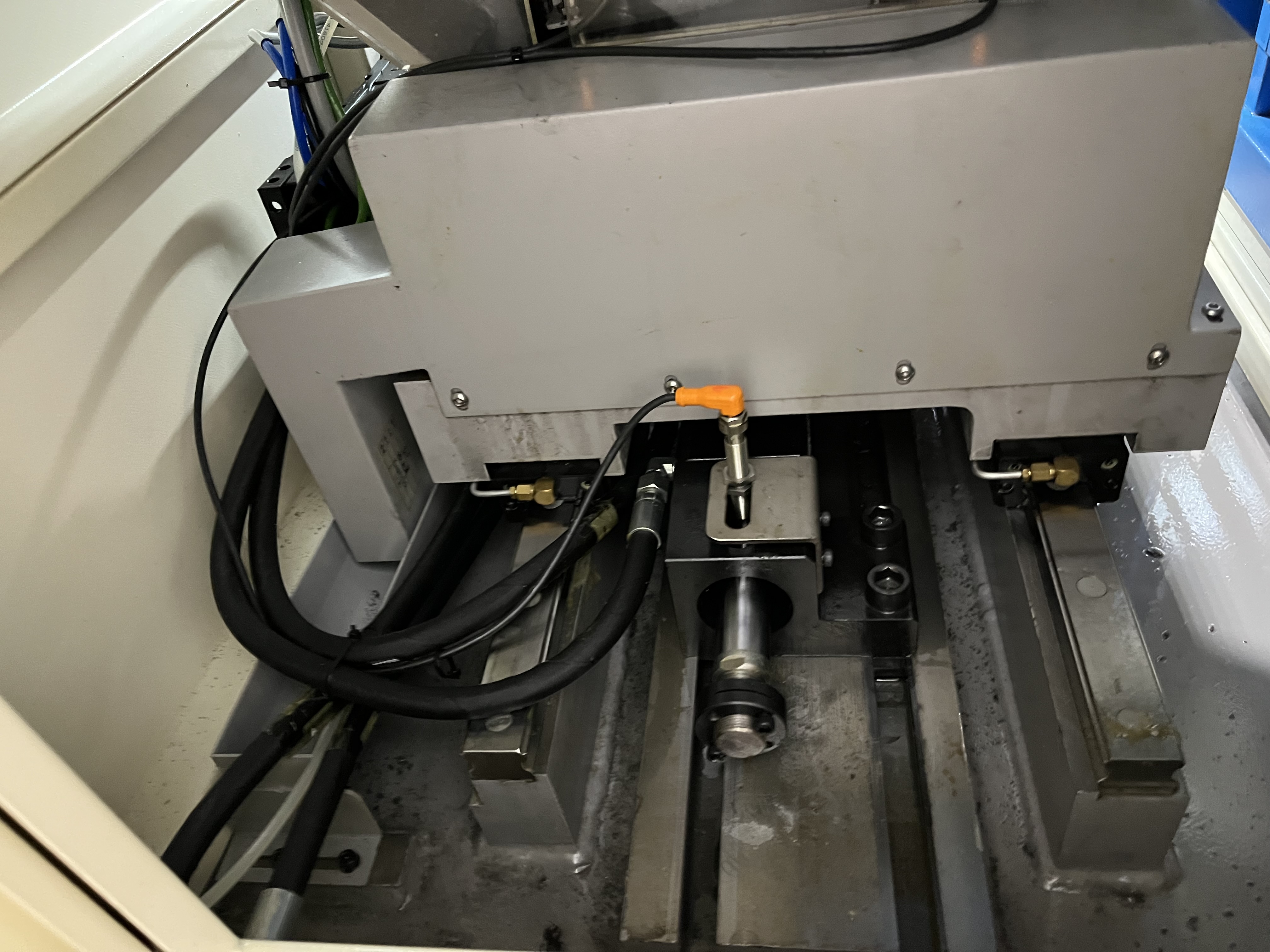
Gun barrel drilling is the original deep hole drilling application. The process we call gun drilling was developed specifically for drilling straight, small-diameter holes through long steel bars to make rifle and firearm barrels. Despite being over a century old, the fundamentals have not changed much.
I have drilled barrels for hunting rifles, competition firearms, and military applications. The requirements vary by application, but the core challenge is always the same: drill a hole that is straight, round, and smooth through a bar that may be 40 to 80 times longer than the hole diameter. At these L/D ratios, the principles of micro-hole deep hole drilling become relevant even though gun barrel bores are larger in absolute terms.
The Gun Drilling Process
Gun drilling for barrels uses a single-lip cutting tool with an internal coolant passage. The drill has a carbide tip brazed onto a steel shank, with a V-shaped flute that carries the chips out of the hole.
The coolant enters through the center of the drill, exits at the cutting edge, and pushes the chips back along the flute. This is called the external chip evacuation method. The chip travels between the drill OD and the bore wall, so the clearance is tight.
For a typical rifle barrel in 4150 steel:
| Caliber | Bore Diameter | Barrel Length | L/D Ratio |
|---|---|---|---|
| .223 Rem | 5.56mm | 510mm | 92:1 |
| .308 Win | 7.62mm | 660mm | 87:1 |
| .300 Win Mag | 7.62mm | 660mm | 87:1 |
| .338 Lapua | 8.58mm | 690mm | 80:1 |
At an 80:1 to 100:1 L/D ratio, the drill is incredibly flexible. A 5.56mm drill extending 500mm from the guide bushing will deflect visibly under cutting pressure. The key is to keep the cutting forces balanced so the drill cuts straight rather than following the deflection.
Counter-Rotation Setup
Every gun barrel I have drilled uses counter-rotation. The barrel rotates in one direction while the drill rotates in the opposite direction. This is the standard setup for gun barrel drilling and for good reason.
Counter-rotation works by canceling out the rotational error. If the drill has a tendency to drift to the right, the barrel rotation compensates by presenting the material from the opposite direction.
For a 7.62mm barrel in 4150 steel:
| Parameter | Value |
|---|---|
| Spindle speed (drill) | 4000-6000 rpm |
| Spindle speed (barrel) | 60-120 rpm |
| Cutting speed | 60-80 m/min |
| Feed rate | 0.020-0.035 mm/rev |
| Coolant pressure | 1500-2500 psi |
| Coolant type | Sulphurized oil |
I have found that the barrel rotation speed matters more than most people think. A barrel rotation of 80-100 RPM gives the best straightness in 7.62mm barrels. Below 60 RPM, the drill starts to drift. Above 120 RPM, the surface finish degrades.
Material Selection
Barrel steel needs to be uniform in hardness and free of inclusions. I have drilled barrels in 4140, 4150, 416 stainless, and 17-4 PH stainless.
4150 is the most common for rifle barrels. It has good wear resistance, machines cleanly, and responds well to heat treatment. The hardness is typically 28-32 HRC in the drilled condition.
Stainless barrels are common for competition and corrosive environments. 416 stainless drills differently than 4150. The chips are more stringy and the cutting speed needs to be lower.
For 416 stainless barrels:
| Parameter | Value |
|---|---|
| Cutting speed | 45-55 m/min |
| Feed rate | 0.025-0.040 mm/rev |
| Coolant pressure | 2000-2800 psi |
The higher coolant pressure for stainless is needed to break the chips. Stainless chips are tougher and tend to form long strings that clog the flute. Running at the higher end of the coolant pressure range helps snap the chips into manageable segments.
Straightness and Wall Thickness
The straightness requirement for a gun barrel is extreme. A competition barrel might spec 0.05mm total indicated runout over the full length. Even a military barrel at 0.1mm per meter is tight for a 500mm-long hole.
The wall thickness must be uniform within 0.05mm around the circumference. If the bore drifts by 0.1mm, the wall thickness on one side is 0.1mm thinner than the other side. This affects accuracy because the barrel heats unevenly during firing.
After gun drilling, I check the wall thickness with a ultrasonic gauge at 10 positions along the barrel and at 4 rotational positions at each point. If the variation exceeds 0.08mm, the barrel may not pass final inspection.
The Rifling Operations
After gun drilling, the barrel goes through rifling. The rifling process cuts the spiral grooves inside the bore that spin the bullet. But the gun drilling quality determines whether the rifling will be consistent.
If the gun drilled bore is straight and round, the rifling will be uniform. If the bore has even slight ovality or drift, the rifling depth will vary around the circumference. This causes accuracy problems that no amount of finishing work can fix.
I have seen barrels that shot poorly because the gun drilled bore had 0.02mm of ovality. The rifling cutter followed the oval shape, producing deeper grooves on one side. The barrel was scrapped at the rifling stage.
Inspection Methods
Gun barrel inspection after drilling includes:
- Bore scope inspection for surface defects
- Air gauge measurement of diameter at multiple points
- Ultrasonic wall thickness measurement
- Straightness check with a precision test bar
- Weight check (weight variation indicates material removal inconsistency)
The air gauge is the fastest way to check diameter consistency. I run the gauge through the full barrel length and record the readings at 50mm intervals. A variation of more than 0.02mm in diameter indicates the drill is wearing or the material is inconsistent.
Key Takeaways
- Gun barrel drilling at 80:1 to 100:1 L/D ratio demands counter-rotation for straightness within 0.05mm
- Barrel rotation speed of 80-100 RPM produces optimal straightness for 7.62mm caliber barrels
- Stainless barrels need 2000+ psi coolant pressure to break tough, stringy chips
- Wall thickness uniformity within 0.05mm is critical for barrel accuracy
- Gun drilling quality directly determines rifling consistency and final barrel accuracy