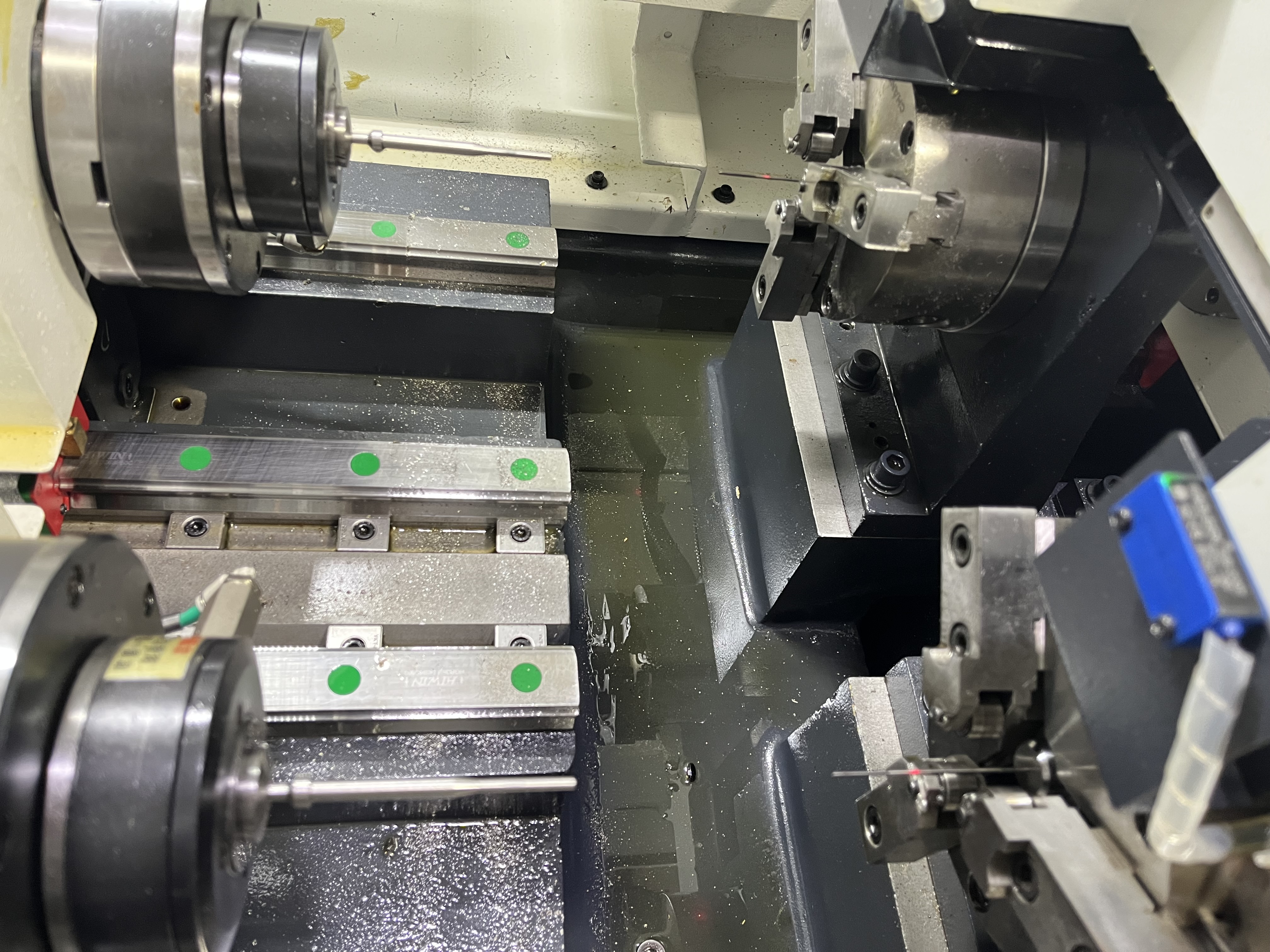
Food processing equipment is a steady source of deep hole drilling work. The industry needs drilled holes for everything from mixing vessel heating channels to pump housings to valve components. The material is almost always stainless steel, and the surface finish requirements are driven by sanitary standards.
I’ve worked on food equipment components on and off for years. The work is different from industrial hydraulics or automotive.
The Stainless Steel Challenge
Most food processing equipment is built from 304L or 316L stainless steel. These grades are corrosion-resistant but not easy to drill. They work-harden, they produce stringy chips, and they retain heat at the cutting edge.
For deep hole drilling in 304L/316L:
| Parameter | Value |
|---|---|
| Cutting speed | 60-80 m/min |
| Feed rate | 0.04-0.08 mm/rev |
| Coolant pressure | 1000-1500 psi |
| Coolant type | Oil or heavy-duty emulsion |
The feed rate is lower than for carbon steel at the same diameter. I’ve found that 0.06 mm/rev is a good starting point for most food-grade stainless work. Going too high causes the material to work-harden at the cutting zone.
The chips from stainless steel tend to be stringy and tough. I run a chip breaker geometry on the insert when possible. If the chips are coming out as long spirals, the feed is too low or the chip breaker isn’t aggressive enough.
Surface Finish Requirements
Food equipment bores often need a surface finish of Ra 0.8μm or better. The smooth finish prevents bacteria from trapping in surface irregularities. This is tighter than the Ra 1.6μm that’s typical for hydraulic cylinders.
Achieving Ra 0.8μm in a gun drilled hole in stainless steel requires:
- Sharp tool with good edge condition
- Consistent feed rate (no fluctuations)
- Adequate coolant pressure
- Stable machine with no vibration
I’ve found that the tool condition is the most important factor. A gun drill that has drilled more than 10 meters in stainless steel starts to show edge wear, and the surface finish degrades. I change tools earlier on food-grade work than on carbon steel work.
Sanitary Design Considerations
The holes in food processing equipment often need to be accessible for cleaning. This means:
- No sharp internal corners (creates crevices for bacteria)
- No burrs on internal intersections
- Smooth transitions between different bore diameters
- Accessible for CIP (clean-in-place) systems
When I drill intersecting holes in food equipment, I deburr every intersection with a carbide burr. The burr pass needs to produce a smooth radius, not just knock off the sharp edge. An internal burr that’s folded over instead of removed will trap bacteria.
Weld Joints
Food equipment often has welded joints that need to be drilled through. A welded joint in stainless steel is harder than the base material, and the heat-affected zone next to the weld has different machinability.
I reduce feed by about 25% when drilling through a weld joint in stainless. Running standard feed through the weld has caused tool deflection in my experience.
Typical Parts
The most common food industry deep hole drilling jobs I’ve seen:
- Heat exchanger tubes. Long stainless tubes for heating or cooling food products. The tubes are typically thin-walled and need careful support to prevent collapse.
- Valve bodies. Sanitary valves for food processing. The bores need smooth surfaces and accurate dimensions for seal fit.
- Pump housings. Centrifugal pump casings for food transfer. The bore needs to be concentric with the seal surface.
- Mixing vessel channels. Drilled channels in vessel walls for heating or cooling media circulation.
Coolant Cleanliness
One issue specific to food equipment work: the coolant system needs to be clean. Food-grade stainless is expensive, and if the coolant is contaminated with bacteria from previous jobs, it can stain the surface of the part.
I use fresh coolant or a coolant with biocide on food-grade work. The cost of the coolant is small compared to the cost of a part that needs to be reworked because of surface staining.
CIP and Regulatory Standards
Food processing equipment in the US falls under 3-A Sanitary Standards or FDA CFR Title 21. In Europe, EHEDG guidelines apply. These standards specify surface finish requirements, drainage angles, and cleanability criteria.
For drilled holes, the relevant requirements are:
| Standard | Surface Finish | Radius Requirements | Drainage |
|---|---|---|---|
| 3-A | Ra 0.8μm max | 3mm minimum internal radius | No stagnant zones |
| FDA 21 CFR 177 | Ra 0.8μm max for contact surfaces | Smooth transitions | Self-draining |
| EHEDG | Ra 0.8μm max | No sharp corners | < 1 degree dead volume |
CIP systems rely on turbulent flow to clean internal surfaces. A drilled hole with a rough surface finish creates laminar boundary layers that trap bacteria. That’s why the surface finish spec matters for cleanability, not just for corrosion resistance.
I’ve seen CIP validation fail on a food processing component because a drilled hole had a Ra 1.2μm finish instead of the specified Ra 0.8μm. The CIP flow couldn’t remove biofilm from the rougher surface. The fix was re-drilling with fresh tooling and verifying the finish with a profilometer.
For more detail on gun drilling techniques in stainless, see stainless steel deep hole drilling.
Key Takeaways
Food equipment drilling is about surface finish and material handling. The stainless steel is more demanding than carbon steel, and the sanitary finish requirements leave no room for tool marks or scratches.
The shops I’ve seen do well in this market have dedicated machines for stainless work with separate coolant systems. Running carbon steel and stainless steel through the same coolant system cross-contaminates the parts and accelerates tool wear.
Key Takeaways
- Surface finish of Ra 0.8μm max is the baseline for food contact bores — anything rougher can trap bacteria and cause CIP validation failures.
- Stainless 304L/316L work-hardens easily; feed rates of 0.04-0.08 mm/rev with sharp tooling are required.
- Tool change intervals should be shorter on food-grade work — tool edge wear degrades surface finish quickly in stainless.
- CIP system requirements (3-A, FDA, EHEDG) affect hole geometry: smooth transitions, no sharp internal corners, no stagnant zones.
- Dedicated coolant systems for stainless prevent cross-contamination and staining from carbon steel swarf.