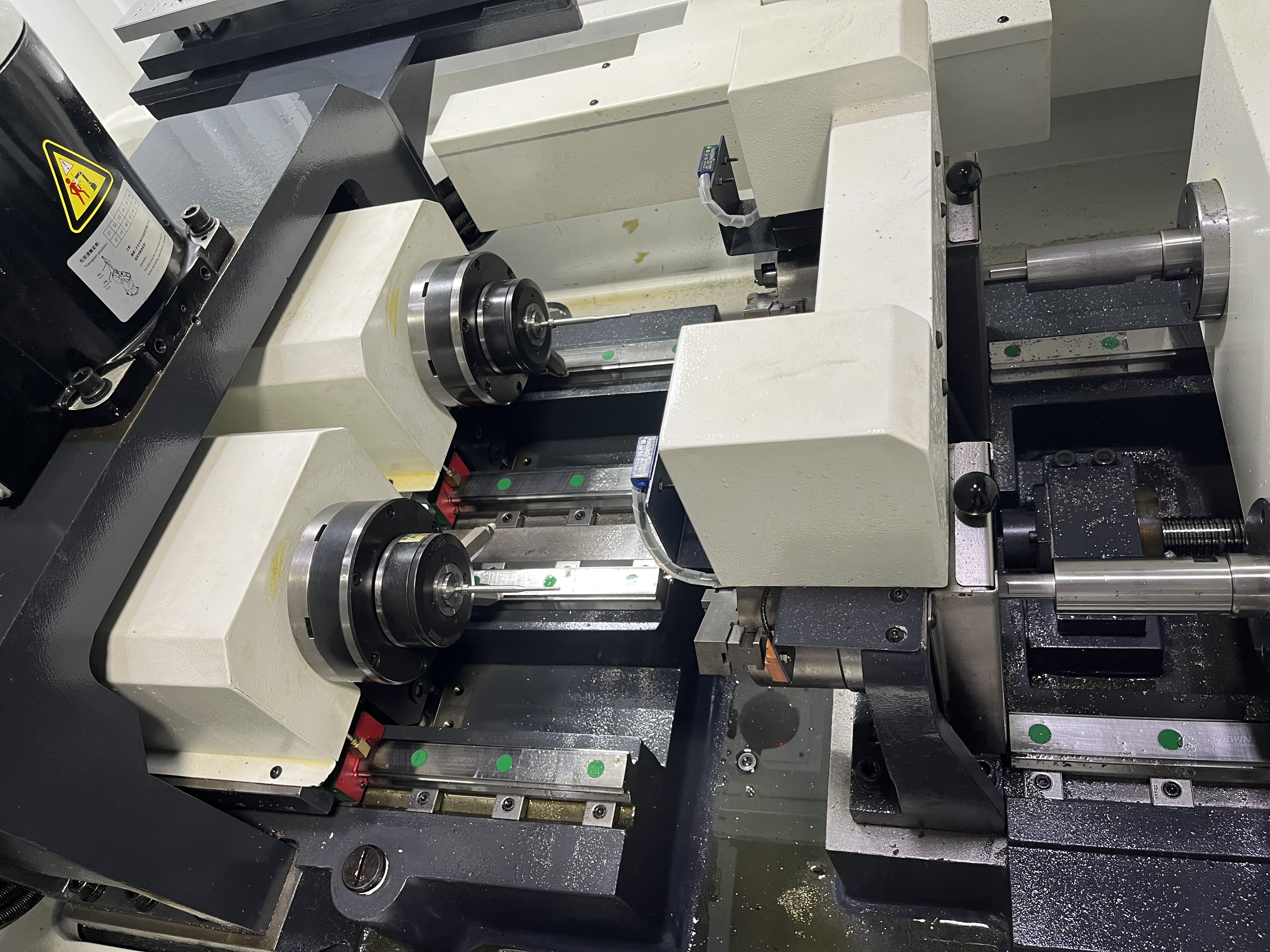
I have been on both sides of this decision. I have set up in-house gun drilling operations and I have sent work to specialized shops. Both are the right answer in different situations.
The decision comes down to four factors: volume, diameter, depth, and how much your time is worth.
When In-House Makes Sense
In-house gun drilling works best when the conditions are right for it. Here is what I look for:
High volume of similar parts. If you are drilling the same hole in the same material every week, the setup cost amortizes fast. At 500+ parts per year of the same configuration, in-house is usually cheaper.
Diameters over 6mm. Small diameters need high coolant pressure (1500-3000 psi). If your holes are under 6mm, the equipment cost for high-pressure coolant goes up and the break-even volume goes up with it.
Moderate L/D ratios under 100:1. Longer holes need more machine rigidity, intermediate supports, and tighter alignment. These are all achievable in-house, but the setup complexity increases.
You already have a suitable machine. If you have a CNC lathe or mill with through-spindle coolant and good rigidity, the incremental cost of adding gun drilling capability is relatively low — a booster pump, a coolant inducer, and tooling.
When to Send It Out
Sending gun drilling to a specialized shop is the right call more often than most shops admit.
| Situation | Why Outsource |
|---|---|
| Under 100 parts per year | Setup and tooling cost per part is too high |
| Diameters under 3mm | High-pressure coolant requirements exceed typical shop capability |
| L/D over 200:1 | Specialized machines and operator experience matter |
| Exotic materials (Inconel, titanium, 17-4 PH) | Tooling cost and parameter optimization require experience |
| One-off or prototype | Machine setup time exceeds the actual drilling time |
| Tight straightness (under 0.1mm/m) | Alignment and setup precision of dedicated machines is hard to match |
The cost of a scrapped part is higher than the cost of outsourcing, especially for expensive materials. I have seen shops spend $3000 on tooling and setup to drill 50 parts that would have cost $400 to send out.
Cost Comparison Framework
I use a simple cost-per-hole calculation to compare in-house vs outsourced:
In-house cost per hole = (Tooling cost per hole) + (Machine cost per hour x cycle time) + (Operator cost per hour x cycle time) + (Scrap rate x part value)
Outsource cost per hole = (Quoted price per hole) + (Shipping cost per part) + (Lead time cost)
The key variable most shops miss is the scrap rate. A 5% scrap rate on a $500 part adds $25 per hole that does not show up in the direct cost calculation.
| Factor | Typical In-House | Typical Outsource |
|---|---|---|
| Cost per hole (simple steel) | $3-8 | $5-15 |
| Cost per hole (exotic material) | $15-40 | $10-25 |
| Setup time per job | 2-8 hours | None (quoted) |
| Scrap rate | 2-10% | 0.5-2% |
| Lead time | Immediate | 2-4 weeks |
These are general ranges. Actual numbers vary significantly by location and volume.
The Hybrid Approach
The approach I recommend most often is hybrid: send the difficult work out and bring the routine work in-house.
| Keep In-House | Send Out |
|---|---|
| High-volume standard parts | Small diameters (under 3mm) |
| Simple materials (steel, aluminum) | Exotic materials |
| L/D under 100:1 | High L/D over 100:1 |
| Loose tolerances (0.2mm+) | Tight tolerances (under 0.05mm) |
This lets the shop build experience on the easy jobs before taking on the hard ones. I have seen several shops start by sending out 100% of their gun drilling, then bring the routine jobs in-house after a year.
What I Tell Shops Asking for the First Time
If you are considering gun drilling for the first time, my recommendation is:
- Send the first 50 parts out. Learn what gun drilling looks like when it works correctly. Establish a baseline quality level.
- Take notes on what the outsource shop does. Ask about pressures, feeds, tool life. Most shops will share this information.
- Do an in-house trial on a simple job. Start with a 10-15mm hole in 4140 steel at 50:1 L/D. This is the sweet spot for learning.
- Scale up gradually. Add one new diameter or material at a time. Do not try to gun drill titanium until you have 100+ hours of experience on steel.
This phased approach avoids the most expensive mistake: buying equipment for a process you have never run.
Key Takeaways
- In-house gun drilling pays off at 500+ parts per year of similar configuration.
- Outsource small diameters (under 3mm), exotic materials, and high L/D ratios — these need specialized equipment and experience.
- Include scrap rate in your cost comparison. A 5% scrap rate on expensive parts can make outsourcing cheaper.
- The hybrid approach — outsource the hard jobs, bring routine jobs in-house — works best for most shops.
- Send the first 50 parts out before buying equipment. Learn the process before investing in it.