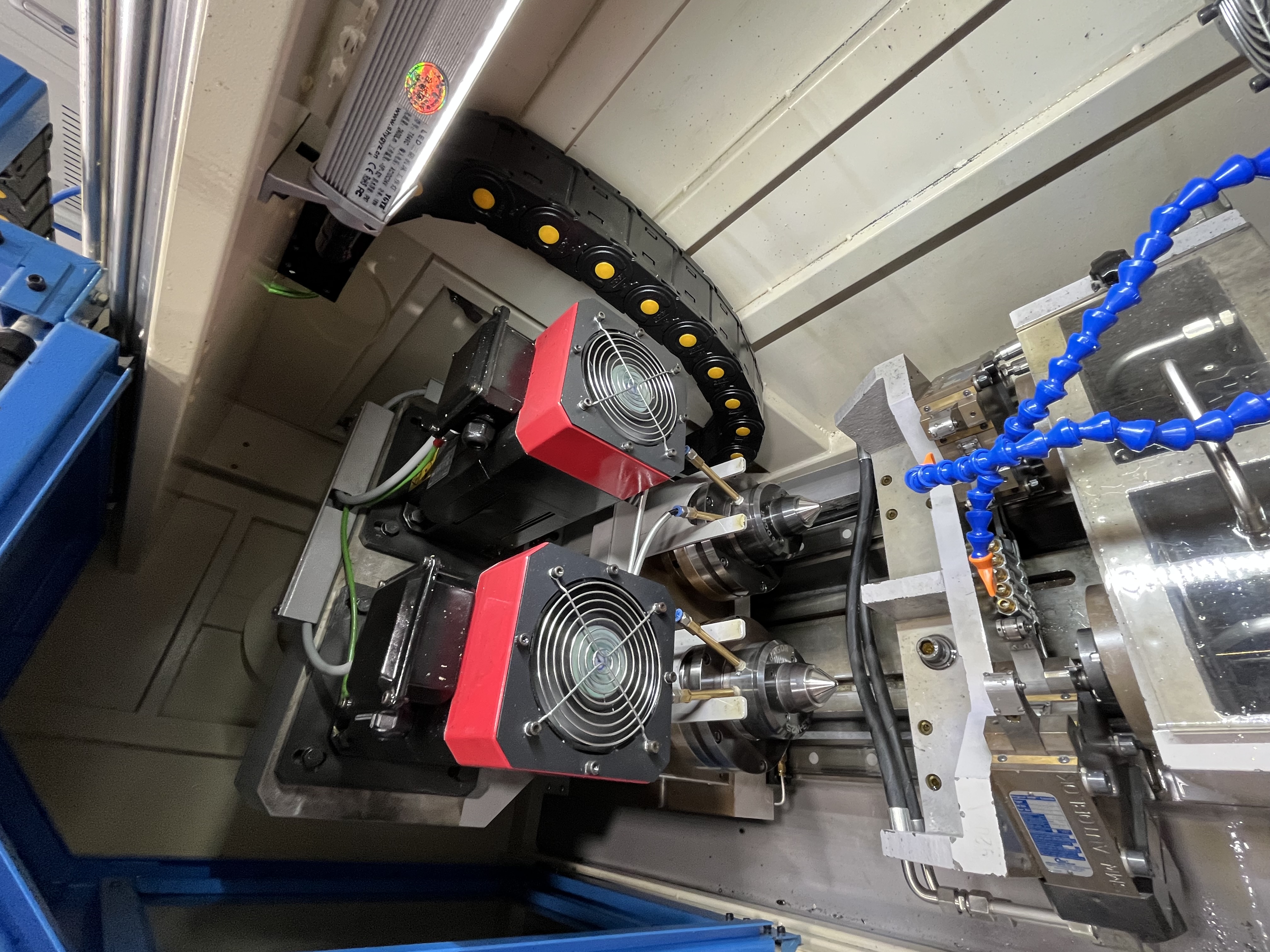
Hydraulic manifolds are blocks of steel or aluminum that contain networks of drilled passages. The passages direct hydraulic fluid from one port to another. The holes need to intersect precisely inside the block. I have drilled manifolds for mobile and industrial hydraulic systems for years, and the work is similar to valve body drilling but with larger passages and looser tolerances. The challenge is not the individual hole — it is making sure every hole meets its cross-hole at the right depth and with a clean intersection.
Manifold Types and Configurations
| Manifold Type | Typical Material | Port Size Range | Operating Pressure | Complexity |
|---|---|---|---|---|
| Mobile hydraulic (excavators, loaders) | 1045 steel, ductile iron | 1/4 to 1-1/2 NPT | 2,000-4,000 PSI | Medium — 8-20 ports |
| Industrial hydraulic (presses, machine tools) | 4140 steel, 1045 steel | 1/4 to 2 inch SAE | 1,500-5,000 PSI | High — 15-60 ports |
| Proportional/servo valve manifolds | 4140 pre-hardened, 6061-T6 aluminum | #4 to #12 SAE | 1,000-3,500 PSI | Very high — tight positional tolerances |
| Hot runner manifolds (injection molding) | P20, H13 tool steel, 4140 | 1/8 to 1 inch | 3,000-15,000 PSI | Medium — heated, complex drill patterns |
| Subsea/manifold stacks | 316L stainless, Inconel | Various | 5,000-15,000 PSI | Very high — corrosion resistant requirements |
The highest volume I see is mobile and industrial manifolds. Hot runner and subsea manifolds are less common but more demanding on accuracy and cleanliness.
Material Comparison for Manifold Drilling
| Material | Machinability | Drillability | Chip Control | Corrosion Resistance | Notes |
|---|---|---|---|---|---|
| 1045 steel | Good | Good | Good — short chips | Poor | Most common manifold material, economical |
| 4140 steel (annealed) | Good | Good | Good | Poor | Higher strength than 1045 |
| 4140 pre-hardened (28-32 HRC) | Fair | Fair | Fair — stringy chips | Poor | Springs back after drilling, account for this |
| 6061-T6 aluminum | Excellent | Excellent | Excellent | Good | Soft, watch for burrs at intersections |
| Ductile iron 65-45-12 | Fair to Good | Fair | Excellent — powder | Fair | Abrasive, reduces tool life |
| 316L stainless | Poor | Poor | Poor — long stringy | Excellent | Work hardens, needs aggressive feed |
| P20 tool steel (30-36 HRC) | Fair | Fair | Fair | Fair | Tough, generates heat |
I prefer 1045 or annealed 4140 for most manifolds. Pre-hardened 4140 saves a heat treatment step but is harder on drills and likes to spring back on deep holes. Aluminum 6061-T6 drills beautifully but the burrs at cross-hole intersections are worse than steel.
The Layout and Print Verification
A manifold starts as a solid block. The print shows a network of holes that intersect at specific depths. The first thing I do is verify the hole positions and intersection depths. If two holes should meet at 100 mm depth from one face and 80 mm from the other face, I check the math before drilling. I have caught more than one print error by verifying the intersection depths. A 2 mm error in a dimension turns into a miss at the intersection point.
I also check for draft angles and surface condition on cast manifold housings. If the manifold is a casting rather than bar stock, my article on deep hole drilling for castings covers the extra checks needed for scale and porosity.
Drilling Sequence
The sequence matters in manifold drilling. Here is the order I follow:
- Face all surfaces — The block needs square reference faces and perpendicular entry surfaces for every drilled hole.
- Drill all through-holes first — Holes that go from one face to another establish the reference positions. These give you the most accurate datum for subsequent operations.
- Drill blind holes to depth — Blind holes are drilled to their specified depths. I check the depth of every blind hole with a depth gauge before moving to the next operation.
- Drill intersecting holes last — Intersecting holes are drilled last because they connect to existing holes. Drilling them earlier risks chip packing into the cross-hole and jamming the drill.
- Deburr and clean between operations — Every time a hole breaks through into an existing passage, it produces a burr and leaves chips in the cavity. I blow compressed air through each hole after drilling to verify it is clear and remove loose chips.
- Final deburr of all intersections — After all drilling is complete, I run a deburring tool through every intersection.
Cross-Hole Intersection Strategy
When two holes meet inside a manifold, the intersection creates a pocket. The pocket needs to be clean — no burrs or chips that could block fluid flow. Here is what I have found works best:
Feed reduction at breakthrough. I reduce feed by 30 percent in the last 5 mm before the expected intersection depth. The lower feed prevents the drill from grabbing when it enters the cavity. A grab at breakthrough can chip the cutting edge or produce a large burr on the far side of the intersection.
Drill the larger hole first. The primary (larger diameter) passage should be drilled before the intersecting hole. This gives the secondary drill a clean entry and exit at the intersection. If you drill the small hole first, the large drill will experience interrupted cutting when it crosses the small passage, which increases tool wear and burr size.
Overshoot calculations. I calculate the exact intersection depth from the print and add 0.5 mm of overshoot to ensure the drill fully clears the cross-hole. A tool that stops exactly at the intersection depth can leave a thin web of material that breaks off during testing and becomes a contaminant. If a hole misses its intersection, the troubleshooting guide on hole deviation in deep hole drilling covers the most common causes and how to correct the drilling approach before the next part.
Burr Control at Intersections
Burrs at hydraulic manifold intersections are a persistent problem. A loose burr that breaks free during operation becomes a contaminant that can stick a spool valve or clog a nozzle. Here are the controls I use:
| Method | Application | Effectiveness | Cost |
|---|---|---|---|
| Feed reduction at breakthrough | All intersections | Reduces burr size by 30-50% | $0 (programming time only) |
| Spring-loaded deburring tool (COFA-X style) | Straight intersections, 1:1 diameter ratio | Removes both front and back burr | Medium — tool cost $80-150 |
| Flex-Hone abrasive brush | Deburring multiple passages | Good for consistent edge radius | Medium — brush wears out |
| Manual deburring with porting tool | Low volume, complex intersections | Complete control, operator dependent | High — labor intensive |
| Abrasive flow machining (AFM) | High volume, complex internal networks | Best consistent results, x consistent radius | High — capital equipment cost |
For my typical production work, I use feed reduction combined with a spring-loaded deburring tool for the most critical intersections. The combination catches about 90 percent of burrs before final inspection.
Testing and Inspection
Every manifold I drill gets tested before it ships. Here is my inspection routine:
- Visual inspection with borescope — I run a 2 mm diameter borescope through every passage to check for burrs, chips, and tool marks at intersections. This catches issues that compressed air blowing will not reveal.
- Depth check on every blind hole — A hole that is 2 mm too shallow will not intersect with the cross-hole. A hole that is 2 mm too deep will break through the wrong face. I use a depth gauge on every blind hole.
- Air flow verification — I blow low-pressure compressed air through each passage network and verify flow at every outlet port. Restricted flow indicates a blocked or partially blocked passage.
- Hydrostatic test — For manifolds rated above 3,000 PSI, I run a hydrostatic test at 1.5 times the rated pressure. A leak at an intersection means either a burr prevented proper sealing or the drill missed the intersection point.
- Cleanliness verification — The manifold gets flushed with clean oil through every circuit, and the flush oil gets filtered through a 10-micron filter patch. The patch is inspected for particulate.
Key Takeaways
Manifold drilling is about accuracy in positioning and depth. Drill the largest holes first, always reduce feed before a cross-hole intersection, and verify every blind hole depth with a gauge. Burr control at intersections is the difference between a manifold that works and one that fails on the test stand. I check the depth of every blind hole with a depth gauge before moving to the next operation, and I borescope every critical intersection. A clean, accurate intersection that passes inspection the first time is cheaper than reworking a manifold after assembly.