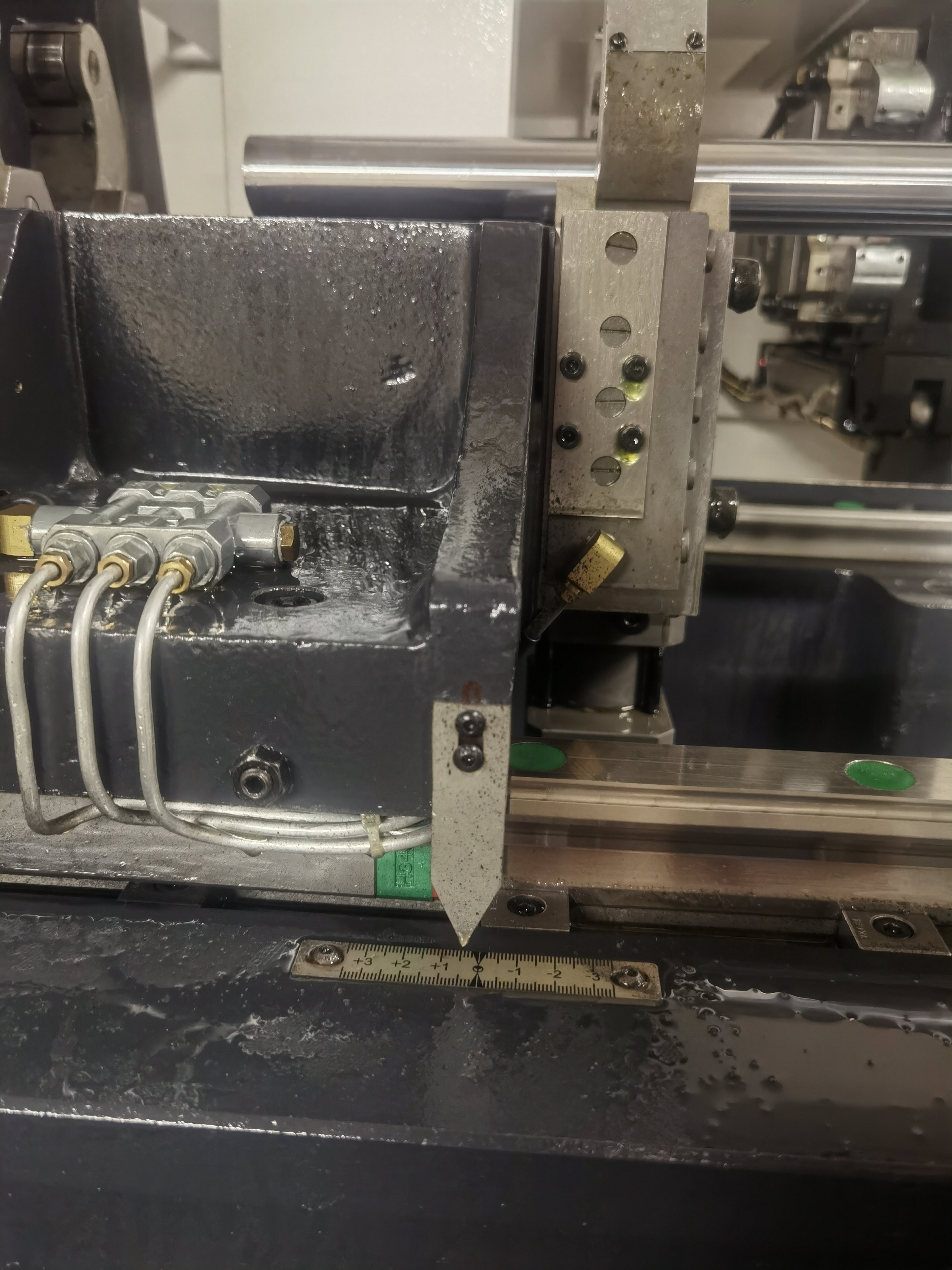
Hydraulic valve bodies are some of the most demanding components I have worked on in the industrial sector. The bores need to be straight, round, and smooth. The valve spool fits inside the bore with a clearance measured in microns. If the bore is off, the valve leaks or sticks.
I have drilled valve bodies for mobile and industrial hydraulic systems. The principles are the same regardless of the valve size.
Valve Types and Their Drilling Requirements
Different valve types have different drilling challenges. Here are the main types I work with:
| Valve Type | Spool Bore Dia (mm) | Bore Depth (mm) | Number of Passages | Typical Material | Tolerance Grade |
|---|---|---|---|---|---|
| Directional control (1/4-1/2 in) | 10-16 | 100-250 | 4-8 | Cast iron, 4140 steel | H6-H7 |
| Directional control (3/4-2 in) | 20-40 | 200-500 | 6-14 | Cast iron, 4140 steel | H6-H7 |
| Proportional/servo valve | 8-25 | 100-350 | 8-20 | 52100 steel, 17-4PH | H5-H6 |
| Pressure control valve | 12-30 | 80-200 | 4-8 | Cast iron, 1045 steel | H7 |
| Flow control valve | 10-25 | 80-200 | 4-10 | Cast iron, 4140 steel | H7 |
| Manifold block | N/A | N/A | 6-40 (passages) | GJS-500, 4140 steel | H8-H9 (passages) |
The brake system deep hole drilling article covers ABS modulator bodies that share many characteristics with hydraulic valve bodies, particularly the intersecting hole networks.
The Two Types of Valve Body Work
Spool bores. The main bore in a directional control valve where the spool slides. These are typically 10-30mm in diameter and 100-500mm deep. The bore needs a surface finish of Ra 0.4 um or better and a diameter tolerance of plus or minus 0.005mm.
Passage holes. The fluid passages that connect the spool bore to the valve ports. These are less critical, typically 3-10mm diameter with standard tolerances.
The spool bore is where the difficulty lies. Achieving Ra 0.4 um and plus or minus 0.005mm in a 20mm bore at 300mm depth requires attention to every detail.
Material Grades Comparison
The material choice has a big effect on drilling parameters and final quality:
| Material Grade | Standard | Tensile (MPa) | Hardness | Machinability | Valve Body Application |
|---|---|---|---|---|---|
| EN-GJS-500-7 (ductile iron) | ISO 1083 | 500 | 170-230 HB | Excellent | Directional control, manifolds |
| 4140 (QT) | ASTM A29 | 850-1000 | 28-32 HRC | Good | High-pressure valves, manifolds |
| SAE 1045 (C45E) | EN 10083 | 700-850 | 230-280 HB | Good | Standard industrial valves |
| 52100 (GCr15) | ASTM A295 | 800-1000 | 58-62 HRC | Fair | Servo valve spools |
| 17-4PH (stainless) | ASTM A693 | 1100-1300 | 38-43 HRC | Fair | Marine/corrosive valves |
| 316L (stainless) | ASTM A240 | 485 | 200 HB | Good | Chemical processing valves |
I prefer GJS-500 ductile iron for directional control valve bodies. It drills cleanly, produces fine chips that evacuate well, and the as-drilled surface finish is better than steel. For high-pressure mobile valves, 4140 QT gives the strength needed.
Spool Bore Drilling
For spool bores, I use gun drilling followed by burnishing or honing:
| Parameter | Gun Drilling | Finish Honing |
|---|---|---|
| Stock removal | Full bore | 0.05-0.10mm |
| Surface finish | Ra 0.8-1.6 um | Ra 0.2-0.4 um |
| Diameter tolerance | +/-0.02mm | +/-0.005mm |
| Cycle time per hole | Moderate | Quick |
The gun drill gets the bore close to final size with good straightness. The honing pass corrects any minor variations and produces the final surface finish.
I have found that the gun drilling step needs to produce a bore within 0.02mm of final diameter and straight to within 0.05mm per meter. If the gun drill pass is within these limits, the honing pass corrects the rest.
For cast iron valve bodies:
| Parameter | Value (Cast Iron) | Value (4140 Steel) |
|---|---|---|
| Cutting speed | 80-120 m/min | 60-90 m/min |
| Feed rate | 0.05-0.10 mm/rev | 0.03-0.06 mm/rev |
| Coolant pressure | 500-800 psi | 800-1200 psi |
| Coolant type | Emulsion | Oil or emulsion |
Cast iron produces a fine dust chip that is easy to evacuate. The coolant pressure can be lower than for steel because the chips do not pack up as easily. Steel produces longer, stringier chips that need higher pressure to clear.
Cross-Hole Drilling and Burr Control
Valve bodies have intersecting holes where the spool bore meets the fluid passages. The intersection creates a sharp edge that can damage the spool seals if it is not deburred.
The standard approach is to deburr the intersection by passing a carbide burr or brush through the opening. For high-production valves, I have used a robotic deburring cell that follows the hole pattern automatically.
The direction of deburring matters. I deburr from the passage hole into the spool bore, not the other way around. This folds any burr into the passage where it does not affect the spool fit.
Cross-hole drilling requires special attention. When a drill enters a spool bore from the side, the drill experiences an interrupted cut. The cutting edge takes an impact each time it crosses the bore. I use a reduced feed rate, about 50-60 percent of normal, when drilling cross passages that intersect the main bore.
| Cross-Hole Parameter | Recommended Value |
|---|---|
| Feed rate reduction at intersection | 50-60% of normal |
| Peck increment | 1-2mm |
| Tool type | Carbide, with sharp edge preparation |
| Exit support | Back-up if through-hole |
| Deburr method | Carbide burr from passage into bore |
Straightness Requirements
Straightness of the spool bore is the most critical parameter. A non-straight bore causes the spool to bind at one end and leak at the other.
The straightness spec on most valve bodies I have worked on is 0.01mm per 100mm of bore length. That is tight but achievable with a well-aligned machine and proper tooling.
I check straightness with an air gauge or a CMM after drilling. If the bore is out of spec, it can sometimes be corrected with the honing pass, but only if the deviation is within about 0.03mm. A larger deviation needs a new bore.
The hydraulic manifold deep hole drilling article covers additional techniques for maintaining straightness in multi-passage manifold blocks.
Key Takeaways
Valve body work is about the finishing operations, not the rough drilling. The gun drill gets the bore close enough that the hone can finish it. Getting the gun drill parameters right reduces the honing time and improves the consistency of the finished part. Ductile iron GJS-500 is the most machinable material for valve bodies. Cross-hole drilling requires reduced feed rates to manage interrupted cuts. Spool bore straightness of 0.01mm per 100mm is achievable with proper machine alignment and tooling. Always deburr from the passage into the spool bore to prevent seal damage.