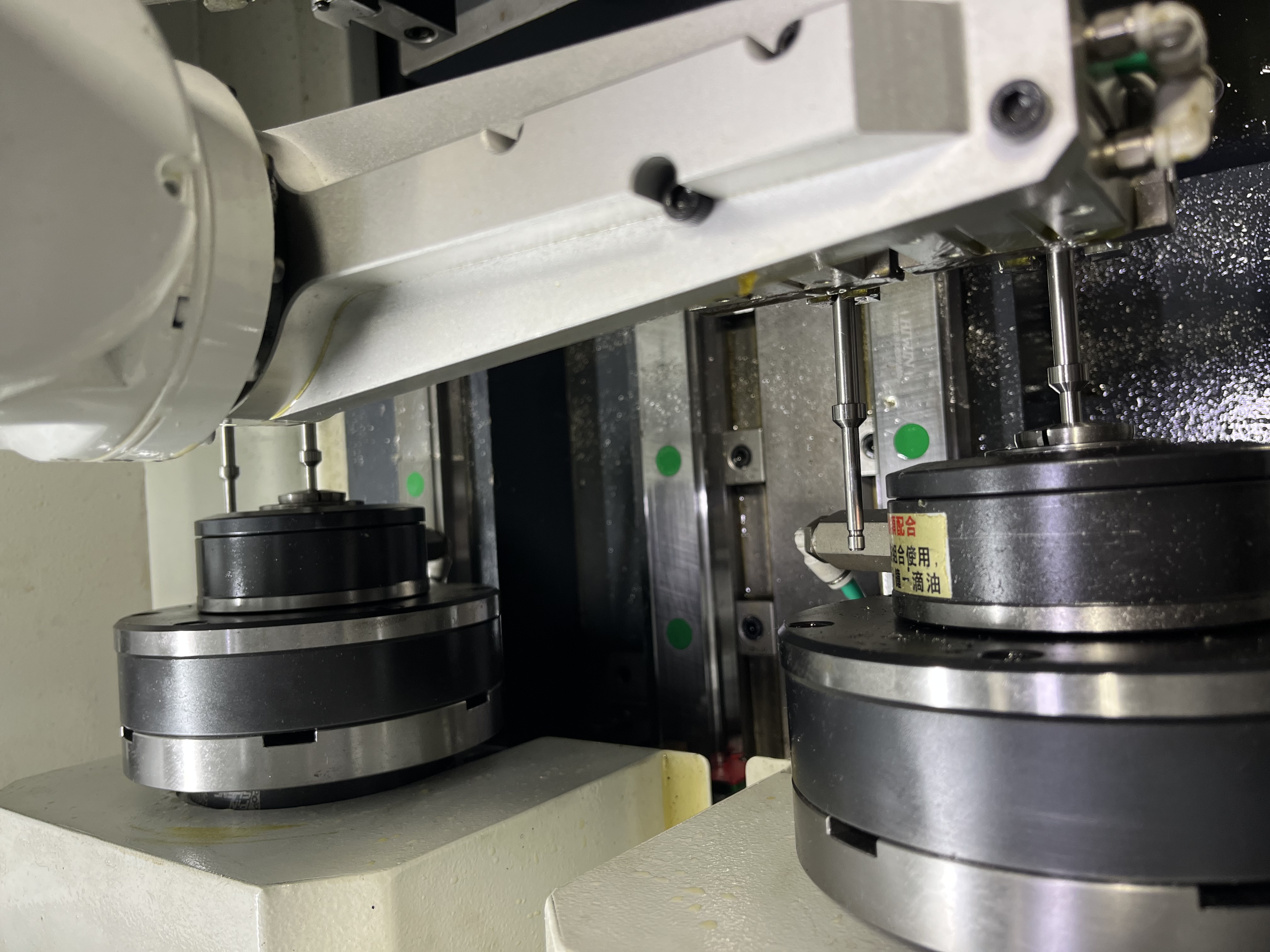
Industrial rollers are used across many industries, including paper, printing, steel, plastic film, and textile manufacturing. They all have one thing in common: they need a through-hole for heating, cooling, or weight reduction.
I have drilled rollers ranging from 1 meter to 6 meters long. The work is similar to general long shaft drilling but with some specific requirements.
Roller Types and Applications
| Roller Type | Industry Use | Bore Function | Typical Length (m) | Bore Dia (mm) | Wall Thickness (mm) |
|---|---|---|---|---|---|
| Heated roller | Laminating, drying, calendaring | Oil/water circulation for heat | 1-4 | 20-80 | 8-20 |
| Cooling roller | Film extrusion, paper making | Cooling fluid circulation | 1-4 | 20-80 | 8-20 |
| Idler roller | Conveyor support, web guiding | Weight reduction | 1-6 | 30-150 | 5-15 |
| Drive roller | Conveyors, processing lines | Lubrication/cooling passages | 1-5 | 20-100 | 10-30 |
| Furnace roller | High-temp steel processing | Water cooling | 2-6 | 30-120 | 10-25 |
| Printing roller | Flexo/gravure printing | Ink circulation, weight reduction | 1-3 | 15-60 | 10-20 |
The deep hole drilling for long shaft applications covers additional techniques that apply to roller drilling, especially for the longer parts.
Material Grades Comparison
Rollers are made from various materials depending on the application:
| Material Grade | Standard | Tensile Strength (MPa) | Hardness | Typical Application | Machinability |
|---|---|---|---|---|---|
| C45E (1045) | EN 10083 | 700-850 | 230-280 HB | General purpose rollers | Good |
| Cf53 | EN 10083 | 750-900 | 250-300 HB | Precision rollers, induction hardened | Good |
| 42CrMo4 (4140) | EN 10083 | 850-1100 | 270-320 HB | High-load drive rollers | Good |
| 51CrV4 | EN 10083 | 1000-1200 | 300-350 HB | High-wear rollers, springs | Fair |
| 100Cr6 (52100) | EN 10083 | 800-1000 | 58-62 HRC | Bearing-grade rollers | Fair |
| 1.4404 (316L) | EN 10088 | 485-600 | 200 HB | Food/chemical rollers | Fair |
| 1.4571 (316Ti) | EN 10088 | 500-700 | 200-240 HB | Chemical processing | Fair |
| EN AW-6082 | EN 755 | 310-340 | 95-100 HB | Lightweight aluminum rollers | Excellent |
For heated rollers running at high temperature, I prefer Cf53 or 42CrMo4 because they maintain dimensional stability up to 400 degrees Celsius. Stainless grades like 1.4571 are needed for furnace rollers operating above 800 degrees. The material selection guide for deep hole drilling has more details on matching grades to thermal requirements.
Drilling Parameters
For a carbon steel roller:
| Parameter | C45E Steel (General) | 42CrMo4 (Hardened) | 316L Stainless | 6082 Aluminum |
|---|---|---|---|---|
| Cutting speed (m/min) | 80-100 | 65-85 | 50-65 | 150-250 |
| Feed rate (mm/rev) | 0.08-0.14 | 0.06-0.10 | 0.05-0.09 | 0.10-0.18 |
| Coolant pressure (psi) | 600-1000 | 800-1200 | 800-1200 | 400-600 |
| Straightness target (mm/m) | 0.3 | 0.2 | 0.3 | 0.5 |
The feed rate depends on the roller wall thickness. Thin-walled rollers need lower feed to prevent deflection. A roller with 10mm wall thickness can take a higher feed than one with 5mm wall thickness.
Straightness Requirements
Straightness is the most critical dimension for most roller applications. A roller that is not straight causes vibration, uneven web tension, and premature bearing wear.
| Application | Straightness Requirement | Measurement Method |
|---|---|---|
| General idler rollers | 0.3-0.5 mm/m | Feeler gauge, straight edge |
| Printing rollers | 0.02-0.05 mm/m | Laser alignment |
| Paper machine rollers | 0.01-0.03 mm/m | Laser or CMM |
| Furnace rollers | 0.5-1.0 mm/m | Straight edge |
| Precision rollers | 3-5 um/m | Interferometer |
For long rollers, 3 meters and above, I use steady rests at 1-meter intervals along the roller length. The steady rests support the roller without constraining it during rotation.
Surface Finish Requirements
The bore surface finish in heated rollers affects heat transfer efficiency. A rough surface has less contact area with the heating medium. I target Ra 1.6 um or better for heated rollers.
| Roller Type | Bore Finish Target (Ra) | Method |
|---|---|---|
| Heated/cooled roller | 1.6 um | Gun drill + burnish |
| Idler roller | 3.2 um | Gun drill as-is |
| Drive roller | 1.6-3.2 um | Gun drill as-is |
| Precision roller | 0.8 um | Gun drill + polish |
| Food processing roller | 0.8 um (smooth for cleaning) | Gun drill + burnish |
If the as-drilled finish is not adequate, I run a polishing pass with a burnishing tool. This improves the finish by about 0.5 um without removing significant material.
Inspection and Quality Checks
Roller bores get inspected for:
- Diameter at both ends and mid-length
- Surface finish with a profilometer
- Straightness with a test bar or laser
- Cleanliness, especially for heated rollers
Cleanliness is especially important for heated rollers. Any scale, chips, or debris in the bore will contaminate the heating oil and can cause system failures. I clean the bore with compressed air and a swab before the roller leaves the shop.
Key Takeaways
Industrial roller drilling is about managing length and straightness. The material choice is driven by the operating temperature and wear requirements. C45E covers most general purpose rollers, 42CrMo4 handles high loads, and 1.4571 stainless works for high-temperature applications. Straightness of 0.3 mm/m is achievable with proper steady rest support. Surface finish of Ra 1.6 um is adequate for heat transfer. Cleanliness is critical for heated rollers to avoid heating system contamination.