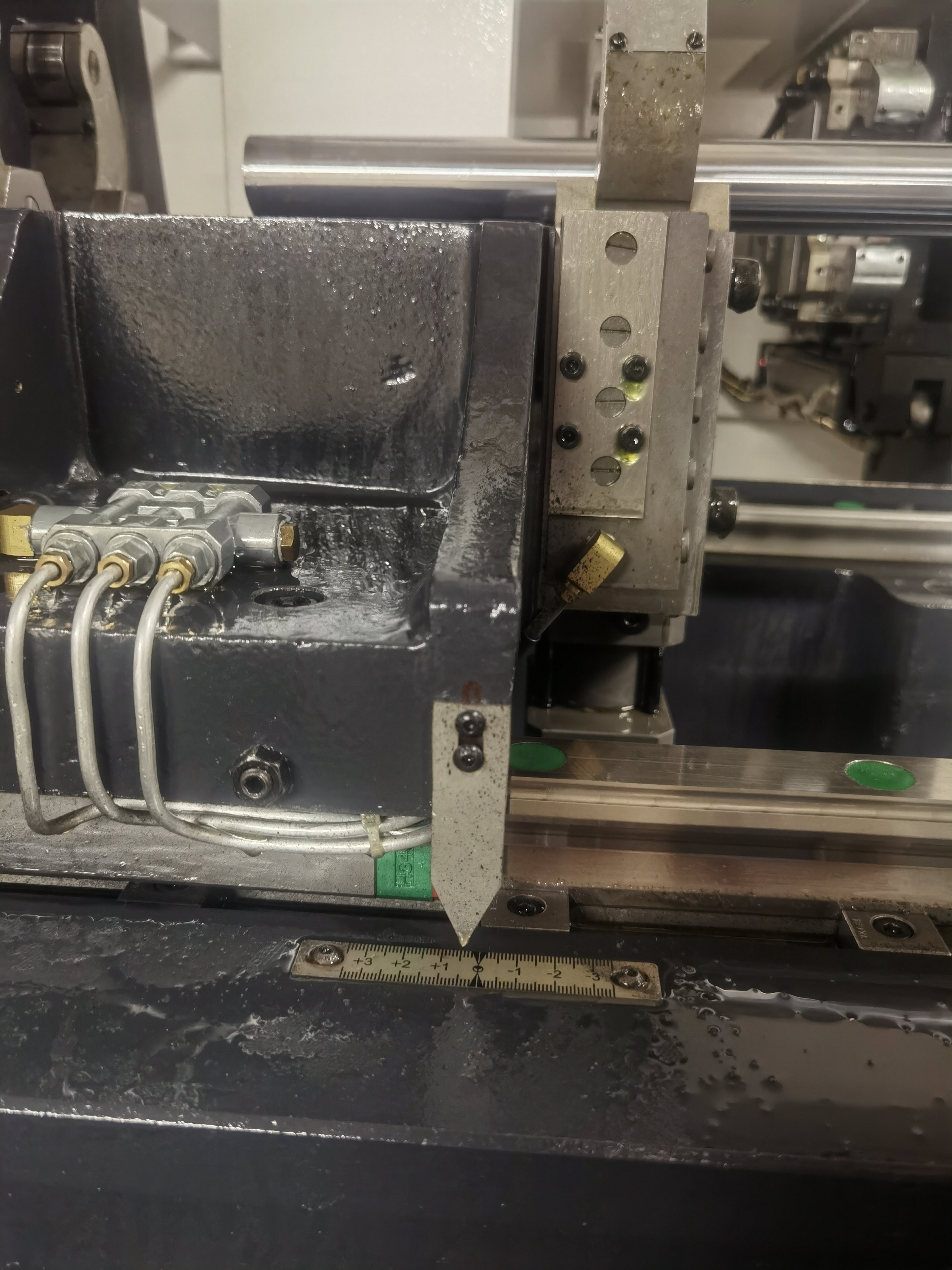
Railway infrastructure components — switches, crossings, fishplates, and baseplates — need deep holes for bolting, wiring, and inspection. The work is different from axle drilling. These parts are shorter, wider, and usually made from wear-resistant steel grades.
I have worked on rail components for mainline and light rail systems. The challenge is the material: rail steel is tough and abrasive, and it wears cutting tools faster than standard structural steel. Over the years I have developed specific approaches for handling these components, and I want to share what works in this guide to deep hole drilling for rail components.
The Material Problem
Rail steel (typically R260 or R350 grade) is a pearlitic steel with high wear resistance. That is good for rails, but hard on drills. The material contains fine carbides that abrade the cutting edge over time. Rail steel typically runs at 250-350 HB, which puts it in the same hardness range as high-strength alloy steel.
I have found that carbide gun drills with a wear-resistant coating — TiAlN or AlTiN — last about 30% longer than uncoated drills in rail steel. The coating reduces the edge wear that comes from the carbides in the material. When I compare coated and uncoated carbide drills in R260 grade, the coated tools consistently deliver more holes per edge before requiring regrind.
The cutting parameters are similar to medium-carbon steel but on the conservative side. I run about 10% slower than I would in 1045 steel. For deep hole drilling of rail components, the speed reduction helps preserve the cutting edge and reduces the risk of heat-related failure.
Rail Component Types and Their Drilling Requirements
Rail components come in several varieties, each with different drilling requirements. Here is a breakdown of the common types I have worked on:
| Component Type | Typical Hole Diameter | Depth Range | Common Hole Count | Purpose |
|---|---|---|---|---|
| Switch blades | 12-30 mm | 100-400 mm | 6-20 per blade | Bolting and signal wiring |
| Crossing noses | 16-40 mm | 150-300 mm | 4-12 per assembly | Bolting and wear detection |
| Fishplates / joint bars | 20-30 mm (often slotted) | 50-150 mm | 4-6 per plate | Rail joint bolting |
| Baseplates | 14-24 mm | 80-200 mm | 4-8 per plate | Rail fastening system |
| Check rails | 12-20 mm | 100-250 mm | 8-16 per rail | Guard rail fastening |
| Signal mounting brackets | 10-18 mm | 60-150 mm | 2-6 per bracket | Signal equipment mounting |
The variety means I cannot use a one-size-fits-all approach. Each job requires a setup tailored to the part geometry and the hole specification. I keep a library of fixture designs for common rail component types so I do not have to start from scratch every time.
Material Grades Used in Rail Components
Understanding the material grade is essential for selecting the right deep hole drilling parameters. Rail steel grades differ in hardness, abrasiveness, and machinability:
| Rail Steel Grade | Hardness Range | Typical Use | Machinability Rating | Recommended Coating |
|---|---|---|---|---|
| R200 | 200-240 HB | Standard rail, light traffic | Good | TiN |
| R260 | 260-300 HB | Mainline rail, heavy traffic | Fair | TiAlN |
| R260Mn | 260-300 HB | Wear-resistant rail | Fair | TiAlN |
| R350HT | 350-390 HB | Head-hardened rail, curves | Poor | AlTiN |
| R370CrHT | 370-400 HB | Very high wear areas | Poor | AlTiN |
| 900A | 260-300 HB | BS standard equivalent | Fair | TiAlN |
I always confirm the grade before setting up the job. I had one experience where the shop floor assumed R260 but the material was actually R350HT, and the drill failed in the first hole. Now I verify the heat number against the material cert before I touch the machine.
Switch and Crossing Components
Railway switches and crossings are assemblies of machined steel components that guide trains from one track to another. They need drilled holes for:
- Bolting the assembly together
- Wiring for signaling and detection equipment
- Grease fittings and lubrication points
The holes range from 12mm to 40mm diameter, typically 100-400mm deep. The parts are often heavy and awkward to handle. A switch blade can be 5 meters long and weigh several hundred kilograms. Moving these parts around the shop requires overhead lifting equipment, and I always check the rigging before starting a setup.
For long switch components, I use the same steady rest setup as for any long shaft work. The challenge is the shape: switch parts are not round like axles. They have irregular cross-sections that do not fit standard steady rests. I have used custom fixture pads shaped to match the part profile. The pads are machined from aluminum to avoid marring the rail surface, and they bolt onto the steady rest arms.
Fishplates and Joint Bars
Fishplates are the steel bars that bolt across rail joints. They need elongated holes for the bolts that hold the rails together. The holes are typically 20-30mm diameter, and they are drilled in a pattern across the fishplate. The slotted shape of these holes allows for thermal expansion of the rail.
The challenge with fishplates is the batch size. A typical order might be 500 fishplates, each needing 4 holes. That is 2000 holes, and the cycle time per hole adds up. At 60 seconds per hole, the total drilling time is over 33 hours. Production efficiency matters a lot on these jobs.
For fishplate work, I have used a multi-spindle drilling setup with a fixture that indexes the part. The fixture has stops that position each hole location under the drill. It is simple but effective, and it keeps the hole spacing consistent across the batch. With a two-spindle setup, I cut the cycle time nearly in half compared to single-spindle drilling.
Drilling Parameters for Rail Steel
For R260 grade rail steel, here are the parameters I use for deep hole drilling of rail components:
| Parameter | Value | Notes |
|---|---|---|
| Cutting speed | 60-75 m/min | Use lower end for harder grades |
| Feed rate | 0.06-0.12 mm/rev | Depends on drill diameter |
| Coolant pressure | 800-1200 psi (55-83 bar) | Through-tool coolant required |
| Tool coating | TiAlN or AlTiN recommended | Extends tool life by about 30% |
| Coolant type | Oil-based preferred | Better lubrication than emulsion |
The feed rate can be higher for larger diameters. A 30mm drill can run at 0.12 mm/rev while a 12mm drill should stay at 0.06-0.08 mm/rev. The smaller drills are more prone to breakage in this material. I have snapped 12mm drills in R260 by pushing the feed too hard, and the repair cost was higher than any productivity gain from the faster cycle.
I also apply depth reduction factors for deeper holes. For holes over 200mm deep, I reduce both speed and feed by about 10 percent. That follows the general rule for deep hole drilling: longer holes need more conservative parameters to account for reduced rigidity and chip evacuation. If you are new to these adjustments, check the deep hole drilling parameters guide for a full breakdown.
Tool Life Management
Rail steel is hard on tools. I track tool life by the number of holes drilled and change inserts at a set interval. For a typical rail component job, I might get 80-120 holes per edge on a carbide gun drill. R350HT reduces that to 50-70 holes per edge because of the higher hardness and carbide content.
I do not push the tool to failure. Rail steel causes microchipping that is hard to see without a microscope. A tool that looks fine to the naked eye might have small edge chips that will show up in the surface finish of the next hole. That is why I use regular tool inspection intervals rather than waiting for visible wear.
If the surface finish or chip shape changes during a batch, I change the tool immediately rather than trying to get a few more holes out of it. The cost of a scrap part in rail components covers the cost of many replacement inserts. I have seen shops try to squeeze extra cycles out of worn tools, and every time it ends in a scrapped part or a broken drill. For more on tool monitoring, read my tool load monitoring guide.
Key Takeaways
- Rail steel grades R260 and R350HT are abrasive and require coated carbide gun drills with TiAlN or AlTiN for acceptable tool life
- Rail component drilling covers a wide variety of part types — switches, crossings, fishplates, and baseplates — each needing a different setup approach
- Cutting speed for gun drilling R260 grade should run at 60-75 m/min with feed rates of 0.06-0.12 mm/rev depending on drill diameter
- I verify the material grade before every rail component job because the difference between R260 and R350HT is significant for tool selection
- Batch production of fishplates benefits from multi-spindle setups and indexing fixtures to reduce cycle time on repetitive hole patterns
- Apply depth reduction factors of 10 percent to speed and feed for holes over 200mm deep to prevent tool overload and wandering
- Replace tools at the first sign of surface quality degradation — rail steel microchipping is not visible without magnification, and catching it early prevents scrap