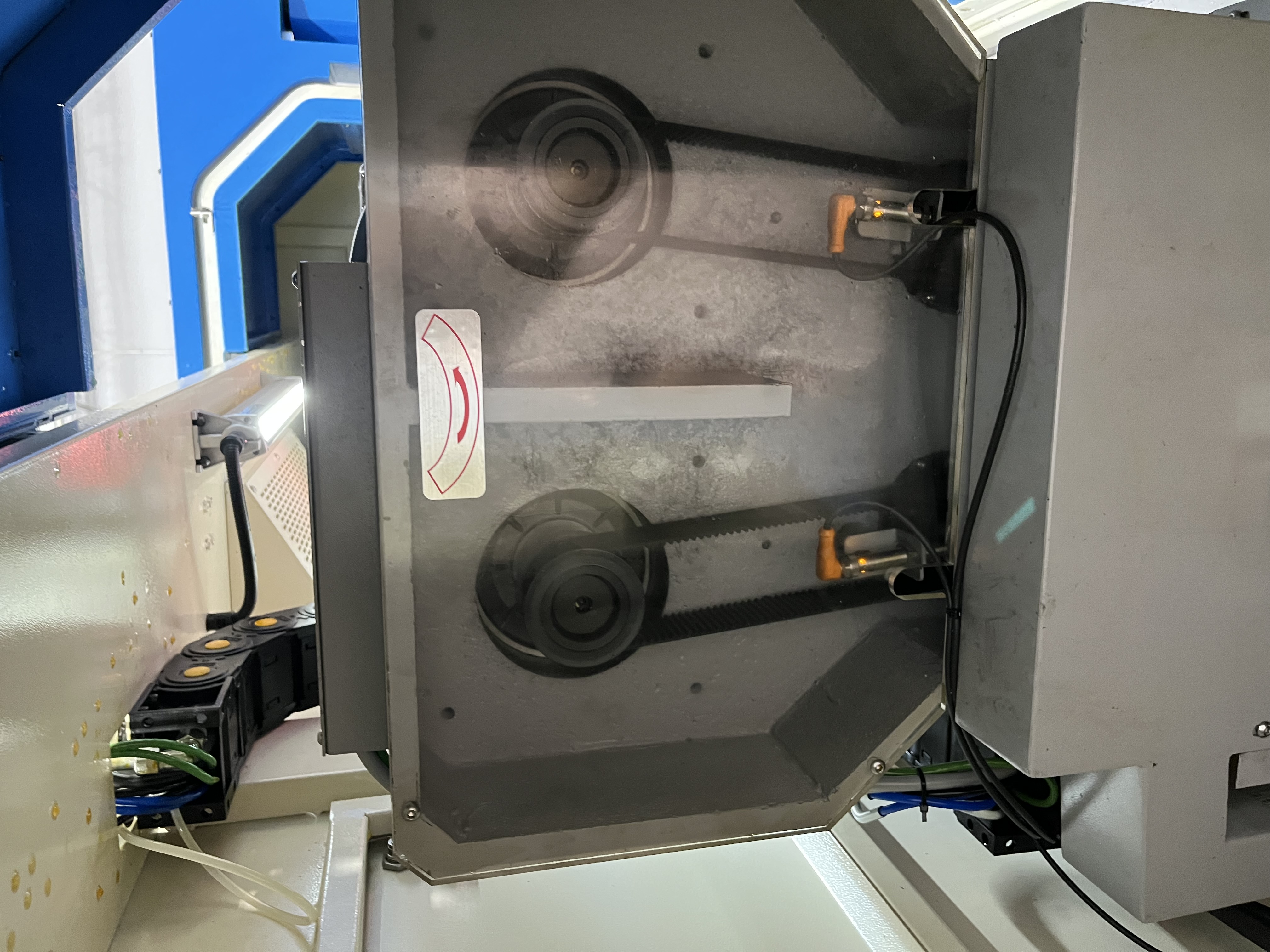
Robotics and automation equipment demand lightweight, stiff components that move quickly and position accurately. Deep hole drilling plays a role in reducing weight, routing cables, and creating fluid passages in robotic arms and end effectors.
I have drilled components for industrial robots, collaborative robots, and custom automation cells. The materials are shifting from steel to aluminum and composites as robot speeds increase. The lightweight design approach has parallels in aerospace deep hole drilling where every gram of weight reduction matters.
Robot Arm Drilling
Robot arm segments are structural components that must be both stiff and lightweight. Drilling through-holes in robot arm segments reduces weight while maintaining the structural cross-section.
For a typical industrial robot arm segment:
| Parameter | Value |
|---|---|
| Arm length | 400-1500mm |
| Bore diameter | 20-60mm |
| Material | 6061-T6 aluminum or 7075-T6 |
| Wall thickness remaining | 5-15mm |
| Cutting speed | 150-250 m/min |
| Feed rate | 0.10-0.25 mm/rev |
| Coolant | Mist or through-spindle air |
Aluminum cuts easily at high speeds. The challenge with robot arm segments is not the drilling itself but the thin wall sections. A robot arm might have wall sections as thin as 5mm after drilling, and the clamping force must be controlled to avoid distortion.
I use low-clamping-force workholding for aluminum robot arm segments. Standard chucks at normal clamping pressure can distort a thin-wall aluminum tube by 0.2mm or more. When the part is released, it springs back to its original shape and the bore becomes oval.
For aluminum drilling, I prefer through-spindle air mist rather than flood coolant. Flood coolant can infiltrate the robot arm interior and be difficult to remove. Mist cooling provides adequate lubrication without the cleanup problem.
End Effector and Gripper Components
End effectors are the hands or grippers at the end of a robot arm. They often have drilled passages for vacuum, pneumatic actuation, or sensor wiring.
End effector components are usually smaller than robot arm segments but require tighter tolerances. A gripper finger might have a 3-8mm bore for a vacuum passage through 50-150mm of material.
For end effector drilling:
| Parameter | Value |
|---|---|
| Bore diameter | 3-12mm |
| Length | 50-200mm |
| Material | Aluminum, stainless, or tool steel |
| Cutting speed | 50-200 m/min (varies by material) |
| Feed rate | 0.02-0.10 mm/rev |
The material choice for end effectors depends on the application. Grippers that handle sharp or heavy parts are made from tool steel. Grippers for food handling or cleanroom use are made from stainless steel or food-grade polymers.
Drilling for vacuum passages requires a clean, smooth bore. Any leakage in the vacuum passage reduces the holding force. I target Ra 1.6um or better for vacuum passages and test every end effector for vacuum leakage after drilling.
Counterbalance and Weight Reduction
Every kilogram of weight on a robot arm reduces the payload capacity and increases cycle time. Deep hole drilling removes weight from robot components without sacrificing strength.
For a robot arm segment that is 800mm long:
| Component | Material | Weight Before Drilling | Weight After Drilling | Weight Savings |
|---|---|---|---|---|
| Lower arm | 6061-T6 Al | 8.5 kg | 5.2 kg | 3.3 kg (39%) |
| Upper arm | 7075-T6 Al | 6.8 kg | 4.1 kg | 2.7 kg (40%) |
| Wrist housing | 7075-T6 Al | 3.2 kg | 2.1 kg | 1.1 kg (34%) |
The weight savings compound because lighter arms let the motors accelerate faster. A 40% weight reduction in the arm can translate to 20-30% faster cycle times.
I have worked on collaborative robot arms where the weight reduction from drilling was the difference between meeting the safety requirements and exceeding them. A cobot arm that weighs less than 10 kg is considered safe for human interaction without heavy guarding.
Cable Routing Bores
Modern robots have complex cabling for power, data, and pneumatics running through the arm. Internal cable routing protects the cables from damage and reduces the robot profile.
The cable routing bores are typically 15-40mm diameter through the full arm length. The bores must be smooth to avoid snagging the cables as the robot moves.
For cable routing bores, the surface finish requirement is Ra 3.2um or better. This is coarse enough for standard drilling but smooth enough to avoid cable abrasion.
I have also drilled chamfers at the entry and exit of cable routing bores. The chamfer prevents the cable jacket from getting cut on the sharp edge of the bore exit. A 0.5mm x 45-degree chamfer is usually sufficient.
Precision Requirements
Robot components have moderate tolerance requirements compared to aerospace or medical work. I typically see:
- Bore diameter tolerance: H8 or H9 (0.033-0.052mm for a 20mm hole)
- Straightness: 0.2mm per meter
- Surface finish: Ra 1.6-3.2um for structural bores
- Coaxiality: 0.1-0.3mm between bore and OD
The tolerance requirements are achievable with standard gun drilling or BTA equipment. The main risk is distortion from clamping on thin-wall aluminum sections.
Key Takeaways
- Robot arm segments in aluminum benefit from mist cooling and low-clamping-force workholding to avoid distortion
- End effector vacuum passages need Ra 1.6um finish and leak testing after drilling
- Deep hole drilling achieves 35-40% weight reduction in robot arm components, improving cycle times by 20-30%
- Cable routing bores through robot arms need chamfered entry and exit edges to prevent cable abrasion
- Aluminum robot arm components with thin wall sections (5mm) require controlled clamping to maintain roundness