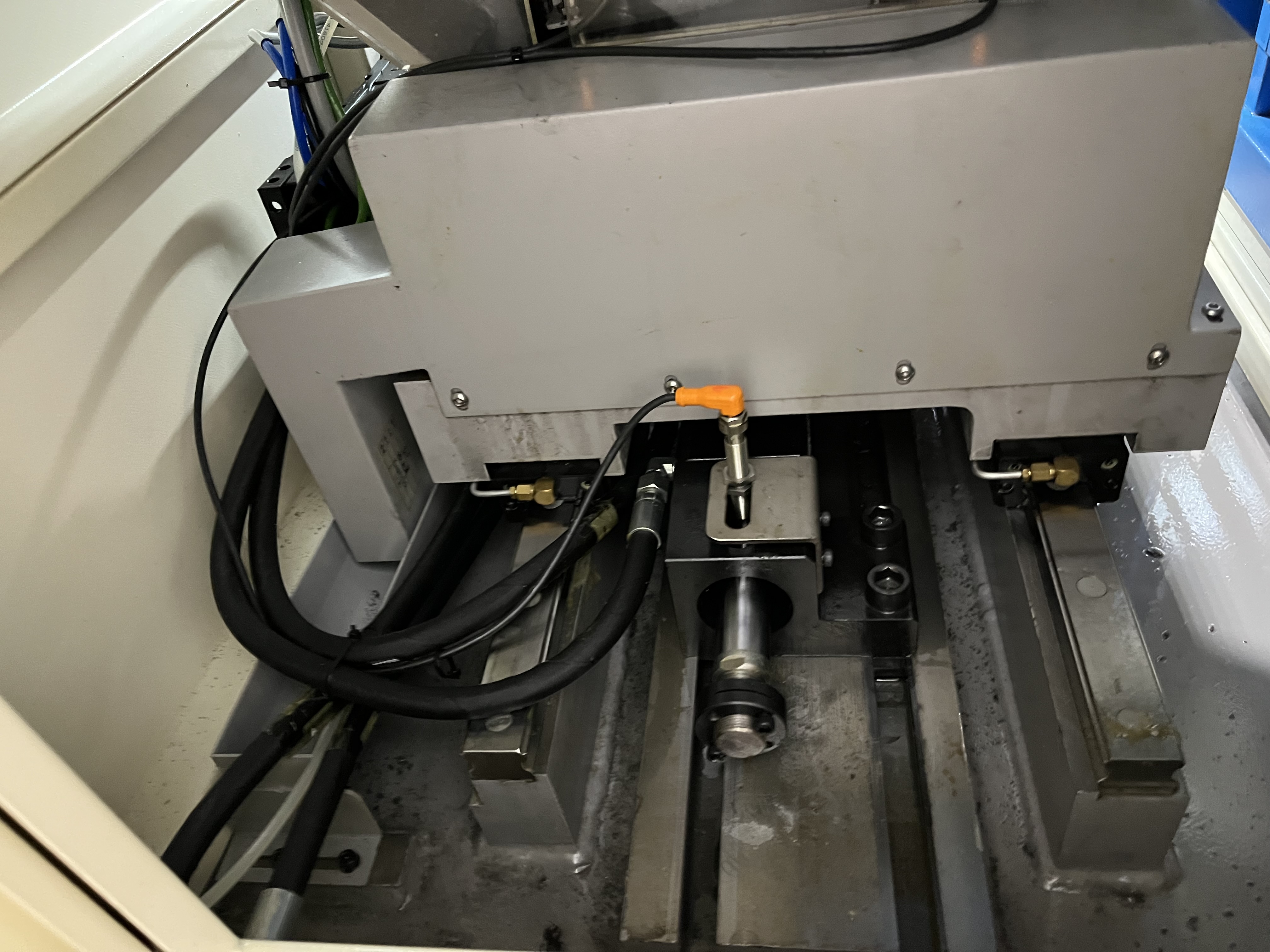
I get asked pretty often by shops that are thinking about buying their first deep hole drilling machine — especially after they land a job like EV motor shafts or mold cooling channels. The question is usually: what should I buy?
The answer depends on the work, the volume, and the budget. But there are some patterns I’ve seen across dozens of shops.
Start With the Parts
The single biggest mistake I see is buying a machine first and figuring out the parts later. The machine needs to match what you’re actually going to drill.
The three numbers that narrow down the machine selection:
- Hole diameter. Is it under 50mm? Gun drilling. Over 50mm? BTA.
- Depth. How deep is the deepest hole you’ll drill regularly? Machine stroke needs to be at least that plus the drill tube length.
- Production volume. 100 parts a year? Flexible machine. 10,000 parts a year? Dedicated machine.
Everything else — spindle power, coolant pressure, automation level — follows from these three numbers.
New vs. Used
A good used machine from a reputable builder can be a smart buy. I’ve seen used single-spindle gun drills from TBT and UNISIG sell for $40,000 to $80,000 — well under the $200,000+ price of a new one.
What I check on a used machine:
- Spindle bearing condition (listen for noise during a test run)
- Guide bushing condition (look for wear at the entry)
- Coolant pump condition (check pressure at the tool tip)
- Ways and ball screws (check for backlash)
- Control condition (older controls may be hard to get parts for)
I’ve also seen shops buy cheap used machines that needed $30,000 in repairs within the first year. A used machine from a reputable dealer that specializes in deep hole drilling equipment is worth more than a cheap machine from a general used machinery dealer.
Coolant System
The coolant system is the heart of a deep hole drilling machine. A machine with an undersized coolant system will produce scrap. It’s that simple.
What I look for:
- Pressure. Gun drilling needs 1000-2000 psi depending on diameter. BTA needs 200-500 psi. The pump should be sized for the hardest job you’ll run.
- Flow. Expressed in liters per minute (L/min). For gun drilling, roughly 3-4 L/min per mm of tool diameter. For BTA, much higher — 200-600 L/min typical.
- Filtration. 20 microns minimum, 10 microns preferred for gun drilling. BTA can get away with 50 microns on some jobs.
- Coolant temperature control. A chiller to keep the coolant temperature stable within ±2 degrees.
I’ve seen too many machines with adequate spindle power but undersized coolant systems. The spindle can handle the job; the coolant can’t. The result is broken drills and scrapped parts.
Controls
The control system affects how easily the machine can be programmed and operated. For deep hole drilling, I prefer controls that support:
- Peck cycle programming (retract distance, feed retract, rapid retract)
- Variable feed rate during the cycle (reduce feed at entry and exit)
- Spindle load monitoring (alarm or stop if load exceeds a set point)
- Coolant pressure monitoring
FANUC and Siemens are the most common controls I’ve seen on deep hole drilling machines. Both work fine. The important thing is that the control is set up for deep hole drilling cycles, not just general machining.
Support and Service
A deep hole drilling machine is a specialized piece of equipment. When it breaks down, you can’t usually call a general machine tool repair service. You need someone who knows deep hole drilling machines.
Before buying, I check:
- Does the builder have local service technicians?
- Are spare parts available off-the-shelf or custom-order?
- Is training included?
- Are there other users of the same machine nearby who can help with setup questions?
I’ve seen a shop buy a machine from a builder on another continent and struggle with every service issue. The machine itself was good, but the support lag made every problem worse.
The Decision Framework
| Factor | If This | Buy That |
|---|---|---|
| Diameter under 50mm | Gun drilling machine | Single or multi-spindle |
| Diameter over 50mm | BTA machine | Larger coolant system, more torque |
| Under 500 parts/year | Used single-spindle | Lowest cost, flexible |
| 500-5000 parts/year | New single or dual-spindle | Balance of cost and productivity |
| Over 5000 parts/year | Multi-spindle or automated | Highest throughput |
| Multiple hole sizes per part | Single-spindle with tool changer | Flexibility matters more than speed |
| One part type, high volume | Dedicated multi-spindle | Speed matters more than flexibility |
Buying a deep hole drilling machine is a long-term decision. I’ve seen shops that bought the wrong machine struggle for years, and shops that bought the right one grow their business around it. The machine matters, but matching the machine to the work matters more.
Key Takeaways
- Match the machine to the parts you will actually drill. Diameter, depth, and volume are the three numbers that narrow down the selection.
- A used machine from a reputable deep hole drilling dealer can be a smart buy, but factor in the cost of potential repairs.
- The coolant system is more important than the spindle. An undersized coolant system will produce scrap regardless of the machine’s power.
- Buy from a builder with local service support. A good machine from a distant builder causes more problems than an adequate machine with local support.
- Start with the work, not the machine. Shops that buy a machine first and look for work later often end up with the wrong type of machine.