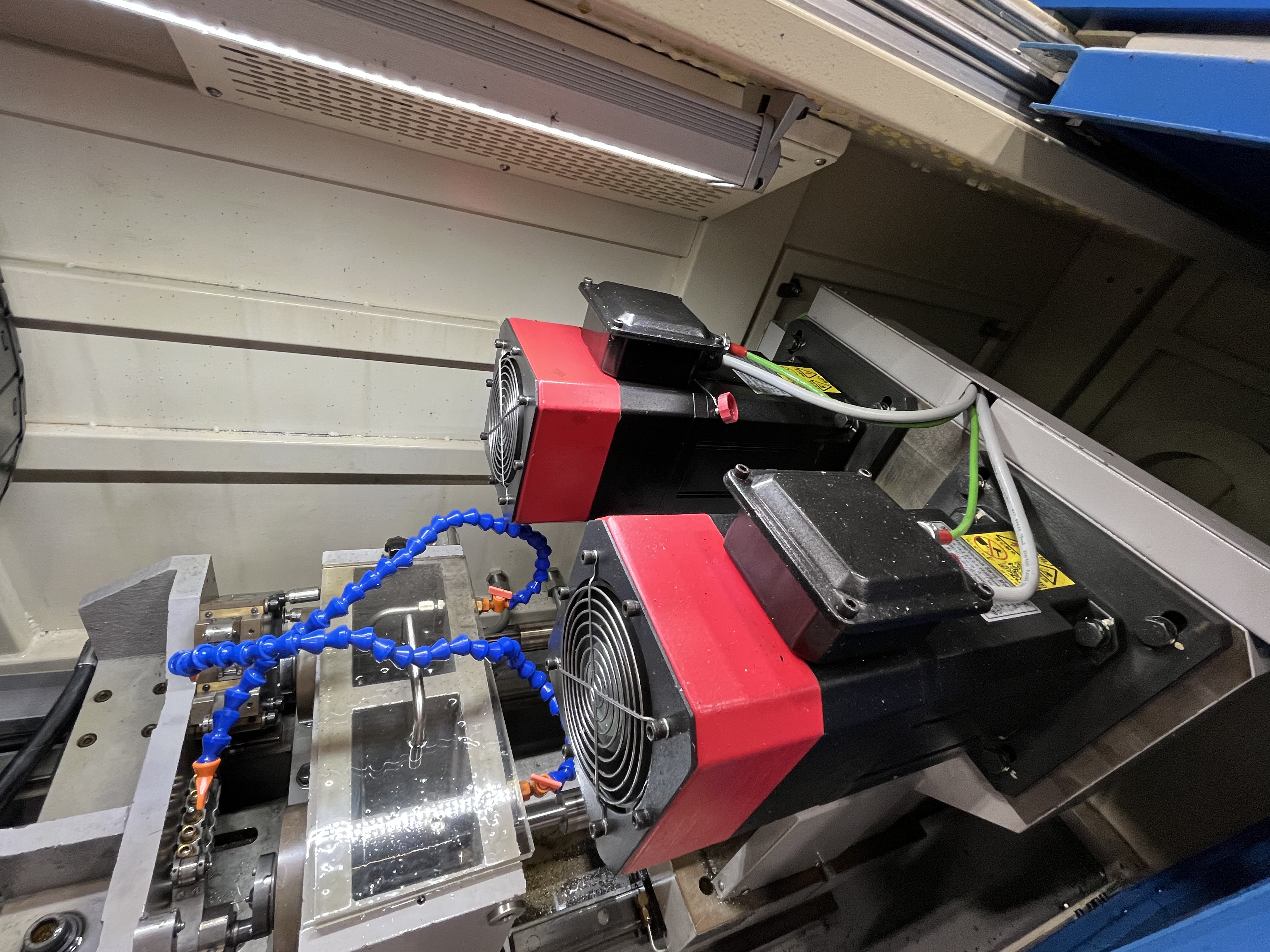
I run an annual safety audit on every deep hole drilling machine in the shop. The audit takes about two hours per machine and catches problems that daily and weekly checks miss. In my experience, the annual audit typically finds 6-10 issues per machine that were not caught by routine checks. About 20% of those are serious enough to require immediate corrective action before the machine can run again.
Emergency Stop and Interlock Systems
The emergency stop circuit is the most critical safety system on the machine. I test it methodically, not by just pressing the button once.
| Audit Item | Test Method | Acceptance Criteria |
|---|---|---|
| Main E-stop on operator panel | Press while machine is in cycle | Machine stops within 500 ms; alarm displayed |
| Remote E-stop stations | Press each station individually | Machine stops from any remote station |
| E-stop reset procedure | Pull out E-stop, press reset | Machine alarms clear; requires separate start command |
| E-stop labeling | Visual inspection | Buttons clearly marked with red-yellow colors; labels legible |
| E-stop accessibility | Physical walk-through | No obstructions within 3 feet of any E-stop |
I test every E-stop button with the machine in cycle, cutting material. I have found E-stop buttons that are wired in parallel rather than series, meaning pressing one button does not stop the machine if another button is already pressed. This is a design flaw that I have corrected on three machines in my shop.
For door interlocks, I verify the complete interlock circuit:
| Interlock Type | Test |
|---|---|
| Hinge-mounted limit switch | Open the door while machine is running — spindle must stop |
| Magnetic interlock | Open the door; check that the control cannot energize the spindle |
| Keyed interlock | Turn the key to the off position; verify the machine will not start |
| Light curtain | Break the beam during cycle; machine must stop within 200 ms |
I have found interlock switches misaligned by as little as 2 mm that still allowed the machine to run with the door slightly open. I check alignment with a feeler gauge and reseat any switch that is within 1 mm of its trip point.
Coolant System Safety Checks
Deep hole drilling machines operate at coolant pressures up to 3000 psi. A hose failure at this pressure can inject coolant through skin — a serious injury risk. I inspect every part of the coolant system during the audit.
| Component | Inspection Points | Failure Criteria |
|---|---|---|
| High-pressure hoses | Full length visual; bend test at fittings | Any crack, chafe mark through outer braid, or soft spot |
| Hose fittings | Swivel nut tightness; ferrule condition | Loose ferrule, corrosion, or cracked nut |
| Pressure relief valve | Function test at 110% of operating pressure | Valve must open within 10% of set pressure |
| Coolant tank lid | Seal condition; vent function | Missing or torn seal; blocked vent |
| Rotating union | Leak test at operating pressure | Any visible drip at rest or during rotation |
I record the remaining wall thickness of high-pressure hoses at the bend points where wear is most common. I replace any hose where the outer braid is visible or the wall thickness is below 80% of the original.
I have a specific procedure for the pressure relief valve test: I gradually increase the pump pressure while watching the relief valve gauge. The valve should crack open within 10% of its stamped set pressure and reseat within 5% of the cracking pressure. A valve that sticks open or fails to open gets replaced immediately.
Electrical Panel and Fire Suppression
Coolant mist is the biggest threat to electrical panel reliability in deep hole drilling shops. Over a year, a fine layer of coolant residue builds up on contactors, terminals, and circuit boards. This residue conducts electricity and causes tracking faults.
| Panel Audit Item | Check |
|---|---|
| Door seal condition | Replace any seal with cuts, tears, or compression set |
| Panel interior cleanliness | Wipe down all surfaces; look for dried coolant residue |
| Terminal block tightness | Torque-check 20% of terminals; retorque all if more than 2 are loose |
| Contactor contacts | Visual inspection for pitting or welding |
| Cooling fan operation | Confirm fan runs when panel temp exceeds 40 C |
| Fire suppression nozzle | Confirm nozzle is unobstructed and aimed correctly |
I clean each panel with a electronics-safe contact cleaner and a soft brush. I then apply a fresh coat of conformal coating to exposed circuit boards. This has virtually eliminated intermittent electrical faults on our machines.
The fire suppression system — typically a CO2 or chemical system inside the electrical cabinet — gets a full check annually. I verify the nozzle is not blocked, the activation cable moves freely, and the inspection tag is current. I replaced two expired CO2 bottles last year that were past their hydrostatic test date.
Machine Anchoring and Structural Integrity
Deep hole drilling machines generate substantial thrust forces. A machine that is not properly anchored can shift over time, leading to misalignment and wear on the machine ways.
| Anchor Point | Torque Spec | Inspection Frequency |
|---|---|---|
| Main base bolts (M24) | 450 Nm | Annual |
| Leveling pads (M20) | 300 Nm | Annual |
| Coolant pump base (M12) | 80 Nm | Annual |
| Chip conveyor brackets (M10) | 50 Nm | Annual |
I torque-check 25% of the foundation bolts each year on a rotating basis, so every bolt is checked over a four-year cycle. In my audits, I have found bolts that were loose by 30% or more of their specified torque. The typical cause is vibration over time, not improper initial installation.
I also check the machine level with a precision level. A machine that has settled unevenly will show a level change of more than 0.02 mm/m. I have re-leveled two machines in the past three years after finding settlement of 0.05 mm/m.
Documentation and Follow-Up
I use a standardized audit form that has 42 check items across 8 categories. I record each result as Pass, Fail, or Needs Attention. Items marked Fail are flagged for immediate repair. Needs Attention items get scheduled within 30 days.
| Audit Category | Number of Checks | Average Fail Rate |
|---|---|---|
| E-stop circuit | 6 | 8% |
| Door interlocks | 5 | 12% |
| Light curtains | 3 | 5% |
| Coolant hoses | 8 | 15% |
| Pressure relief valves | 4 | 10% |
| Electrical panel | 7 | 20% |
| Fire suppression | 4 | 3% |
| Machine anchoring | 5 | 10% |
I follow up within one week to verify all repairs are complete. I take a photo of every failed item and the completed repair for the audit record. This documentation has been invaluable during insurance inspections and internal safety reviews.
Key Takeaways
- The annual audit finds 6-10 issues per machine that routine checks miss
- Test E-stop buttons in series, not just individually — verify the circuit design
- High-pressure coolant hoses degrade from the inside out; annual replacement may be justified
- Coolant mist in electrical panels is the leading cause of intermittent electrical faults
- Document everything with photos — it protects you during regulatory inspections