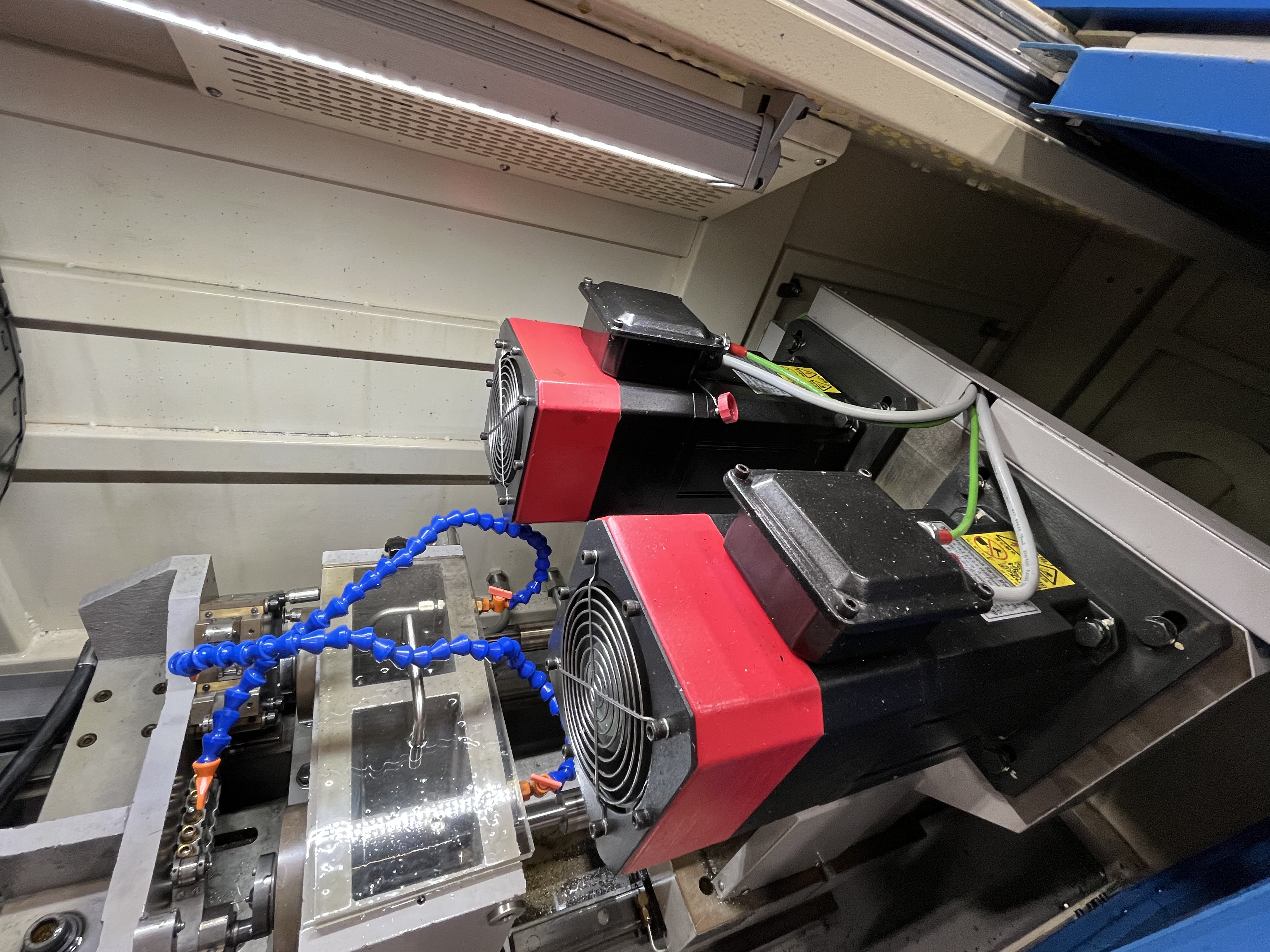
I retrofitted automatic lubrication on a deep hole drilling machine that was having way wear problems. The operators were supposed to grease the ways every morning, but it was not happening consistently. Some ways were dry, some were over-greased, and the machine was losing accuracy over time.
The automatic system solved all of those problems. Here is what I learned from the retrofit and from installing systems on three machines since then.
Why I Retrofitted Automatic Lubrication
The machine in question was a mid-size gun drill from the early 2000s. It had manual grease fittings on the linear ways, ball screws, and spindle bearings. The maintenance schedule called for greasing every 40 operating hours.
In practice, greasing was inconsistent. Operators forgot or skipped it during busy shifts. When they did grease, they often applied too much. The excess grease attracted chips and dust, which formed an abrasive paste on the ways. The machine started showing position drift of 0.02mm over 300mm of travel.
I checked the way surfaces and found scoring on the linear guides. The machine was losing alignment because the ways were running dry between grease applications.
How Automatic Lubrication Works
The automatic system delivers a measured amount of oil to each lubrication point at set intervals. The system has three main components:
- Pump unit. An electric pump that pressurizes the oil supply. Pumps range from $400 to $1,200 depending on capacity and pressure rating.
- Distribution block. A manifold that splits the oil flow to individual lubrication points. Each outlet has an adjustable metering valve.
- Controller. A timer that runs the pump at set intervals. Basic controllers run on a fixed timer. Advanced controllers monitor oil level and pressure and alarm on faults.
The system I installed runs the pump for 10 seconds every 30 minutes. Each lubrication point receives about 0.05cc of oil per cycle. The total oil consumption is about 2.5cc per hour — much less than manual greasing.
The Results
| Before Automatic Lube | After Automatic Lube |
|---|---|
| Inconsistent lubrication | Consistent metered delivery |
| 0.02mm position drift over 300mm | 0.005mm position drift over 300mm |
| Way scoring visible | No new scoring after 2 years |
| Operators spent 10 min/day greasing | Zero operator time on lubrication |
| Oil consumption: 5-10cc per shift | Oil consumption: 2.5cc per hour |
| Bearing replacement every 18 months | Bearing replacement at 3 years and counting |
The most noticeable improvement was in the machine’s alignment stability. Before the retrofit, I checked alignment weekly and made adjustments every few months. After the retrofit, the alignment held for months without adjustment. The consistent lubrication kept the ways at a stable temperature and reduced thermal drift.
Installation Considerations
Installing an automatic lubrication system is a straightforward retrofit that takes about 8-16 hours for a technician.
The key steps are:
- Clean all existing grease fittings. Old grease and debris block the new oil lines. I flushed each fitting with solvent before connecting the new lines.
- Run distribution lines. I used 4mm nylon tubing from the distribution block to each lubrication point. The tubing should be routed away from moving parts and chip flow.
- Mount the pump unit. The pump needs a clean location with access for refilling. I mounted the pump on the machine frame near the coolant tank.
- Program the controller. Set the pump interval and cycle time based on the machine’s duty cycle. For a machine running one shift, 10 seconds every 30 minutes works well.
I learned the hard way that the distribution lines need protection. On my first installation, a chip landed on a nylon tube and melted through it. The oil leaked out, and the lubrication points ran dry. I now route all tubing inside flexible conduit.
Oil Selection
The oil type matters more than I initially expected. The system I installed uses ISO VG 68 way oil, which has good adhesion and stays on the way surfaces between lubrication cycles.
I tested a lower-viscosity oil (ISO VG 32) and found that it dripped off the ways too quickly. The ways were dry by the time the next lubrication cycle started. The VG 68 oil maintains a thin film between cycles.
For spindle bearings, I use the oil recommended by the spindle manufacturer — typically a lighter oil with anti-wear additives. Some systems run the same oil for ways and bearings, but I prefer separate lines with different oils if the machine has that capability.
Cost and Payback
The total cost for the retrofit was about $1,200 in parts:
| Component | Cost |
|---|---|
| Pump unit | $550 |
| Distribution block | $200 |
| Tubing and fittings | $250 |
| Controller | $200 |
The payback came from reduced maintenance time, longer component life, and fewer scrapped parts from alignment drift. I calculated the payback period at about 8 months for a machine running two shifts.
Key Takeaways
- Automatic lubrication eliminates the inconsistency of manual greasing
- A $1,200 retrofit can extend way life by years and improve alignment stability
- Oil consumption is lower than manual greasing because the system delivers measured amounts
- The installation takes 8-16 hours and is straightforward for a maintenance technician
- Protect the distribution lines from chips and coolant — melted lines defeat the purpose
- Payback is typically under 12 months on a machine running multiple shifts