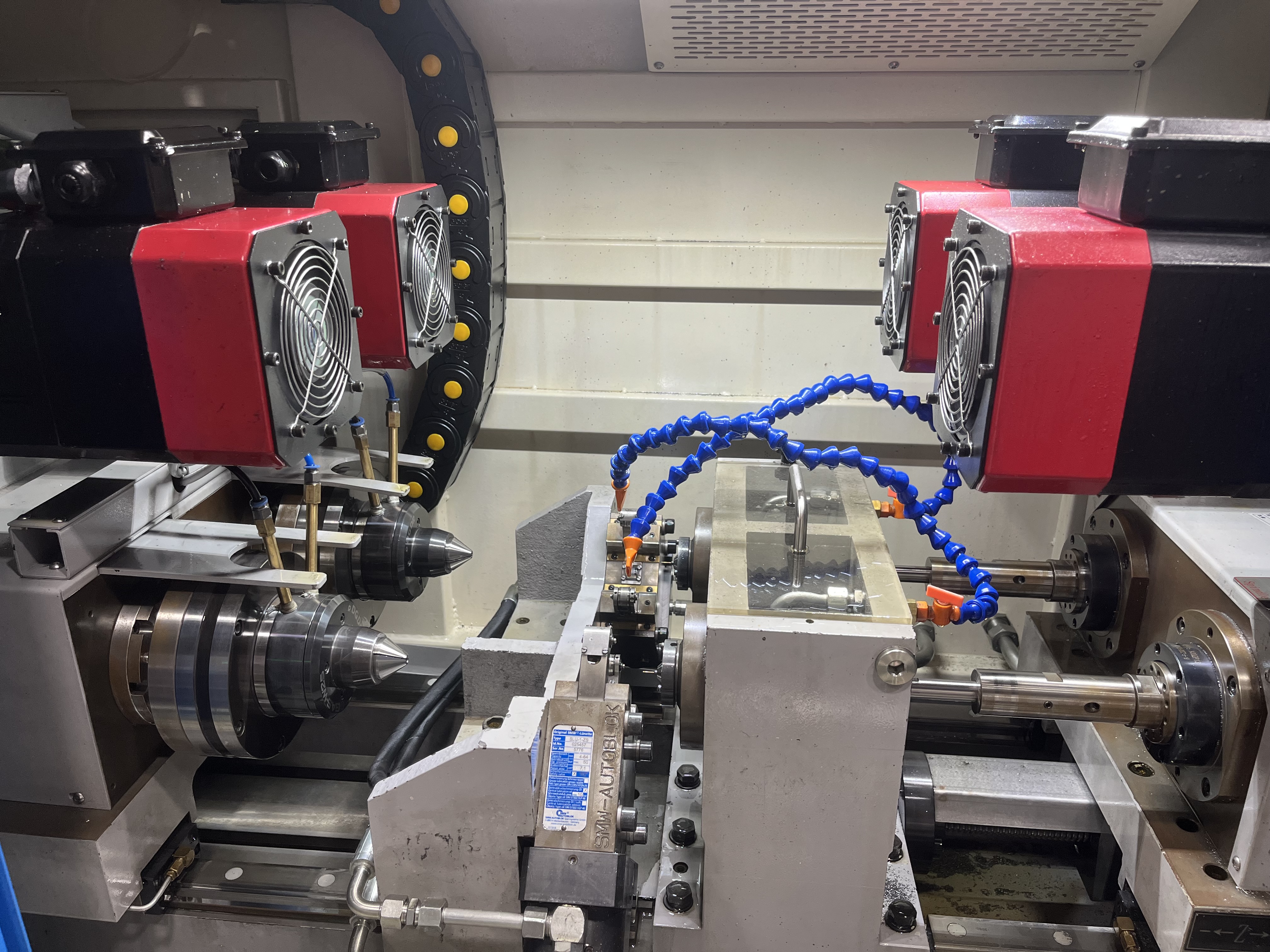
Starting deep hole drilling does not require a $200,000 new machine. I have seen small shops enter this field with well under $100,000 and grow their business from there. The key is knowing which equipment to buy, what to look for in a used machine, and how to budget for the supporting tooling and training that make the machine productive.
Three Entry-Level Paths
I have helped shops take three different paths into deep hole drilling. Each path has different upfront costs, capability limits, and growth potential. The right choice depends on the shop’s existing equipment, budget, and target work.
| Path | Equipment | Typical Cost | Capability | Best For |
|---|---|---|---|---|
| Used dedicated machine | Single-spindle gun drill from TBT, UNISIG, or Mollart | $40,000 - $80,000 | Full gun drilling, 1500-3000 psi coolant, up to 25mm dia | Production work, deep holes, contract shops |
| Gun drilling attachment | Attachment for existing CNC lathe with live tooling | $20,000 - $40,000 | Limited depth, lower coolant pressure, uses existing CNC | Shops with CNC lathes already, occasional work |
| CNC retrofit | Manual deep hole machine converted to CNC | $30,000 - $60,000 | Good capability, modern control, requires mechanical ability | Shops with manual machine experience, low budget |
The best value for a small shop is a used single-spindle gun drilling machine from a reputable builder. I have bought used TBT machines for $50,000 that drilled within 0.02mm per 100mm on the first setup. The key is buying from a builder who still supports older machines with parts and service manuals.
Machine Comparison: Used Market Pricing
Here is what I see on the used market for the major brands:
| Brand | Typical Used Price | Typical Age | Parts Availability | Spindle Support | Coolant System |
|---|---|---|---|---|---|
| TBT (Germany) | $20,000 - $50,000 | 1980s-2000s | Good | Parts available, rebuild services | Often original, may need work |
| UNISIG (Swiss/US) | $50,000 - $100,000 | 1990s-2010s | Good to excellent | Excellent support | Usually high-quality |
| Mollart (UK) | $25,000 - $45,000 | 1970s-1990s | Moderate | Parts available | Simple, reliable |
| IMSA (Italy) | $20,000 - $40,000 | 1980s-2000s | Moderate | Parts available | Variable condition |
| BTA-type dedicated | $50,000 - $150,000 | 1990s-2010s | Variable | Specialized | Large, high-flow |
TBT machines offer the best value on the used market. They are common, well-built, and parts are available. The ball screw maintenance guide covers how to inspect the feed axis, which is one of the critical checks when buying used.
Used Machine Buying Guide
When I evaluate a used deep hole drilling machine, I focus on the condition of the spindle, ball screw, guide bushing holder, and coolant system. These four components represent the highest replacement cost and determine whether the machine is a good value.
| Component | Good Condition | Needs Work | Replacement Cost |
|---|---|---|---|
| Spindle | Runout under 0.005mm, no noise | Runout over 0.015mm, audible noise | $5,000 - $12,000 |
| Ball screw | Backlash under 0.05mm | Backlash over 0.08mm | $2,000 - $5,000 |
| Guide bushing holder | Alignment under 0.02mm | Misalignment over 0.05mm | $1,000 - $3,000 |
| Coolant system | Full pressure, no leaks | Low pressure, clogged lines, sludge | $5,000 - $15,000 |
| Way covers and seals | Intact, no leaks | Torn, missing, leaking | $1,000 - $3,000 |
The spindle should run with no audible noise and no measurable runout at the taper. I check spindle runout with a dial indicator on a test bar. Runout under 0.005mm at the gauge line is excellent. Runout over 0.015mm means the spindle bearings are worn and will need replacement within the first year.
The ball screw condition is checked by measuring backlash at the spindle carrier. Backlash under 0.05mm is good. Backlash over 0.08mm means the ball screw will need replacement or adjustment soon.
The guide bushing holder alignment is critical. I check the alignment between the bushing holder bore and the spindle centerline. Misalignment over 0.02mm means the machine was crashed or was never properly aligned.
The coolant system condition determines whether the machine can drill production holes on day one. I check the pump pressure, filter condition, and coolant tank for sludge. A machine that has been sitting for years with coolant in the tank will have clogged lines and a gummed-up pump.
Tooling and Training Budget
I recommend budgeting for tooling and training in addition to the machine purchase price. I have seen shops buy a machine for $50,000 and then struggle to make it productive because they did not budget for tooling.
| Expense Category | Estimated Cost | Notes |
|---|---|---|
| Gun drills (starter set) | $2,000 - $5,000 | 5-10 drills in common sizes |
| Guide bushings | $1,000 - $2,000 | 5-10 bushings matching drill sizes |
| Collets and holders | $1,500 - $3,000 | Collet chuck, drill holders, test bar |
| Setup tooling | $500 - $1,000 | Wrenches, alignment tools, dial indicators |
| Coolant and additives | $500 - $1,000 | Initial fill and first month of additives |
| Operator training | $2,000 - $5,000 | On-site training or manufacturer course |
| Spare parts kit | $1,000 - $2,000 | Seals, wipers, fuses, filters |
| Total tooling and training | $8,500 - $19,000 |
The tooling investment depends on the range of hole diameters the shop plans to drill. A shop that drills only one or two sizes can get by with a minimal tooling set. A job shop that needs to cover 5mm to 20mm diameters will need a larger investment.
Upgrade Path
Once the shop is established with an entry-level machine, here is the typical upgrade path I see:
| Stage | Investment | Timeline | Capability Added |
|---|---|---|---|
| 1. Entry-level used machine | $40,000 - $80,000 | Start | Basic gun drilling, up to 25mm dia |
| 2. High-pressure coolant pump upgrade | $8,000 - $15,000 | 6-12 months | Better surface finish, faster feeds |
| 3. Workholding system | $3,000 - $10,000 | 6-12 months | Faster setups, higher throughput |
| 4. CNC control upgrade | $10,000 - $25,000 | 12-24 months | Automation, consistent cycles |
| 5. Second machine (dedicated to BTA) | $80,000 - $150,000 | 24-48 months | Large diameter capability |
Return on Investment Timeline
The return on investment for an entry-level deep hole drilling setup depends on the shop billing rate and utilization. I have tracked the ROI for several shops.
At a shop rate of $75 to $100 per hour for deep hole drilling work, a used machine in the $50,000 range generates enough revenue to pay for itself within 12 to 18 months at 50 percent utilization. At higher utilization, the payback is faster.
The profit margin on deep hole drilling is higher than general machining because fewer shops offer the service. I have seen shops charge $100 to $150 per hour for gun drilling work that costs $40 to $60 per hour to run. The margin covers the tooling cost and the higher machine maintenance cost.
Key Takeaways
- Three entry-level paths exist: used dedicated machine ($40,000-$80,000), gun drilling attachment ($20,000-$40,000), and CNC retrofit ($30,000-$60,000).
- TBT machines offer the best value on the used market, typically $20,000-$50,000 with good parts availability.
- When evaluating a used machine, check spindle runout (under 0.015mm), ball screw backlash (under 0.08mm), and guide bushing holder alignment (under 0.02mm).
- Budget $8,500 to $19,000 for tooling, setup equipment, coolant, training, and spare parts on top of the machine purchase price.
- A used machine in the $50,000 range pays for itself in 12 to 18 months at 50 percent utilization.
- Plan a staged upgrade path: start with the basic machine, add high-pressure coolant and workholding, then consider a second machine for BTA work.