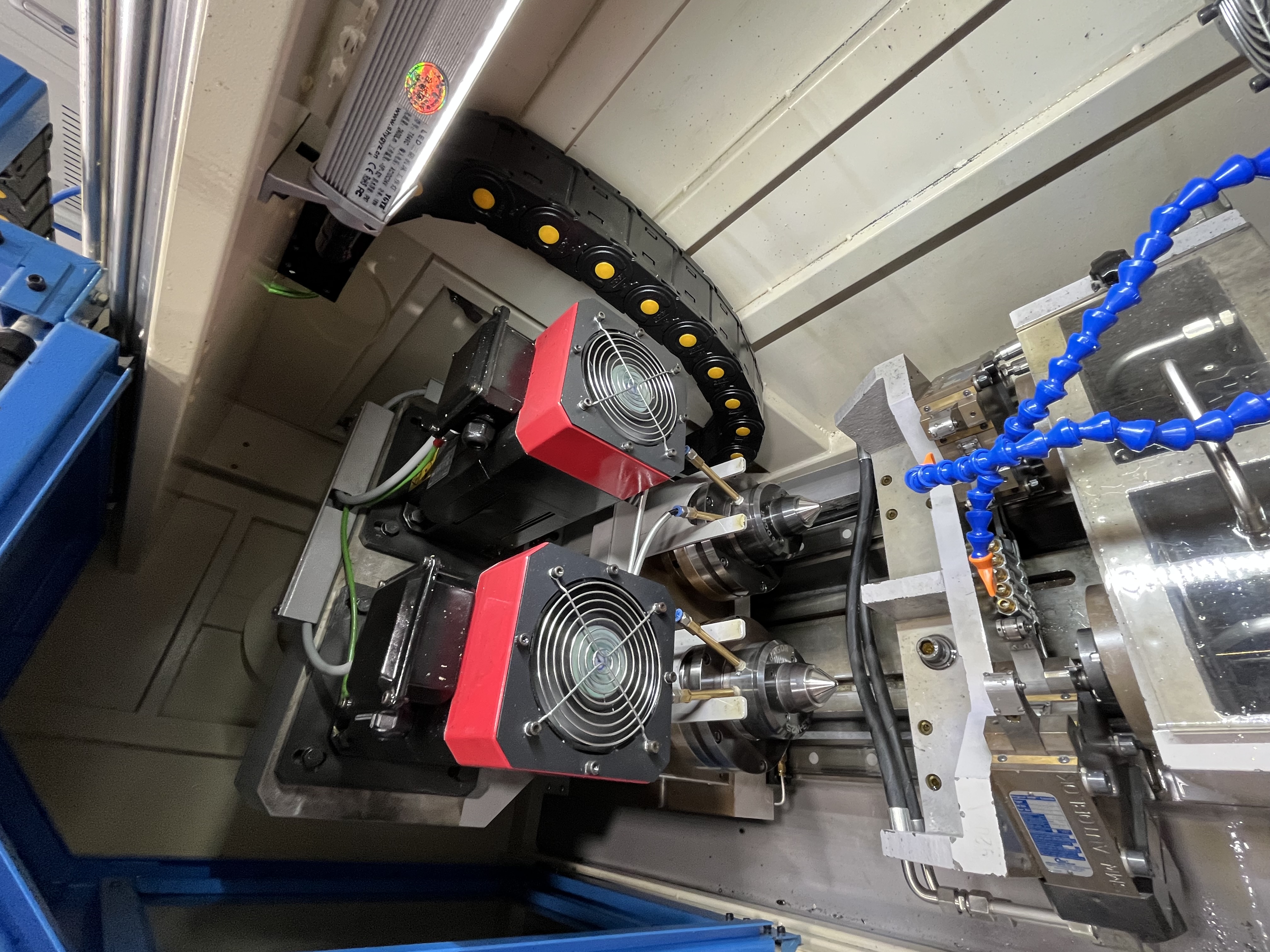
Chip guards are the physical barriers that protect operators from flying chips, high-pressure coolant spray, and rotating parts. On deep hole drilling machines, the guards need to be designed for the specific hazards of the process.
I’ve seen both good and bad guard designs. A well-designed guard keeps the operator safe without interfering with production.
What the Guard Needs to Contain
On a deep hole drilling machine, the guard must contain:
- High-pressure coolant spray. Coolant at 2000 psi can penetrate the skin. The guard must prevent any spray from reaching the operator.
- Hot chips. Chips exit the bore at high temperature and velocity.
- Rotating parts. The drill tube and workpiece are rotating during the cycle.
- Mist. Fine coolant mist is generated during drilling and can be inhaled.
Guard Materials
Chip guards are typically made from:
- Polycarbonate. Clear, impact-resistant, and chemical-resistant. Standard for window panels.
- Steel mesh. Used for areas that don’t need visibility. More durable than polycarbonate.
- Stainless steel. Required for food-grade or medical applications.
Polycarbonate guards need to be thick enough for the pressure involved. For deep hole drilling, I recommend 10mm minimum polycarbonate for the front panels. Thinner panels can flex under pressure and leak.
Here’s a comparison of the common guard materials I’ve worked with:
| Guard Material | Impact Rating | Weight | Coolant Resistance | Visibility | Cost per sq ft |
|---|---|---|---|---|---|
| Steel mesh | 500 J | Heavy | Excellent | Poor (opaque) | $15-25 |
| Polycarbonate (10mm) | 200 J | Light | Good | Excellent (clear) | $40-60 |
| Stainless steel | 600 J | Heavy | Excellent | Poor (opaque) | $60-90 |
| Aluminum mesh | 300 J | Medium | Good | Moderate | $20-35 |
Guard Design
A good guard design:
- Covers the entire work zone
- Has interlocked doors that stop the machine when opened
- Has windows for visibility
- Is easy to clean (coolant mist builds up on the inside)
- Has drain holes at the bottom to prevent coolant accumulation
I’ve seen guards that leaked coolant through gaps at the door edges. The fix was adding brush seals that close the gap when the door is closed.
Door Interlock Maintenance
Door interlock switches are a common failure point. The switches are exposed to coolant mist and chips, which can cause them to fail.
I check door interlock switches weekly. A failed interlock means the machine can run with the door open, which is dangerous.
Pressure Relief
The guard should have a pressure relief feature. If the coolant system fails and pressurizes the enclosure, the relief prevents the guard from bursting.
The relief is usually a spring-loaded panel that opens at a set pressure. I test the relief annually.
Mist Collection
Deep hole drilling generates fine coolant mist. The mist needs to be collected and filtered before the air is returned to the shop. A mist collector is required by safety regulations in most jurisdictions.
I’ve seen shops that didn’t have mist collectors on their machines. The coolant mist created a slippery floor and a respiratory hazard. Adding a mist collector fixed both problems.
Key Takeaways
Chip guards are simple components that are essential for safety. A guard that’s damaged or bypassed is a safety risk. I replace damaged guards immediately and never run a machine with a missing guard.
The most common safety violation I’ve seen in deep hole drilling shops is disabled door interlocks. The interlock is disabled to save cycle time. The seconds saved aren’t worth the risk.