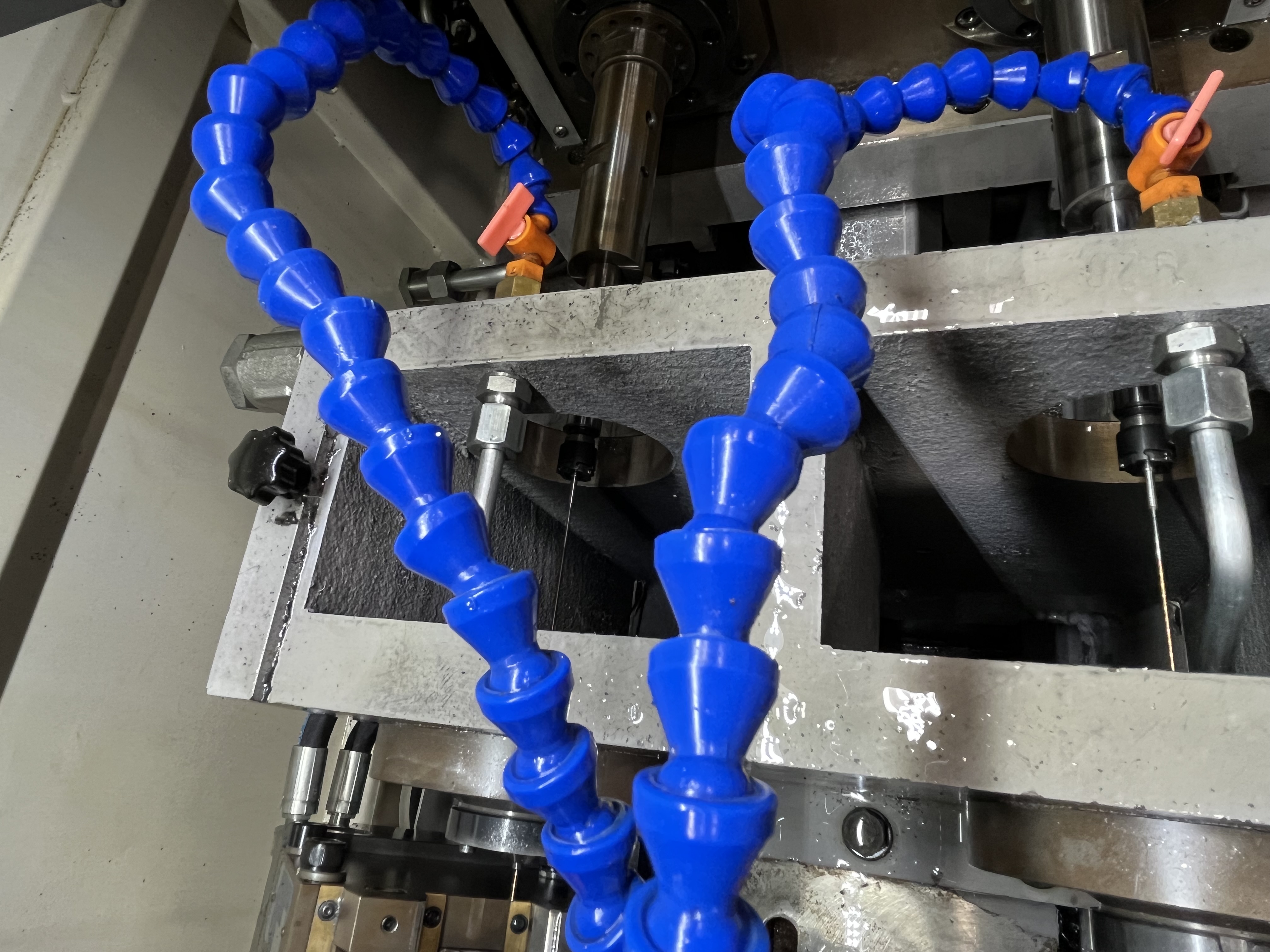
Shops often ask me whether they should use a CNC lathe for gun drilling or buy a dedicated machine. The answer depends on the volume, the hole requirements, and the depth-to-diameter ratio. I’ve used both approaches on hundreds of jobs, and each has its place.
When a CNC Lathe Works
A CNC lathe with live tooling and through-coolant capability can handle shallow gun drilling work up to about 10:1 L/D ratio. The main limitations are coolant pressure — typically 300-500 psi — and the lack of a guide bushing support for the drill entry.
I’ve run successful gun drilling jobs on a Mazak Quick Turn lathe with a high-pressure coolant option. For holes under 150mm depth with diameters above 6mm, the lathe produced acceptable results. The setup time was about an hour, and the parts met spec.
What you need on the lathe:
- Through-coolant tooling that matches the drill diameter
- A sub-spindle or tailstock with a pilot drill bushing (if available)
- High-pressure coolant option (adds $8,000-$15,000 to the machine cost)
- Peck drilling cycles in the control
CNC lathes work best for low-volume work. For runs under 500 parts per year with L/D under 10:1, the lathe is the economical choice. The machine is already in the shop, and the added cost is just the tooling and possibly a coolant system upgrade.
When You Need a Dedicated Machine
A dedicated gun drilling machine costs $150,000-$400,000 new but provides capabilities that a CNC lathe cannot match:
| Capability | CNC Lathe | Dedicated Gun Drill |
|---|---|---|
| Coolant pressure | 300-500 psi | 1500-3000 psi |
| Guide bushing | Not available | Standard |
| Counter-rotation | Not available | Available |
| Max L/D ratio | 10:1 | 200:1+ |
| Surface finish | Ra 1.6 typical | Ra 0.8 typical |
| Hole straightness | 0.01mm per 10mm depth | 0.005mm per 10mm depth |
I’ve found that the biggest difference is in hole straightness. A dedicated machine with a guide bushing produces straighter holes because the drill is supported at entry. On a lathe, the drill enters unsupported and can wander during the first few millimeters.
Cycle Time Comparison
The cycle time difference between a lathe and a dedicated gun drill is significant. I tracked times on a similar job run on both machine types:
| Hole Specs | CNC Lathe Time | Dedicated Gun Drill Time | Savings |
|---|---|---|---|
| 8mm x 80mm (10:1) in 4140 | 4.5 min | 2.0 min | 55% |
| 12mm x 180mm (15:1) in 1045 | 8.0 min | 3.0 min | 62% |
| 6mm x 90mm (15:1) in stainless | 6.5 min | 2.5 min | 61% |
The cycle time savings come from higher feed rates possible with better coolant pressure and the elimination of peck cycles. On a lathe, I’m pecking to clear chips. On a dedicated gun drill, the coolant pressure clears chips continuously.
Cost Breakdown
Here is how the total cost per part compares at different volumes:
| Parts per Year | CNC Lathe Cost/Part | Dedicated Gun Drill Cost/Part |
|---|---|---|
| 100 | $12.50 | $38.00 |
| 500 | $8.20 | $12.50 |
| 1,000 | $6.80 | $7.20 |
| 5,000 | $5.50 | $3.80 |
The numbers include machine amortization, tooling, labor, and overhead. At low volumes, the lathe wins because there is no machine investment to amortize. At high volumes, the dedicated machine wins because the faster cycle time reduces labor cost.
The Used Machine Option
The used machine market is a good option for shops that cannot justify a new machine. I’ve bought and sold several used gun drills over the years. A used machine in good condition costs $40,000-$80,000 — about 25% of the new price.
What I check on a used gun drill:
- Spindle runout (under 0.01mm TIR or budget for a rebuild)
- Coolant pump condition (check pressure at the tool tip)
- Guide bushing holder alignment
- Way wear on the feed axis
- Control condition (older controls can be hard to get parts for)
I’ve seen shops buy a used gun drill for $50,000, spend $15,000 on a spindle rebuild and new seals, and end up with a machine that drills as well as a new one. The total cost of $65,000 is less than half of a new entry-level machine.
Real Examples from My Work
I made this decision twice in the last five years. For a job with 200 parts per year of hydraulic spools at 8:1 L/D, I used the CNC lathe. The parts passed inspection, and the customer never knew the difference. The job would not have justified a dedicated machine purchase.
For another job with 2,000 parts per year of gun barrels at 30:1 L/D, the dedicated machine was necessary. The lathe could not reach the required depth, and the straightness tolerance was 0.05mm over 200mm — impossible without a guide bushing.
Key Takeaways
- A CNC lathe works for L/D ratios under 10:1 and volumes under 500 parts per year
- A dedicated gun drill cuts cycle time by 50-60% on most jobs
- Coolant pressure and guide bushing support are the two capabilities the lathe cannot match
- A used dedicated machine in good condition costs $40,000-$80,000 and bridges the gap well
- The crossover point where a dedicated machine becomes cost-effective is around 1,000 parts per year