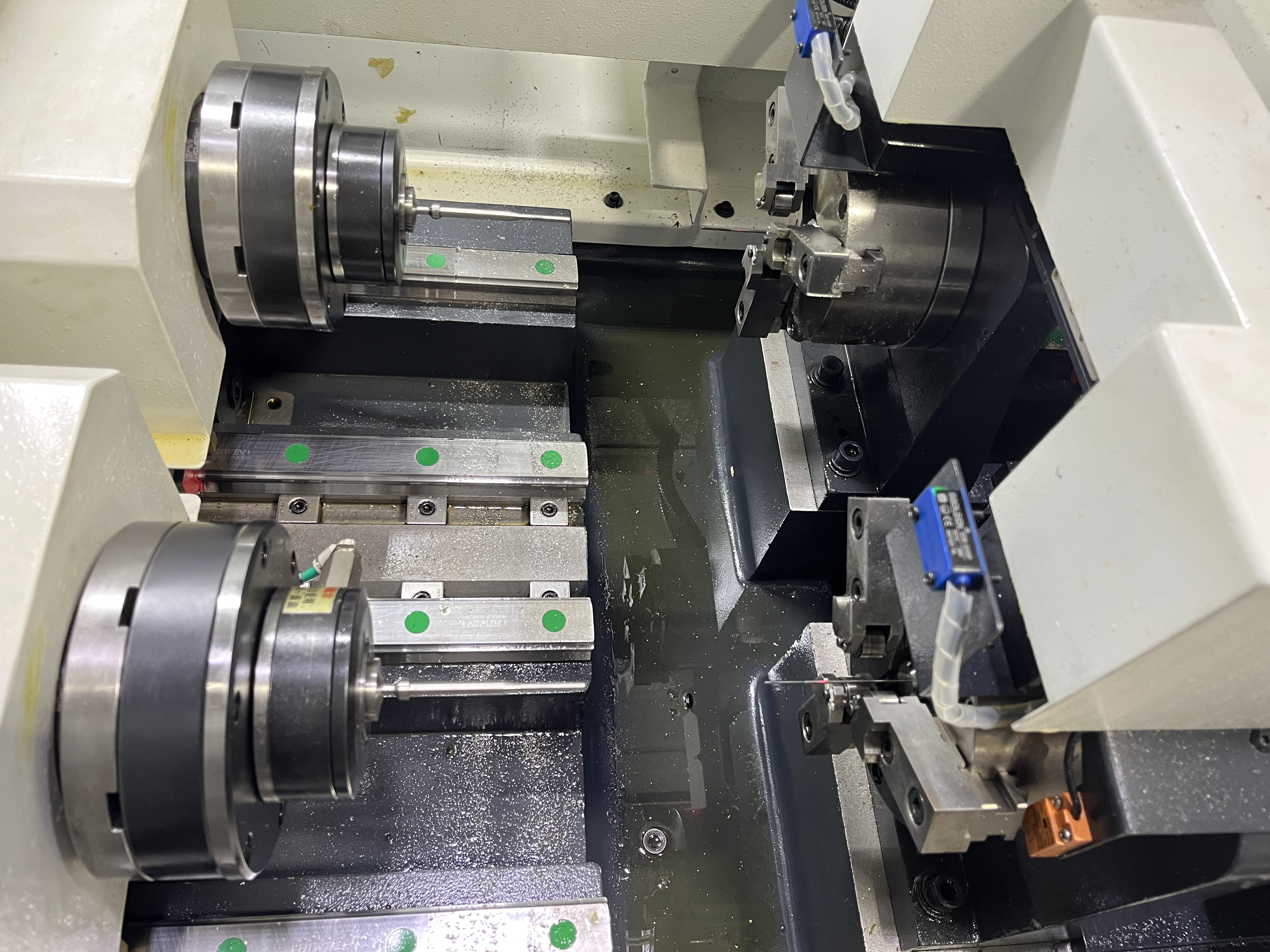
Consumables are the parts that wear out with regular use. Guide bushings, seals, and filters need to be replaced on a schedule. I’ve learned to manage them proactively rather than reactively. A proactive consumables management program costs less than emergency repairs and prevents production downtime.
Guide Bushing Management
Guide bushings wear with use. The wear rate depends on the material being drilled and the number of holes. I have tracked bushing life across multiple materials and compiled the expected life data below.
I track bushing usage by the number of holes drilled. A carbide bushing drilling carbon steel typically lasts 3000-5000 holes. I replace the bushing when it reaches 80% of its expected life.
The bushing ID should be measured at regular intervals. Wear beyond 0.02mm over the initial ID means the bushing needs replacement. I measure with an internal micrometer or a plug gauge that is 0.02mm over the nominal bushing ID — if the plug gauge fits, the bushing is worn out.
Consumables Inventory Table
Here is the full inventory I maintain for consumables on a typical deep hole drilling machine setup. I keep minimum stock levels to avoid production stoppages.
| Consumable | Material | Typical Life | Unit Cost | Min Stock Level | Reorder Point | Lead Time |
|---|---|---|---|---|---|---|
| Guide bushing, carbide (10mm) | Tungsten carbide | 3000-5000 holes | $45-85 | 3 pieces | 2 remaining | 2-4 weeks |
| Guide bushing, steel (10mm) | Hardened steel | 1000-2000 holes | $15-30 | 5 pieces | 3 remaining | 1-2 weeks |
| Rotary union seal kit | Carbon/ceramic | 2000 hours | $120-250 | 2 kits | 1 used | 1-2 weeks |
| Pressure head seal | Polyurethane | 5000 cycles | $35-65 | 4 pieces | 2 remaining | 1 week |
| Coolant filter element (20 micron) | Cellulose/synthetic | 40-80 hours | $8-15 | 10 pieces | 5 remaining | 1 week |
| Coolant filter element (10 micron) | Synthetic | 30-50 hours | $12-20 | 10 pieces | 5 remaining | 1 week |
| Wiper seal, steady rest | Polyurethane | 6 months | $25-40 | 4 pieces | 2 remaining | 1-2 weeks |
| Coolant hose (1/2-inch HP) | Braided stainless | 5 years | $8-12/ft | 10 meters | 5 meters | 1 week |
| O-ring kit (assorted) | Buna-N/Viton | As needed | $30-50 | 1 kit | When used up | 1 week |
| Chip conveyor belt | Steel/rubber | 2-3 years | $400-800 | 1 | When ordered | 4-8 weeks |
I adjust the minimum stock levels based on how quickly I can get replacements. For items with 4+ week lead times, I keep higher stock levels. For items available next-day from local suppliers, I keep minimal stock.
Reorder Point Calculation
I calculate the reorder point for each consumable using a simple formula:
Reorder Point = (Daily Usage x Lead Time in Days) + Safety Stock
For example, a coolant filter element that lasts 40 hours (5 days at one shift) with a 7-day lead time and 5 days of safety stock: Reorder Point = (0.2 elements/day x 7 days) + (0.2 x 5) = 1.4 + 1.0 = 2.4 elements
I round up and set the reorder point at 3 elements remaining. When I have 3 filter elements left in stock, I order more. This ensures the new shipment arrives before I run out.
The safety stock covers delivery delays and unexpected increases in consumption. I set safety stock at 50% of the lead time demand for most items. For critical items like rotary union seals, I use 100% of lead time demand as safety stock.
Seal Replacement
Seals in the rotating union and pressure head wear with time, not just usage. Even a machine that sits idle needs seal replacement every 2-3 years because the elastomer degrades. I have seen seals fail on idle machines because the elastomer dried out and cracked.
I replace seals on a time-based schedule:
| Seal Location | Replacement Interval | Cost per Replacement | Labor Time |
|---|---|---|---|
| Rotating union | Every 2000 operating hours or 2 years | $120-250 | 2-4 hours |
| Pressure head | Every 5000 cycles or 1 year | $35-65 | 1 hour |
| Cylinder seals | Every 4000 operating hours or 3 years | $80-150 | 3-5 hours |
| Coolant hose | Every 5 years | $50-100 per 10 ft | 1 hour |
Filter Maintenance
Coolant filters need regular cleaning or replacement. A clogged filter reduces coolant flow and causes chip evacuation problems. In deep hole drilling, a clogged filter is not just a maintenance issue — it leads to broken drills and scrapped parts.
I check the filter pressure drop weekly. A pressure drop that’s 10 psi higher than the clean filter reading indicates the filter needs cleaning or replacement.
The filter replacement interval depends on the material being drilled. Cast iron produces fine particles that clog filters faster than steel chips. Aluminum also produces fine particles that load filters quickly. I change filters every 30 hours on cast iron, every 40 hours on aluminum, and every 60 hours on steel.
Cost Tracking
I track the cost per hole for consumables and monitor it monthly. Here is the format I use:
| Consumable | Cost per Hole | Annual Cost (10,000 holes) | Trend |
|---|---|---|---|
| Guide bushings | $0.015 | $150 | Stable |
| Seal replacements | $0.008 | $80 | Stable |
| Filter elements | $0.012 | $120 | Stable |
| Coolant (makeup and change) | $0.045 | $450 | Increasing |
| Drill head inserts | $0.085 | $850 | Decreasing |
| Total consumables cost | $0.165 | $1,650 | Stable |
If the cost per hole increases for a specific consumable, I investigate. An increase in bushing cost per hole usually means the alignment is off or the coolant condition has deteriorated. An increase in filter cost might mean the material changed or a new contamination source appeared.
Supplier Evaluation
I evaluate suppliers for each consumable category on these criteria:
| Criterion | Weight | Scoring |
|---|---|---|
| Lead time reliability | 30% | On-time delivery percentage |
| Product quality | 25% | Defect rate, premature failures |
| Price competitiveness | 20% | Comparison to market average |
| Technical support | 15% | Responsiveness to questions |
| Stock availability | 10% | Fill rate on orders |
I score each supplier annually and rotate business based on the scores. This keeps suppliers responsive and gives me backup options if a primary supplier has issues.
For more on related consumables topics, see the lubrication systems guide and the coolant foaming troubleshooting guide.
Key Takeaways
- Consumables management is about preventing problems before they cause downtime or scrap — a proactive replacement schedule costs less than emergency repairs.
- The comprehensive consumables inventory table covers 10 consumable categories with typical life, unit cost, minimum stock levels, reorder points, and lead times.
- Use the reorder point formula: (Daily Usage x Lead Time) + Safety Stock to avoid stockouts while minimizing inventory carrying costs.
- The most important consumable to track is guide bushings — a worn bushing causes drill wandering, poor surface finish, and reduced tool life.
- Track cost per hole monthly for each consumable category — a rising trend indicates an underlying problem that needs investigation.
- Evaluate suppliers annually using weighted criteria: lead time reliability (30%), product quality (25%), price competitiveness (20%), technical support (15%), and stock availability (10%).
- Seal replacement schedules are time-based, not usage-based, because elastomers degrade over time even on idle machines.