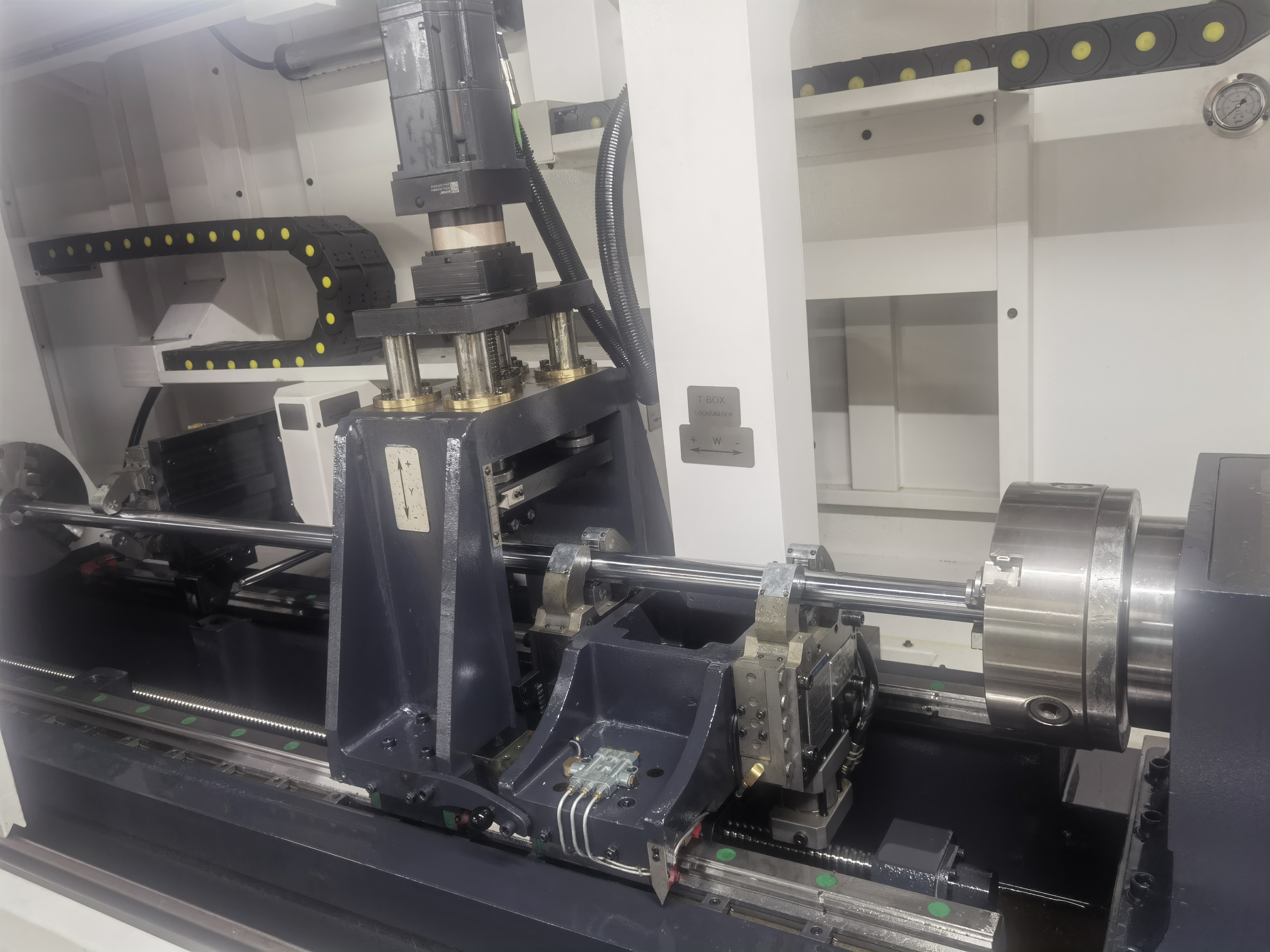
I have seen this pattern more times than I can count. A shop is running 12mm gun drills with no coolant issues. Then they switch to a 6mm job and the pump starts making a rattling noise, the pressure gauge oscillates, and coolant flow becomes erratic.
The diagnosis is almost always the same: the pump is cavitating because the small drill restricts flow more than the pump can tolerate.
Why Small Drills Cause Cavitation
A centrifugal pump needs a minimum flow rate to operate correctly. When the flow drops below this minimum, the pump recirculates fluid internally, heats up, and vapor forms at the impeller inlet. Those vapor bubbles collapse violently — that is the rattling noise you hear.
Small gun drills have proportionally smaller coolant holes. A 12mm gun drill might have a 4mm coolant hole. A 6mm gun drill has a 2mm hole. The cross-sectional area drops by 75%. The pump sees that restriction and flow drops below the minimum.
The way to fix it is counterintuitive: you need to dump some coolant back to the tank to keep the flow through the pump high enough.
How to Diagnose Pump Cavitation
The symptoms are distinctive once you know what to listen for:
| Symptom | What It Sounds Like | Likely Cause |
|---|---|---|
| Rattling from pump area | Gravel in the pump | Cavitation — vapor bubbles collapsing |
| Pressure gauge oscillation | Needle swings 100-300 psi | Flow restriction at drill |
| Surging coolant flow | Flow stops and starts | Pump cycling on/off due to internal recirculation |
| High pitch whine | Steady, not rattling | Pump running dry or air in system |
If the noise changes when you swap to a larger drill and goes away, cavitation due to flow restriction is confirmed.
The Fix: Install a Dump Valve
The solution is a bypass or dump valve — a tee’d line with an adjustable needle valve that returns coolant to the tank. This maintains adequate flow through the pump even when the drill’s coolant holes are small.
           ┌─── Drill line ───→  Spindle / Inducer
Pump ──────┤
           └─── Bypass line ──→  Tank (with needle valve)
The needle valve is adjusted so that enough coolant flows through the bypass to keep the pump in its operating range. The total flow — bypass + drill — keeps the pump happy.
I install a tee at the pump outlet with a needle valve rated for the maximum pump pressure. A simple brass needle valve costs about $50 and takes 30 minutes to install. For automated control, a solenoid valve tied to the spindle start signal can open the bypass only when the drill is cutting.
I also recommend a glycerin-filled pressure gauge. The glycerin dampens needle oscillation from pump pulsation and gives a stable reading. Without it, diagnosing cavitation by gauge reading alone is difficult. I cover gauge selection in Coolant Manifold Design.
Confirming the Fix
After installing the dump valve:
- Set the needle valve to fully open
- Start the pump with a small drill in the cut
- Slowly close the needle valve until the rattling stops
- Check that pressure at the drill is still adequate
- Lock the needle valve at that position
The correct setting is the most open position that still maintains operating pressure at the drill. I have had to open valves only 10-20% on some installations to stop cavitation.
If the rattling continues even with the valve fully open, the pump may have existing damage from cavitation or the inlet filter may be restricted. Check and clean the suction strainer first.
How This Differs for Positive Displacement Pumps
Piston pumps and other positive displacement pumps do not cavitate the same way centrifugal pumps do. Instead, they deadhead — pressure builds until the relief valve opens, then drops, then builds again. This produces a rhythmic thumping sound.
The fix is similar: a bypass valve. But for piston pumps, the bypass is typically set slightly below the relief valve pressure to prevent the relief valve from cycling. I cover piston pump maintenance in Coolant Pump Selection.
Preventing Cavitation Damage
Cavitation is destructive. The collapsing vapor bubbles erode the impeller and pump housing over time. I have pulled apart pumps that ran cavitating for weeks and found the impeller blades worn to half their original thickness.
| Preventive Measure | Cost | Effect |
|---|---|---|
| Dump valve on small-drill machines | $50-200 | Prevents cavitation entirely |
| Suction strainer cleaning schedule | Free | Prevents restriction-induced cavitation |
| Coolant temperature monitoring | $100-500 | Prevents vapor formation from heat |
| Pump VFD with minimum speed | $500-2000 | Maintains pump flow at reduced pressure |
I check suction strainers after every shift on machines that run small diameters. Chips and debris accumulating on the strainer add inlet restriction that promotes cavitation even when the drill is not the cause.
Key Takeaways
- Small gun drills restrict coolant flow and cause centrifugal pumps to cavitate. The symptom is a rattling noise and oscillating pressure.
- The fix is a $50 needle valve installed as a bypass from pump outlet to tank. This maintains adequate pump flow.
- Diagnose by swapping to a larger drill — if the noise stops, cavitation from flow restriction is confirmed.
- Positive displacement pumps surge rather than cavitate, but a bypass valve fixes both.
- Cavitation damages pump impellers over time. Fix it when you first hear it, not after the pump fails.
- Clean suction strainers regularly. Inlet restriction is a common cavitation trigger.