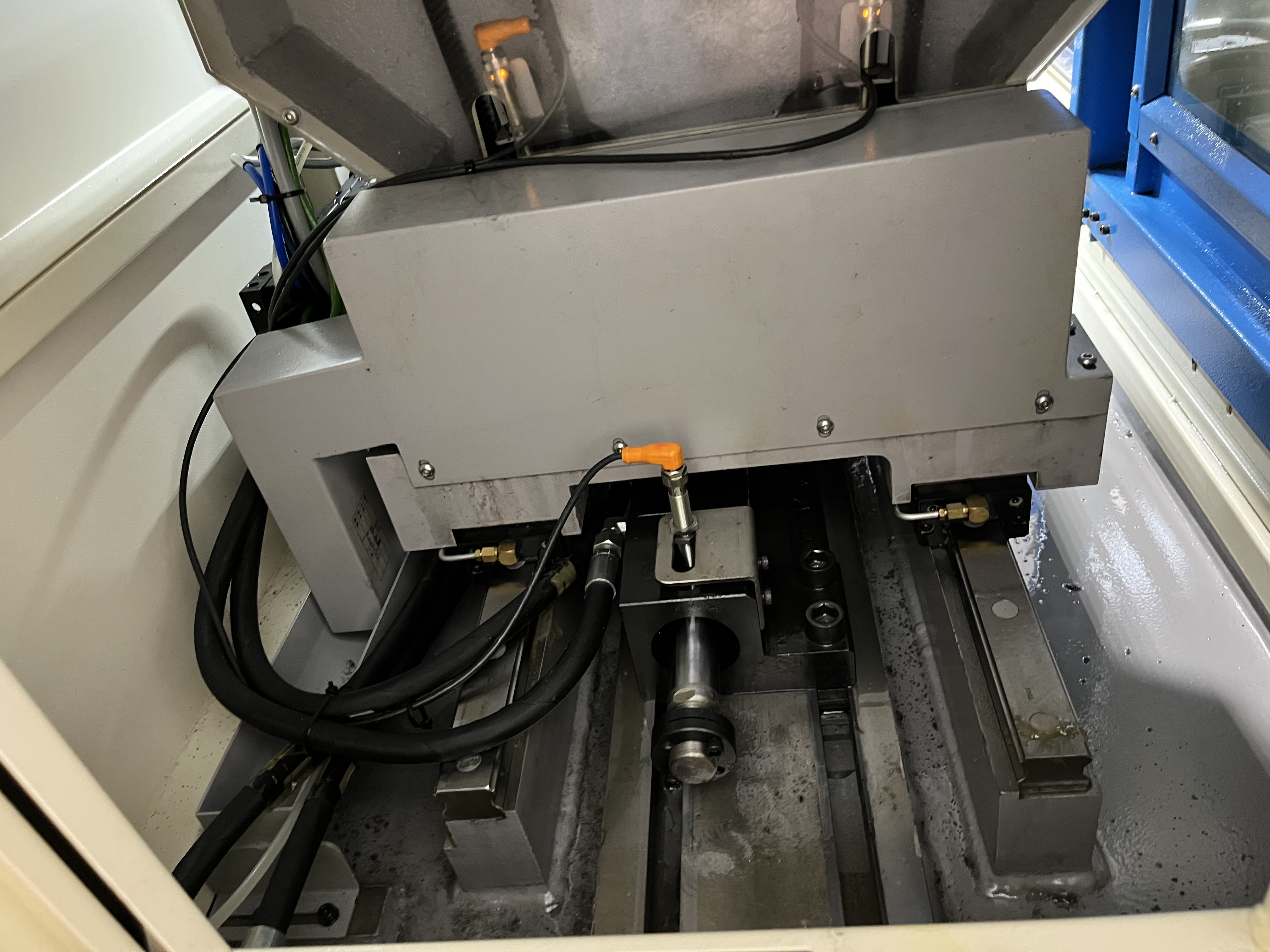
The coolant pump is the heart of any deep hole drilling system, and I have seen more production downtime from pump failures than from spindle issues. The pump must deliver consistent pressure and flow at the tool tip, and the maintenance approach is completely different from the standard sump pump on a CNC lathe.
Pump Selection Criteria
The pressure and flow required depend on the drilling method, tool diameter, and depth. For gun drilling, the rule of thumb I use is 800 to 1,200 psi (55 to 83 bar) for diameters under 20 mm, and 400 to 800 psi (28 to 55 bar) for diameters above 20 mm. BTA drilling typically runs at lower pressure, 200 to 500 psi (14 to 35 bar), but requires two to three times the flow rate.
| Drilling Method | Diameter | Pressure Range | Flow Rate | Pump Type |
|---|---|---|---|---|
| Gun drilling | 3–20 mm | 800–1,500 psi | 10–40 L/min | Piston pump |
| Gun drilling | 20–50 mm | 400–800 psi | 30–80 L/min | Piston or screw pump |
| BTA / STS | 20–80 mm | 200–500 psi | 60–200 L/min | Screw or centrifugal |
| BTA / STS | 80–200 mm | 100–300 psi | 150–600 L/min | Centrifugal |
I made the mistake of underspecifying a pump on a gun drilling machine years ago. The pump delivered 1,200 psi at the outlet but only 700 psi at the tool tip because of pressure losses through the piping and rotating union. I now specify pumps with a 25% margin above the calculated tool tip requirement.
Pump Types for Deep Hole Drilling
Piston Pumps (Axial or Radial)
Piston pumps deliver the high pressures needed for small-diameter gun drilling. Axial piston pumps are the most common. They handle 1,500 to 3,000 psi easily. The downside is that they are sensitive to contamination. A 50 µm particle passing through a piston pump can score the cylinder barrel and cause pressure loss. I run 25 µm absolute filtration on the suction side of all piston pump installations.
| Pump Type | Max Pressure | Max Flow | Efficiency | Relative Cost |
|---|---|---|---|---|
| Axial piston | 3,000 psi | 200 L/min | 85–92% | $$$ |
| Screw pump | 500 psi | 600 L/min | 75–85% | $$ |
| Multistage centrifugal | 300 psi | 1,000 L/min | 60–75% | $ |
| Gear pump | 500 psi | 100 L/min | 70–80% | $ |
Screw Pumps
For BTA applications requiring high flow at moderate pressure, screw pumps (three-screw design) are my preferred choice. They run quieter than piston pumps and tolerate slightly dirtier fluid. The flow is non-pulsating, which helps maintain stable chip evacuation. I use screw pumps on all our BTA machines above 40 mm diameter.
Multistage Centrifugal
These are economical for high-flow, low-pressure applications above 80 mm diameter. The efficiency is lower, but the initial cost is significantly less. I have used multistage centrifugals on roughing operations where surface finish requirements are relaxed.
Maintenance Schedules
Pump maintenance intervals depend on the pump type, operating pressure, and coolant cleanliness. The table below shows the intervals I follow on our fleet.
| Maintenance Task | Piston Pump | Screw Pump | Centrifugal |
|---|---|---|---|
| Seal inspection | Monthly | Monthly | Monthly |
| Oil change | 500 hours | 2,000 hours | N/A |
| Valve plate inspection | 1,000 hours | N/A | N/A |
| Bearing replacement | 4,000 hours | 8,000 hours | 6,000 hours |
| Full rebuild | 6,000 hours | 12,000 hours | 10,000 hours |
| Suction strainer clean | Weekly | Weekly | Weekly |
I had a screw pump run 18,000 hours without a rebuild because the coolant filtration was excellent and the oil temperature stayed below 130°F. The pump on the adjacent machine with poorer filtration needed a rebuild at 9,000 hours. Coolant condition is the biggest variable in pump life.
Variable Frequency Drive Integration
I run all coolant pumps through a VFD rather than across-the-line starting. The VFD provides soft start that reduces mechanical stress on the pump and piping during startup. More importantly, the VFD allows pressure adjustment at the control panel rather than through mechanical bypass valves. I can dial the pressure up or down by 200 psi in seconds to match different tool sizes.
The VFD also enables energy savings. Running a pump at 80% speed reduces power consumption to roughly 50% of full speed power, following the affinity laws. I have measured a 35% reduction in coolant pump energy costs across our fleet after installing VFDs. The payback period was 14 months on average.
| Speed (%) | Flow (%) | Pressure (%) | Power (%) |
|---|---|---|---|
| 100 | 100 | 100 | 100 |
| 90 | 90 | 81 | 73 |
| 80 | 80 | 64 | 51 |
| 70 | 70 | 49 | 34 |
| 60 | 60 | 36 | 22 |
VFD-controlled pumps also reduce pipe erosion and fitting wear because the fluid velocity is lower at reduced speeds. The coolant system piping design should account for the VFD installation by positioning the drive close to the pump motor to keep the motor cable short.
Spare Pump Strategy
I keep a complete spare pump assembly for each pump size in our fleet. The spare includes the pump body, motor, and mechanical seal pre-assembled and tested. When a pump fails, we swap the assembly in two hours and put the failed pump in the repair queue. The alternative is waiting for a rebuild while the machine sits idle.
The cost of a spare pump assembly ranges from $2,000 for a small centrifugal pump to $12,000 for a large piston pump. Compared to a single day of lost production at $2,000 to $8,000 per hour, the spare pays for itself the first time it is used. I started carrying spares after a piston pump failure shut down a machine for 36 hours while we sourced a replacement valve plate.
Common Failure Modes
Cavitation is the number one killer of coolant pumps. It happens when the suction line is restricted or when the coolant temperature rises above 160°F, causing vapor formation at the pump inlet. The symptoms are a rattling noise from the pump area and fluctuating pressure readings. I check suction strainers after every shift on high-production machines.
Seal failure is the second most common issue. The mechanical seal between the pump shaft and housing wears over time. A leaking seal wastes coolant and eventually allows air into the system, which causes pressure loss. I replace mechanical seals proactively at the intervals shown above rather than waiting for a leak.
The coolant system piping design directly affects pump performance. A suction line that is too long or has too many fittings adds inlet restriction that promotes cavitation. I keep suction line length under 3 meters and use sweep elbows instead of 90-degree standard elbows.
Key Takeaways
- Specify pumps with 25% pressure margin above calculated tool tip requirements.
- Piston pumps for gun drilling (high pressure, low flow); screw pumps for BTA (moderate pressure, high flow).
- Pump life is directly proportional to coolant cleanliness and filtration quality.
- Cavitation is the most common failure mode; check suction strainers every shift.
- Proactive seal replacement at scheduled intervals prevents unplanned downtime.
- Suction line design with short, straight runs and sweep elbows prevents cavitation.