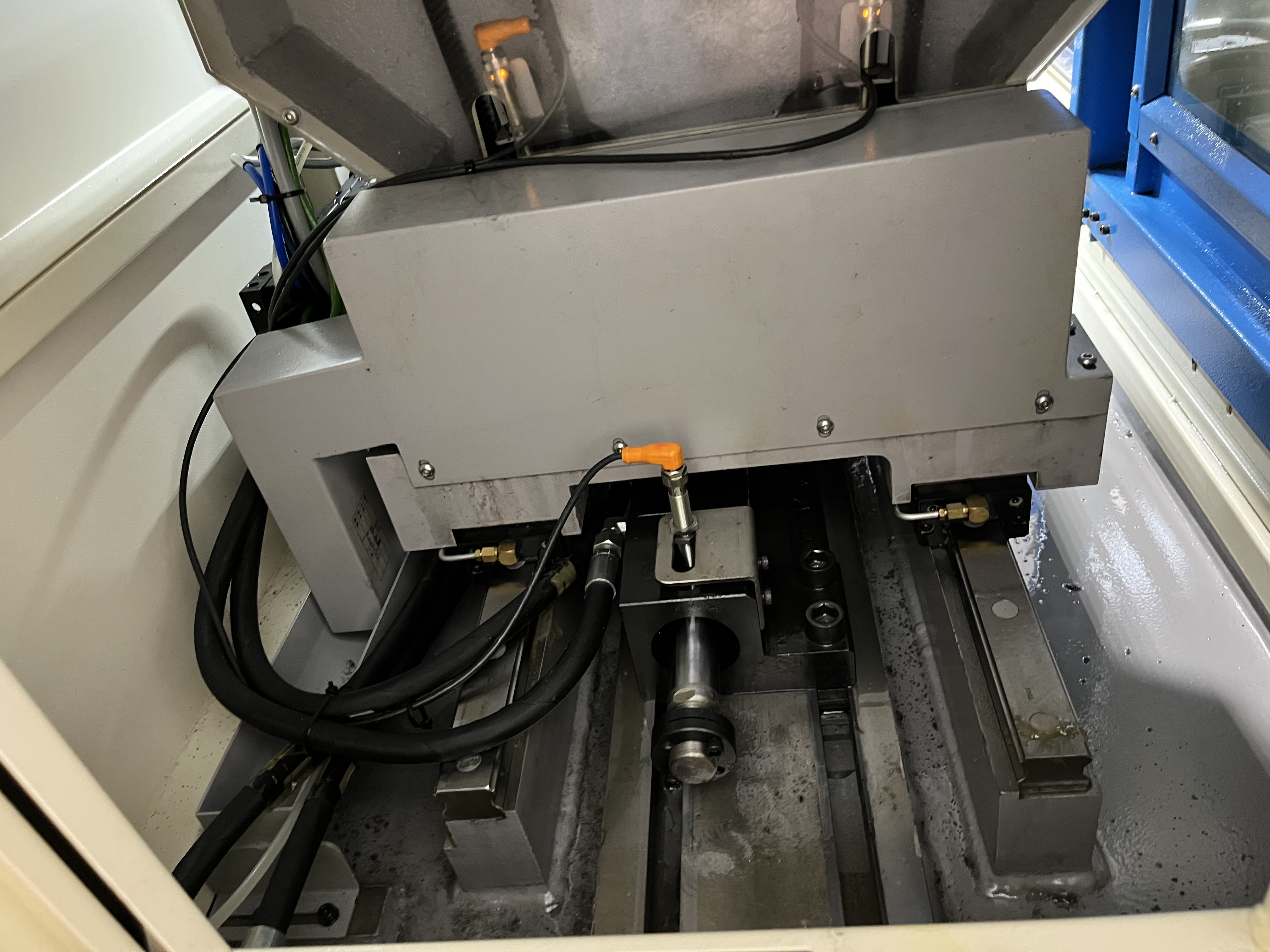
Coolant temperature changes throughout the day affect the bore size more than most operators realize. As the coolant warms up, the machine structure expands and the cutting tool grows from thermal expansion. The result is a bore that gets progressively larger as the machine warms up. I have spent years measuring and managing these thermal effects to maintain consistent bore sizes across multiple shifts.
The Thermal Expansion Effect on Bore Size
The thermal expansion of the machine structure and the cutting tool both contribute to bore size variation. The machine structure expands as it warms up, increasing the distance between the guide bushing and the workpiece. The cutting tool expands as the coolant heats up, increasing the diameter of the drilled hole.
| Component | Material | Coefficient of Thermal Expansion | Temperature Change (morning to afternoon) | Dimensional Change per 100mm |
|---|---|---|---|---|
| Machine column (cast iron) | Gray cast iron | 10 x 10^-6 / deg C | 15 deg C | 0.015 mm |
| Spindle housing (steel) | Carbon steel | 12 x 10^-6 / deg C | 15 deg C | 0.018 mm |
| Gun drill shank (steel) | Tool steel | 12 x 10^-6 / deg C | 15 deg C | 0.018 mm |
| Workpiece (steel) | Carbon steel | 12 x 10^-6 / deg C | 15 deg C | 0.018 mm |
| Total thermal effect on bore | - | - | 15 deg C | 0.069 mm |
I have measured bore diameter changes of 0.02 to 0.05mm between the first part of the day and parts machined after the machine has warmed up. The table above estimates a worst-case total of 0.069mm per 100mm for a 15 degree temperature rise. For tight tolerance work where the print calls for plus or minus 0.025mm, this temperature-driven variation consumes the entire tolerance budget.
The thermal expansion is not uniform across the machine. The spindle side of the machine warms up faster than the tailstock side because the spindle generates more heat. This differential expansion causes the machine to tilt slightly, which affects bore alignment as well as bore size.
Coolant Chiller Selection and Sizing
A coolant chiller is essential for consistent bore size when tolerances are tighter than plus or minus 0.05mm. I set the chiller to maintain the coolant temperature at 25 to 30 degrees Celsius within plus or minus 2 degrees.
| Machine Type | Pump Flow Rate | Heat Generation | Recommended Chiller Capacity | Estimated Cost |
|---|---|---|---|---|
| Small gun drill (under 10mm) | 30 L/min | 3 - 5 kW | 5 - 8 kW | $3,000 - $5,000 |
| Medium gun drill (10-25mm) | 50 L/min | 8 - 12 kW | 10 - 15 kW | $5,000 - $9,000 |
| Large BTA machine (over 25mm) | 150 L/min | 20 - 30 kW | 25 - 35 kW | $10,000 - $18,000 |
| Multiple machine cell | 200+ L/min | 40 - 60 kW | 50 - 75 kW | $18,000 - $30,000 |
The chiller capacity must match the heat generated by the pump and the cutting process. I calculate the heat generation by measuring the temperature rise of the coolant across the pump and the machine. The temperature rise multiplied by the flow rate gives the heat load in kilowatts.
Without a chiller, the coolant temperature can rise by 10 to 15 degrees Celsius during a single shift, causing the bore size to drift. I have measured a steady increase in bore diameter from the first part to the last part of the shift, with the bore growing by 0.003 to 0.005mm per hour as the coolant warmed up.
The chiller should be piped into the coolant system between the filter and the pump suction. This location ensures that the coolant is chilled before it enters the pump and that the chiller does not interfere with the filtration system.
Machine Warm-Up Procedure
I warm up the machine before production to bring it to thermal equilibrium. The warm-up cycle runs the spindle at operating speed with coolant circulating for 30 minutes before any parts are drilled. The warm-up brings the machine structure, spindle bearings, and coolant to a stable temperature.
The warm-up procedure I use has three steps. Step one: start the coolant pump and circulate coolant for 10 minutes. Step two: start the spindle at 500 RPM for 5 minutes, then at 1000 RPM for 5 minutes, then at operating speed for 10 minutes. Step three: make a test pass with a drill but without cutting to confirm the coolant flow and pressure are stable.
After warm-up, I drill a test part and measure the bore diameter. The test part diameter is used as the baseline for the production run. If the first production part is within the print tolerance, the warm-up was sufficient.
I have found that machines that have been idle over a weekend need 45 to 60 minutes of warm-up to reach thermal equilibrium. The machine structure cools down over the weekend and takes longer to stabilize than a machine that was run the previous day.
Production Scheduling for Thermal Stability
For shops without chillers, I schedule tight-tolerance work for the middle of the shift when the machine temperature is most stable. The first hour of production is used for roughing work or setup that does not require tight tolerances.
The temperature stability window is typically from 2 hours after startup to 2 hours before the end of the shift. During this window, the coolant temperature changes by less than 2 degrees Celsius per hour. Outside this window, the temperature changes more rapidly as the machine warms up at the start of the shift and as the coolant loses heat if the machine is idle.
I also schedule the tightest tolerance work for the same time of day on consecutive days. If the best bores were produced at 10 AM on Monday, I run the same job at 10 AM on Tuesday. The consistent thermal conditions produce consistent bore sizes.
Monitoring Coolant Temperature
I monitor the coolant temperature daily as part of the machine inspection. A temperature reading outside the normal range is the first sign of a chiller problem. I check the chiller filters and refrigerant levels if the temperature starts to rise.
The temperature gauge should be located at the pump discharge so it measures the coolant temperature as it enters the machine. I record the temperature reading at the start of each production run and note any trends.
A gradual increase in the baseline temperature over several months indicates the chiller is losing efficiency. The most common causes are clogged chiller filters, low refrigerant charge, or a failing compressor. I service the chiller annually to maintain its performance.
Key Takeaways
- Coolant temperature changes of 15 degrees Celsius cause thermal expansion of the machine and tool totaling 0.069mm per 100mm, which consumes the entire tolerance budget on tight-tolerance work.
- I have measured bore diameter drift of 0.003 to 0.005mm per hour as the coolant warms up during a shift, with total variation of 0.02 to 0.05mm between the first and last parts.
- A coolant chiller maintaining 25 to 30 degrees Celsius within plus or minus 2 degrees eliminates temperature-driven bore variation, with chiller costs ranging from $3,000 for small machines to $18,000 for large BTA machines.
- A 30-minute warm-up procedure — coolant circulation for 10 minutes, spindle ramp-up for 10 minutes, test pass for 10 minutes — brings the machine to thermal equilibrium before production.
- Machines idle over a weekend need 45 to 60 minutes of warm-up to reach thermal stability.
- Without a chiller, schedule tight-tolerance work for the middle of the shift (2 hours after startup to 2 hours before end) when the coolant temperature is most stable, varying by less than 2 degrees per hour.