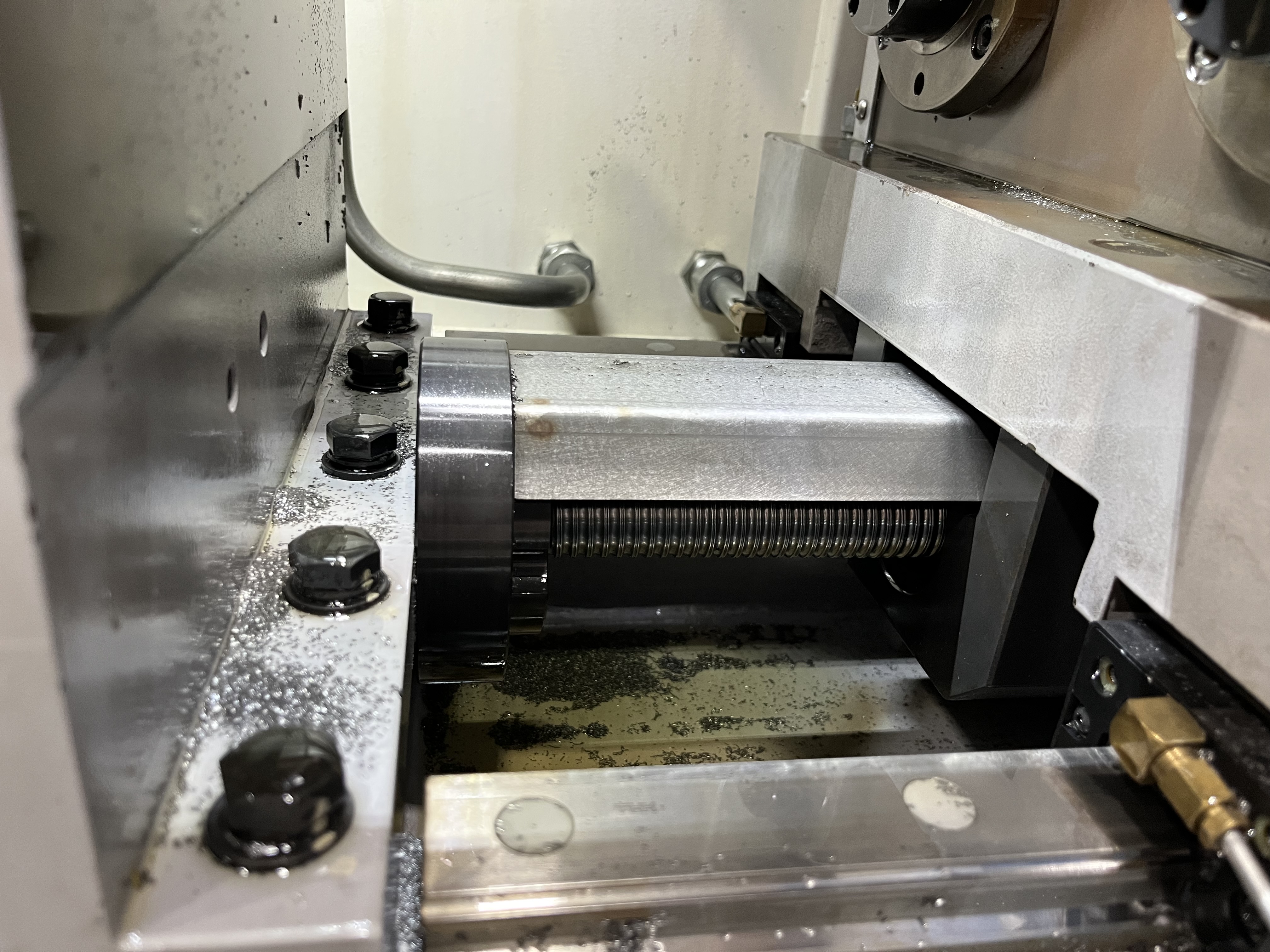
Coolant temperature is one of the most overlooked factors in deep hole drilling accuracy. The coolant flows through the machine and the workpiece, carrying heat away from the cutting zone. But it also carries heat into the machine structure — and that thermal input changes the machine geometry. A machine that started the morning drilling holes on size can drift by 0.03 mm by lunch because the coolant warmed up by five degrees.
I have learned to control coolant temperature through chillers, monitoring, and daily procedures. The results are consistent hole sizes, predictable chip evacuation, and fewer broken tools.
How Coolant Temperature Affects Hole Size and Accuracy
The coolant absorbs heat from the cutting process and carries it through the deep hole drilling machine. The heated coolant flows over the machine bed, through the spindle housing, and back to the tank. Over time, the machine structure warms up and expands. The thermal expansion changes the relative position of the tool and workpiece.
The effect on accuracy in deep hole drilling:
- Spindle height changes. The spindle centerline rises as the spindle housing warms up. A 10-degree Celsius temperature rise can raise the spindle by 0.02-0.05 mm depending on the machine size and casting design.
- Bed alignment changes. The machine bed expands as coolant flows over it. The expansion is rarely uniform, causing the alignment between the spindle axis and the guide bushing to shift.
- Ball screw expansion. The feed axis ball screws expand with temperature, affecting the positioning repeatability. A 500 mm ball screw expands by about 0.06 mm for a 10-degree temperature rise.
- Hole diameter drift. The workpiece itself expands and contracts with coolant temperature. A steel workpiece shifts by 0.011 mm per 100 mm of diameter per 10 degrees of temperature change. Aluminum shifts by 0.023 mm — more than double.
Thermal Expansion Effect on Hole Size by Material
Here is the table I use to estimate how coolant temperature variation affects hole size in deep hole drilling:
| Material | CTE (x10⁻⁶/°C) | Size Change per 10°C on Ø50 mm | Size Change per 10°C on Ø100 mm | Impact on Tolerance |
|---|---|---|---|---|
| Steel (mild) | 12 | ±0.006 mm | ±0.012 mm | Moderate |
| Stainless 304 | 17 | ±0.009 mm | ±0.017 mm | Significant |
| Aluminum 6061 | 23 | ±0.012 mm | ±0.023 mm | Major |
| Titanium 6Al-4V | 9 | ±0.005 mm | ±0.009 mm | Low |
| Cast iron | 10 | ±0.005 mm | ±0.010 mm | Low |
| Inconel 718 | 13 | ±0.007 mm | ±0.013 mm | Moderate |
For aluminum deep hole drilling, a 5-degree coolant temperature swing during the day can change the hole diameter by 0.006 mm on a 50 mm hole. If the tolerance is ±0.025 mm, that temperature swing consumes 24% of the tolerance budget before cutting forces even enter the equation.
Coolant Chiller Selection and Sizing
A coolant chiller maintains the coolant at a set temperature. Without a chiller, the coolant temperature in a deep hole drilling machine rises 10-20 degrees Celsius throughout the day as the machine runs, and the hole size drifts with it.
I set the chiller to 25-30 degrees Celsius for most deep hole drilling operations. This temperature range maintains consistent viscosity and provides stable thermal conditions for the machine structure. The chiller should maintain the setpoint within ±1 degree for precision work.
The chiller sizing depends on the heat load from the cutting process and the coolant pump. I calculate the required cooling capacity using:
Cooling Capacity (kW) = Coolant Flow Rate (L/min) x Temperature Rise (°C) x 0.0698
For a typical medium gun drilling machine with 80 L/min coolant flow and a 5-degree temperature rise from cutting, the required cooling capacity is about 28 kW. I add a 25% safety margin, so I would specify a 35 kW chiller.
Chiller Sizing Guide by Machine Type
| Machine Type | Coolant Flow (L/min) | Typical Heat Load (kW) | Recommended Chiller (kW) | Tank Size (L) |
|---|---|---|---|---|
| Small gun drill (1-6 mm) | 20-40 | 8-15 | 12-20 | 200-400 |
| Medium gun drill (6-25 mm) | 60-100 | 20-35 | 30-45 | 500-800 |
| Large gun drill (25-50 mm) | 100-200 | 35-60 | 50-80 | 800-1500 |
| BTA drilling (25-100 mm) | 150-300 | 50-100 | 70-130 | 1000-2500 |
| Multi-spindle system | 200-500 | 80-150 | 100-200 | 2000-5000 |
An undersized chiller cannot maintain the set temperature during heavy cutting. I have seen chiller outlet temperatures rise by 6-8 degrees when a machine goes from idle to full production cutting. That thermal shock changes the hole size and can scrap the first few parts of a production run.
Temperature Monitoring in Production
I monitor the coolant temperature with a thermocouple in the return line, located as close to the machine return port as possible. The temperature should stay within ±1 degree of the setpoint during steady operation, and within ±2 degrees during heavy cutting cycles.
If the temperature fluctuates more than ±2 degrees, the chiller needs service or is undersized for the heat load. I check the chiller condenser coils, refrigerant level, and pump flow when I see temperature variation outside the acceptable range.
I also track the coolant temperature trend over weeks and months. A gradual upward trend in baseline temperature indicates chiller performance degradation, usually from fouled condenser coils or low refrigerant charge. Catching this early avoids the sudden failure that shuts down production.
Seasonal Temperature Adjustment
I adjust the chiller setpoint seasonally to match the shop ambient temperature. In summer, when the shop runs at 30-35 degrees, I set the chiller to 28 degrees — about 5 degrees below ambient. In winter, when the shop is 18-22 degrees, I set the chiller to 25 degrees.
The goal is to keep the coolant temperature at least 5 degrees below the shop ambient so the machine structure stays thermally stable. When the coolant is warmer than the shop air, the machine bed expands unevenly as coolant flows over it. When the coolant is cooler, the machine bed contracts in the localized areas where coolant flows, causing the spindle axis to tilt.
Thermal Settling Before Production
When the chiller starts in the morning, the coolant temperature drops as the chiller pulls heat out of the system. The temperature drop causes the machine structure to contract. I have seen the spindle height change by 0.03 mm in the first 30 minutes after the chiller starts following a weekend shutdown.
I start the chiller at least one hour before production begins. The deep hole drilling machine needs time to stabilize at the operating temperature. A thermal imaging camera confirms when the machine bed and spindle housing have reached equilibrium — typically 45-60 minutes after the chiller reaches setpoint.
Starting production before thermal stabilization means the first 5-10 parts will be out of tolerance as the machine structure settles. I have seen shops scrap an entire morning setup because they started cutting as soon as the chiller turned on.
Coolant Temperature and Viscosity
Coolant viscosity changes with temperature, and viscosity affects chip evacuation in deep hole drilling. Cold coolant has higher viscosity, which requires more pump power to push through the drill shaft and increases the pressure drop across the system. Hot coolant has lower viscosity, which reduces the chip-carrying capacity of the coolant stream.
The viscosity effect is most noticeable with oil-based coolants and high-concentration emulsions. A 10-degree temperature change can change the viscosity by 20-30%. At the extremes, coolant at 15 degrees is thick enough to cause pump cavitation on cold starts, while coolant at 45 degrees is thin enough that chips settle in the return line instead of flowing with the coolant.
Research from UNITAC on deep hole drilling coolant temperature showed that at 39 degrees Celsius, inner chip formation became unstable, and at 43.7 degrees, longer chips formed that increased the risk of packing. Their recommended target for stable chip evacuation was 27 degrees Celsius. I use a similar target for my high-pressure deep hole drilling systems.
For more on how coolant affects chip evacuation, see the chip management systems article. Also check the machine specs article for how coolant system specs factor into machine selection.
Key Takeaways
- Coolant temperature control is essential for consistent deep hole drilling — a 5-degree swing can consume 24% of a ±0.025 mm tolerance budget on aluminum.
- Maintain coolant temperature within ±1 degree of setpoint for precision work, ±2 degrees maximum for general deep hole drilling.
- Set chiller temperature to 25-30 degrees for most operations — 27 degrees is a proven target for stable chip formation.
- Size the chiller with 25% margin over the calculated heat load — an undersized chiller cannot maintain setpoint during heavy cutting.
- Allow the machine to thermally stabilize for at least one hour after chiller startup before starting production.
- Adjust chiller setpoint seasonally — keep coolant 5 degrees below shop ambient for thermal stability.
- Aluminum is 2x more sensitive to coolant temperature variation than steel due to its higher thermal expansion coefficient.
- Track coolant temperature trends over weeks — a gradual upward baseline signals chiller degradation before failure occurs.