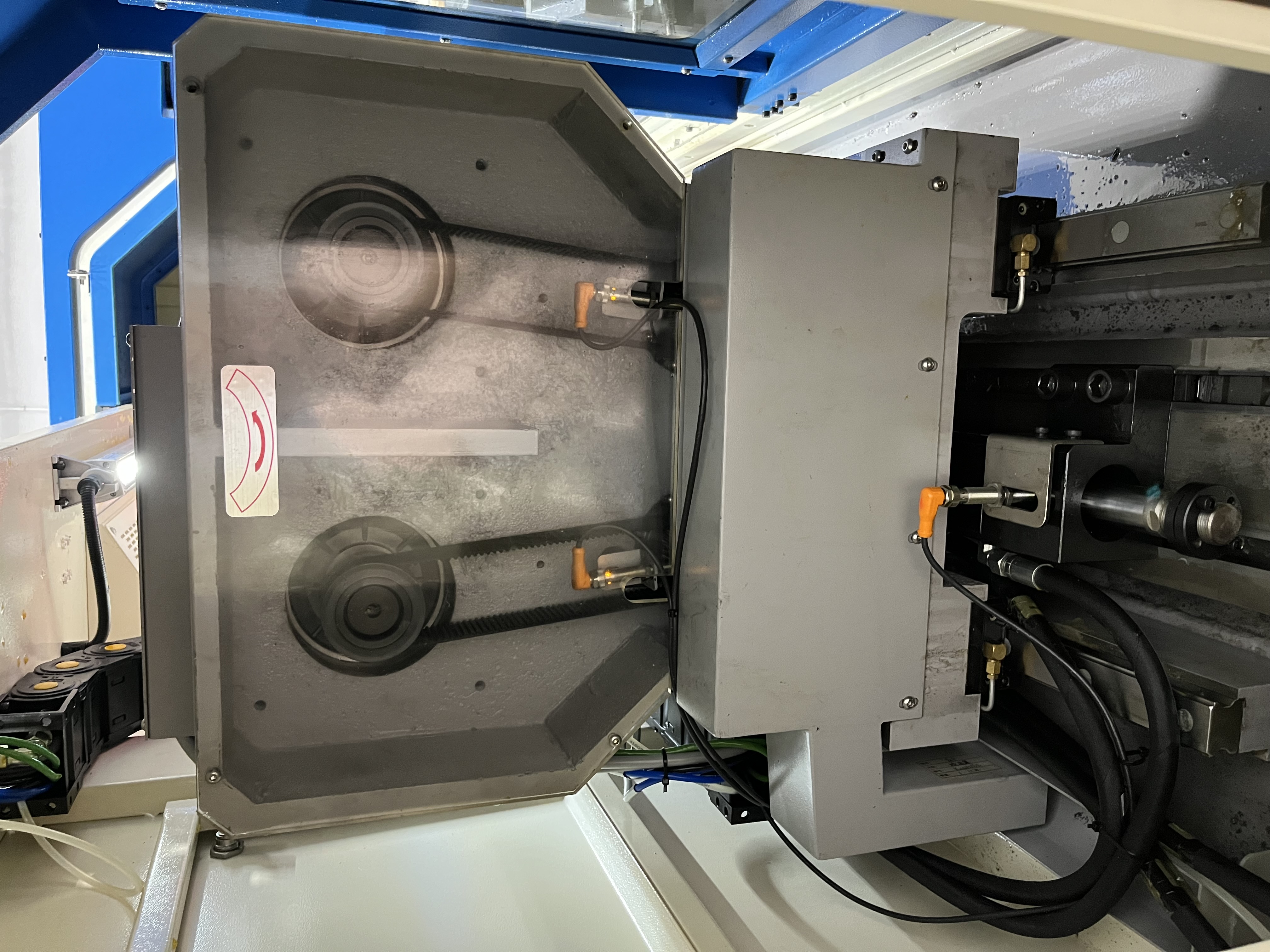
Counter-rotation is the most effective way to drill a straight deep hole. The principle is simple: the tool rotates in one direction and the workpiece rotates in the opposite direction. The relative speed between the tool and workpiece is the sum of both speeds, but the effect on straightness is what matters.
I’ve run jobs with and without counter-rotation, and the difference is measurable. Here’s what I’ve learned.
How Counter-Rotation Works
In conventional deep hole drilling, either the tool rotates while the workpiece is stationary (tool rotation only) or the workpiece rotates while the tool is stationary (workpiece rotation only). Both methods produce a straight hole, but each has limitations.
Counter-rotation combines both. The tool spins in one direction at, say, 3000 RPM, and the workpiece spins in the opposite direction at 100 RPM. The effective cutting speed is 3100 RPM equivalent, but more importantly, the gyroscopic forces from the two opposing rotations cancel each other out.
The result is that the drill tends to stay centered. It doesn’t wander off axis the way it can with single-direction rotation.
Straightness Comparison
Based on jobs I’ve run on the same machine type with different rotation setups:
| Rotation Method | Typical Straightness | Best Application |
|---|---|---|
| Tool rotation only | 0.5-1.5 mm/m | General job shop work |
| Workpiece rotation only | 0.2-0.8 mm/m | Long shafts, axles |
| Counter-rotation | 0.05-0.3 mm/m | Aerospace, precision components |
I’ve measured straightness of 0.08mm per meter on a counter-rotation machine drilling 20mm holes through 1.5 meters of steel. The same job on a tool-rotation-only machine produced 0.3mm per meter.
When Counter-Rotation Matters
Counter-rotation makes the biggest difference on:
Long, small-diameter holes. A 10mm hole through 2 meters of steel at a 200:1 L/D ratio benefits from counter-rotation more than a short hole. The longer the hole, the more the drill tends to wander — and counter-rotation reduces that tendency.
High straightness requirements. If the print calls for straightness under 0.2mm per meter, counter-rotation is the most reliable way to achieve it.
Hard materials. Titanium and stainless steel are more prone to drill wandering than mild steel. Counter-ration helps keep the drill on center in difficult materials.
Thin wall sections. When the wall thickness around the bore is tight, the hole needs to stay centered. Counter-ration reduces the risk of breaking through the side.
When It Doesn’t Matter
Counter-ration doesn’t help much on:
Short holes under 10:1 L/D. The drill doesn’t have enough length to wander significantly.
Machines with excellent alignment. If the machine is perfectly aligned and rigid, the benefits of counter-rotation are smaller.
Large diameter BTA drilling. BTA drills are more rigid than gun drills and less prone to wandering. The straightness improvement from counter-rotation is marginal at large diameters.
Machine Requirements
Counter-ration requires a machine with two synchronized spindles: one to rotate the tool and one to rotate the workpiece. The workpiece spindle (headstock) needs a chuck or fixture to hold the part and a drive system synchronized with the tool spindle.
Not all deep hole drilling machines offer counter-rotation. It’s more common on machines built for aerospace and medical work — UNISIG, TBT, and some high-end Chinese machines offer it. It’s less common on standard job shop machines.
Retrofitting counter-rotation to an existing machine is possible but expensive. The headstock and drive system alone can cost $30,000-$50,000. Most shops that need counter-rotation buy a machine that has it from the start.
Cut Speed
One common mistake I’ve seen is miscalculating the cutting speed on counter-rotation machines. The relative speed between tool and workpiece is the sum of their RPMs, not the average. If the tool spins at 3000 RPM and the workpiece spins at 100 RPM in the opposite direction, the relative speed is 3100 RPM.
I calculate the effective cutting speed based on the combined RPM and set the feed accordingly. If I don’t account for the workpiece rotation, I end up running faster than intended, which reduces tool life.
The Straightest Holes I’ve Drilled
The straightest holes I’ve ever drilled were on a counter-rotation machine with the workpiece rotating at about 80 RPM and the tool at 3500 RPM in the opposite direction. The part was a 12mm diameter oil passage through a 1.8-meter landing gear component. The straightness measured 0.06mm per meter — about the straightest I’ve seen outside of a laboratory.
Coolant Considerations with Counter-Rotation
Counter-rotation adds complexity to the coolant system. The rotating workpiece creates a centrifugal effect that can push coolant away from the cutting zone if the rotation direction is wrong. I check the coolant flow direction relative to the workpiece rotation on every new setup.
The coolant pressure also needs adjustment. With both the tool and workpiece rotating, the effective coolant velocity at the cutting edge changes. I typically increase the coolant pressure by 10-15% on counter-rotation setups compared to tool-rotation-only setups to ensure adequate chip evacuation.
When I Recommend Counter-Rotation
Based on my experience, I recommend counter-rotation for:
- Holes with L/D ratios above 100:1 where straightness is critical
- Aerospace and medical components with straightness requirements under 0.2mm per meter
- Hard materials like titanium and stainless steel where drill wandering is a problem
- Thin-wall sections where the hole must stay centered in a tight wall envelope
For job shop work with moderate straightness requirements, I skip counter-rotation. The added machine cost and setup complexity are not justified when a well-maintained single-rotation machine can meet the spec. For a deeper look at how machine design affects hole quality, see Machine Rigidity and Hole Quality.
Key Takeaways
- Counter-rotation produces straightness of 0.05-0.3 mm/m, better than tool-rotation-only (0.5-1.5 mm/m) or workpiece-rotation-only (0.2-0.8 mm/m).
- The gyroscopic forces from opposing rotations cancel out, keeping the drill centered.
- Counter-rotation matters most for long, small-diameter holes, high straightness requirements, and hard materials.
- It does not help significantly on short holes (under 10:1 L/D), well-aligned machines, or large-diameter BTA work.
- Retrofitting counter-rotation costs $30,000-$50,000 for the headstock and drive system.
- Calculate cutting speed as the sum of tool and workpiece RPM, not the average.