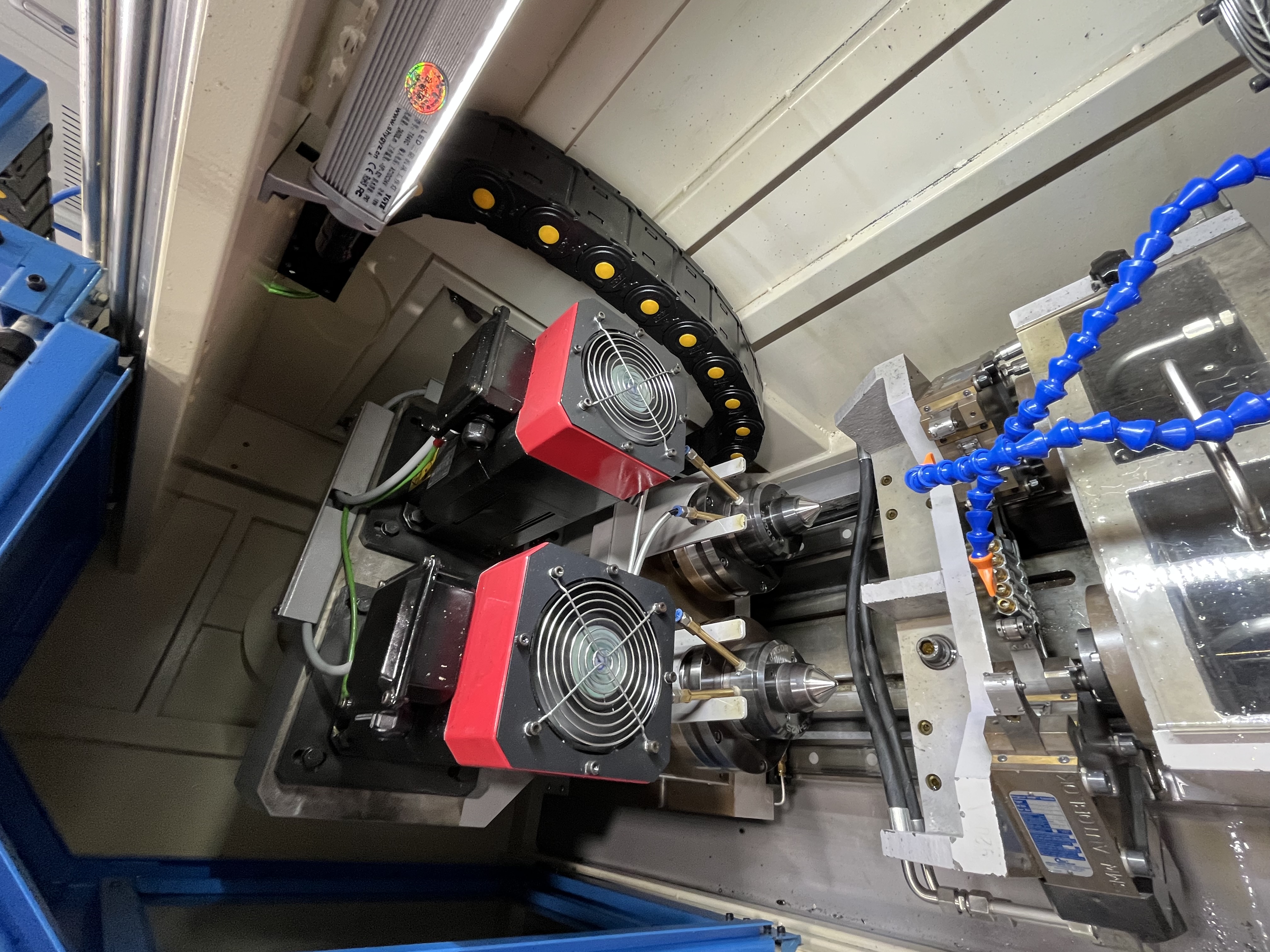
Cross-training operators to run both gun drilling and BTA machines increases shop flexibility. When one operator is out, another can step in without losing production time. In my shop, we run both processes daily, and before I implemented the cross-training program, we had three dedicated gun drill operators and two dedicated BTA operators who could not cover each other. One sick call meant a machine sat idle.
Training Timeline and Structure
The training takes about 2-3 weeks for an operator who already knows one machine type. The trainee learns the differences in tooling, parameters, and troubleshooting between the two processes. I break the training into three phases: observation, supervised operation, and independent operation.
Phase one is three days of observation. The trainee watches an experienced operator run the new machine type. They observe the setup sequence, the parameter selection process, and the troubleshooting response. I give the trainee a checklist of observation points so they know what to look for rather than just watching passively.
Phase two is two weeks of supervised operation. The trainee runs the machine while the experienced operator watches and coaches. I start with the easiest jobs and increase complexity gradually. The trainee signs off on each job type before moving to the next.
Phase three is the final sign-off. The trainee runs a full shift independently while the experienced operator is available by radio but not present. Any issues that come up are the trainee’s responsibility to resolve or escalate. Passing this phase means the operator is qualified on the new machine type.
| Training Phase | Duration | Activities | Sign-Off Criteria |
|---|---|---|---|
| Observation | 3 days | Watch setup, operation, troubleshooting | Complete observation checklist |
| Supervised operation | 10 working days | Run jobs under coach supervision | Successful runs on 3 job types |
| Independent operation | 3 days | Run full shifts alone | No call-for-help incidents |
| Final qualification | 1 day | Skills assessment with supervisor | Pass written and practical test |
Key Differences Between Gun Drilling and BTA
The main differences between gun drilling and BTA machines are tooling setup, coolant delivery, and troubleshooting. Gun drills need guide bushings and high pressure coolant. BTA drills need drill tubes and high flow coolant. An operator who understands these differences can move between machines.
Tooling setup is the biggest difference. A gun drill is a single-piece tool with an integral shank and brazed carbide tip. The operator mounts the drill in the spindle, installs the guide bushing, and sets the coolant pressure. A BTA drill has a separate drill head that screws onto a drill tube. The operator must assemble the head onto the tube, install the tube into the machine’s pressure head, and verify the tube support steady rests are aligned.
Coolant delivery is another major difference. Gun drilling uses high pressure (1000-3000 psi) and low flow (20-80 L/min). The operator sets the pressure regulator and monitors the pressure gauge during the cut. BTA drilling uses low pressure (200-500 psi) and high flow (200-800 L/min). The operator monitors the flow meter to ensure the coolant velocity is adequate for chip evacuation.
| Parameter | Gun Drilling | BTA Drilling |
|---|---|---|
| Coolant pressure | 1000-3000 psi | 200-500 psi |
| Coolant flow | 20-80 L/min | 200-800 L/min |
| Tool type | Single-piece drill | Modular head + drill tube |
| Guide method | Guide bushing near workpiece | Drill tube supported by steady rests |
| Chip exit | Through external V-groove | Through internal drill tube bore |
| Typical surface finish | 32-63 Ra | 63-125 Ra |
| Typical feed rate | 0.01-0.10 mm/rev | 0.05-0.25 mm/rev |
Progressive Job Complexity
I start the cross-training on simple jobs — short holes in mild steel. The trainee runs these under supervision until they are comfortable. Then I move them to more complex jobs with harder materials or tighter tolerances.
The job complexity progression follows a defined path. Level one jobs are in 1018 steel, hole depth under 5x diameter, with tolerance of plus or minus 0.005 inches. Level two jobs are in 4140 alloy steel, hole depth 5-15x diameter, tolerance plus or minus 0.002 inches. Level three jobs are in stainless steel or Inconel, hole depth over 15x diameter, tolerance plus or minus 0.001 inches.
| Complexity Level | Material | Depth Ratio | Tolerance | Example Job |
|---|---|---|---|---|
| Level 1 (entry) | 1018 mild steel | Under 5x diameter | +/- 0.005 in | Drill bushing blank, 100 mm deep |
| Level 2 (intermediate) | 4140 alloy steel | 5-15x diameter | +/- 0.002 in | Hydraulic cylinder tube, 400 mm deep |
| Level 3 (advanced) | 304 stainless steel | 15-30x diameter | +/- 0.001 in | Medical implant component, 600 mm deep |
| Level 4 (expert) | Inconel 718 | Over 30x diameter | +/- 0.0005 in | Aerospace landing gear pin, 900 mm deep |
The trainee must complete three successful runs at each level before advancing. A successful run means the hole meets all dimensional and surface finish requirements, the tool shows no damage, and the cycle time is within 10% of the standard.
Troubleshooting Skills Transfer
The most valuable skill a cross-trained operator develops is troubleshooting. A gun drill and a BTA machine have different failure modes, but the logical troubleshooting process is the same. I teach the operators a systematic approach: identify the symptom, list the possible causes, eliminate causes one at a time, and verify the fix.
For gun drilling, the common problems are chip packing (caused by low coolant pressure or high feed rate), drill walk (caused by incorrect guide bushing size or worn bushings), and surface finish defects (caused by worn drill tip or incorrect speed/feed).
For BTA drilling, the common problems are seal failure at the pressure head (caused by worn seals or misalignment), tube vibration (caused by incorrect steady rest position), and chip blockages in the drill tube (caused by insufficient coolant flow).
| Problem | Gun Drill Cause | BTA Cause |
|---|---|---|
| Poor surface finish | Worn drill tip, wrong speed | Tube vibration, worn head |
| Hole oversize | Worn guide bushing | Worn drill head pads |
| Tool breakage | Chip packing, low pressure | Chip blockage, feed too high |
| Short tool life | Speed too high, coolant wrong | Speed too high, coolant wrong |
| Coolant pressure drop | Worn pump, filter loading | Worn pump, filter loading |
I document the common problems and solutions in a troubleshooting guide that stays on each machine. The guide includes photos of good and bad parts so the operator can compare what they see to the reference.
Skills Matrix Documentation
The training is documented in a skills matrix. Each operator has a record of which machines and processes they are qualified on. The matrix is a spreadsheet that lists every machine and process combination and marks each operator’s qualification status. I update the matrix after each training completion.
The matrix uses three qualification levels: Observer (has completed observation), Operator (has completed supervised and independent operation on Level 1-2 jobs), and Advanced Operator (has completed all levels including Level 3-4). This granularity lets me schedule work assignments based on the job complexity and the operator’s skill level.
I review the skills matrix quarterly and identify gaps in coverage. If I have only one operator qualified on a particular machine-process combination, I prioritize cross-training a second operator. The goal is to have at least two operators qualified for every machine-process combination. Currently I have three cross-trained operators in my shop, and the flexibility has saved us several times when an operator called in sick and another operator stepped in to keep production running.
Key Takeaways
- Cross-training takes 2-3 weeks per operator using a three-phase structure: observation, supervised operation, and independent operation.
- The biggest differences between gun drilling and BTA are tooling setup, coolant delivery parameters, and troubleshooting patterns.
- Use a progressive job complexity system starting with short holes in mild steel and advancing to deep holes in exotic alloys.
- Document troubleshooting guides on each machine with photos of good and bad parts for visual comparison.
- Maintain a skills matrix with three qualification levels and review quarterly to identify coverage gaps.
- Having at least two operators qualified for every machine-process combination eliminates downtime from absenteeism.