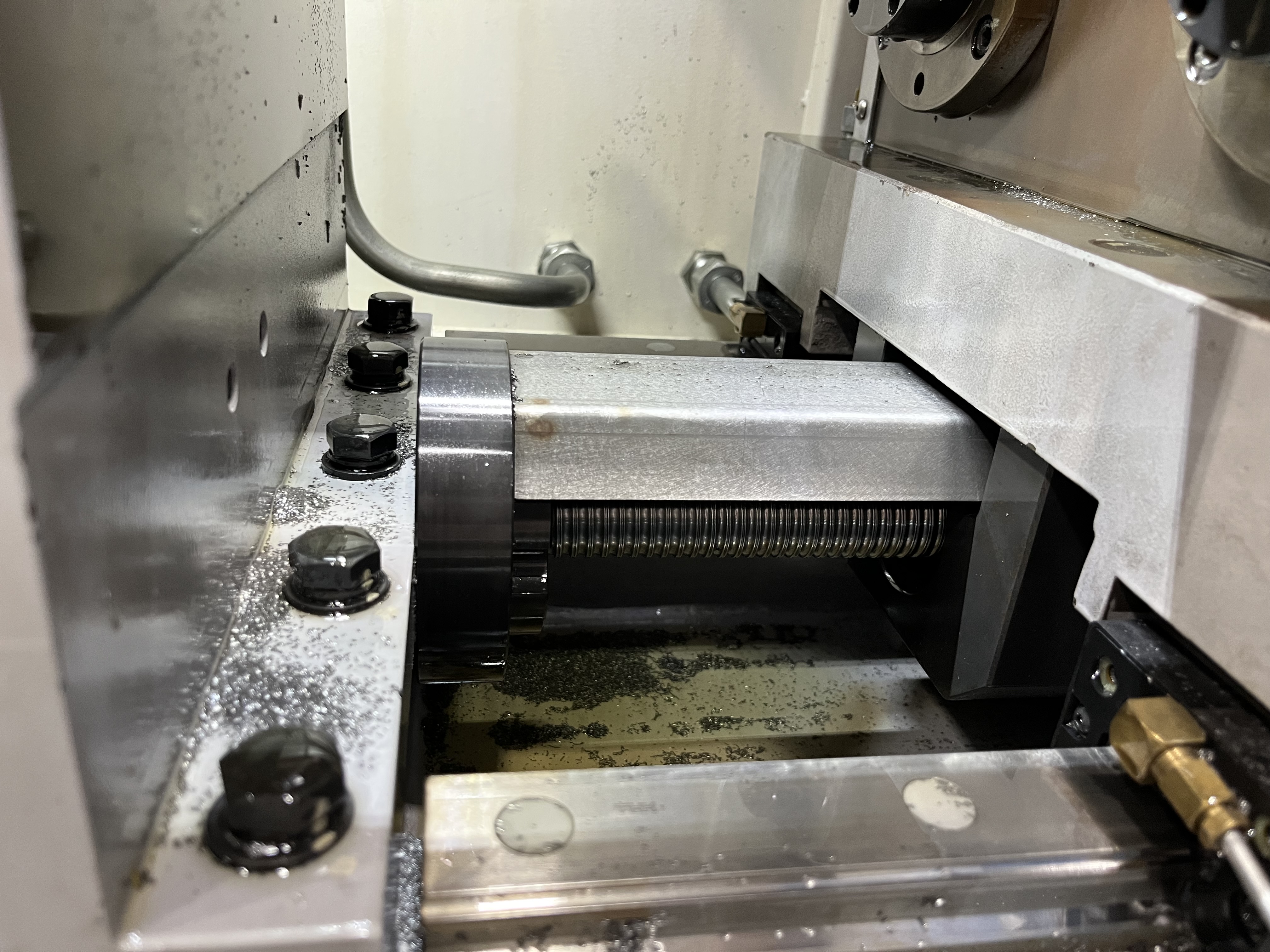
A daily inspection checklist is not paperwork for the sake of paperwork. I have caught three incipient machine failures in the past year during the five-minute walk-around that operators do at the start of each shift. A spindle bearing that was starting to run hot, a coolant leak that would have contaminated the way covers, and a loose gib strip on a box way machine. None would have been caught by the weekly inspection because they were progressing slowly.
The Rationale Behind Daily Checks
Deep hole drilling machines operate under high thrust loads and coolant pressures that accelerate wear on every component. A small coolant drip from a fitting at 1,000 psi can erode a way cover in a month. A loose gib strip causes chatter marks that take the bore out of tolerance. The daily check catches these early enough to fix them during a scheduled break rather than during an emergency shutdown.
| Inspection Item | Time Required | Failure Mode Caught | Cost of Early Detection vs Late |
|---|---|---|---|
| Coolant level sight glass | 30 sec | Pump cavitation, overheating | $50 filter vs $4,000 pump rebuild |
| Way wiper condition | 45 sec | Scored ways from trapped chips | $200 wiper vs $8,000 way grind |
| Spindle nose area | 60 sec | Coolant leak into spindle bearings | $500 seal vs $12,000 spindle rebuild |
| Guide bushing wear | 60 sec | Oversize bore, poor finish | $300 bushing vs $2,000 scrap |
| Hydraulic pressure | 30 sec | Clamping force loss, part movement | $100 adjustment vs $5,000 crash |
| Coolant filter delta-P | 30 sec | Clogged filter, pressure loss | $40 filter vs $800 seal failure |
I have a printed checklist laminated and mounted on each machine. The operator initials each item and notes any observations. The checklist takes five minutes max, and the supervisors review it at shift handoff.
Core Daily Inspection Items
Coolant System
Check the coolant level in the main tank through the sight glass. The level should be between 60% and 80% of the sight glass height. Low coolant causes the pump to draw air, which leads to cavitation and pressure fluctuation. I have seen a pump destroyed in 20 minutes of running with the coolant level 100 mm below the suction pipe inlet.
Check the coolant filter differential pressure gauge. If it reads more than 8 psi above the clean filter baseline, the element needs changing. I train operators to reset the baseline reading after each filter change so the delta-P reading is accurate.
Check for leaks at every fitting, hose connection, and access panel. Look for coolant pooling on the floor or on the way covers. A drips-per-minute leak may not seem urgent, but at 10 drips per minute you lose 3.5 gallons per day and create a slipping hazard.
Machine Ways and Guides
Run the axis through its full travel range manually. Listen for any grinding, popping, or irregular sounds from the way covers and wipers. Watch for chips trapped between the wiper and the way surface. A single chip caught under the wiper can score the way for the entire travel length.
Check the way lubrication oil level and the oil lines at each lubrication point. Each axis should show a small oil bead on the way surface after the lubrication cycle. If the ways look dry, the lubrication pump or distribution block is blocked.
Spindle and Tooling
Listen to the spindle during a warm-up cycle at 500 RPM and at maximum RPM. Any bearing noise that changes with speed indicates wear. I keep a baseline recording of each machine’s spindle sound at idle and compare when something sounds off.
Check the rotating union area for coolant leakage. A slight weep from the union drain is normal on some designs, but a steady drip means the seals are failing. The thru-spindle coolant maintenance article covers the inspection details.
Safety Systems
Verify that the emergency stop buttons function correctly. I test each E-stop at the start of the first shift. The machine should stop all motion within one second. Test the spindle brake if the machine has one.
Check the door interlock switches. The machine should not be able to run a cycle with the doors open. I have seen interlock switches bypassed with tape or zip ties. That is an immediate safety violation.
Check the fire suppression system pressure gauge. The gauge should read in the green zone. If it has dropped since the last check, there is a leak in the suppression system.
Digital vs Paper Checklists
I have used both paper and digital checklists. Paper is simpler and does not break, but the data never gets analyzed. Digital checklists that log to a database allow trend analysis. I can look at the daily coolant level readings and see if a machine is developing a slow leak that would not be visible in a single day.
| Checklist Format | Pros | Cons |
|---|---|---|
| Paper laminated | No power needed, cheap | Data stays on the sheet |
| Spreadsheet on shop PC | Easy data entry, low cost | Requires operator to walk to PC |
| Mobile app / tablet | Data logged, trends visible | Device gets coolant damage |
| Machine HMI integrated | Best data, no extra steps | Requires OEM support or retrofit |
I use a tablet-based system mounted on each machine. The tablet lives in a waterproof case and syncs to the server when the operator completes the checklist. The trend data has paid for the system by catching a gradual way oil consumption increase that indicated a failing lubrication pump.
Coolant Concentration Checks
Coolant concentration is a parameter that changes slowly but has a dramatic effect on the drilling process. I check concentration with a refractometer weekly and record the value. The concentration for semi-synthetic coolants in deep hole drilling should be 8% to 12%. Below 8%, the lubricity drops and tool life decreases. Above 12%, the coolant becomes too viscous and carries chips less effectively.
I have tracked the correlation between coolant concentration and gun drill tool life on our machines. At 6% concentration, average tool life was 450 linear inches. At 10% concentration on the same machine and material, tool life was 720 linear inches. The 60% improvement was worth the weekly refractometer check.
Concentration drift happens gradually as water evaporates from the coolant tank. The evaporation rate is higher in summer when the shop is warmer. I adjust concentration by adding coolant concentrate, not water, unless the concentration is above the target range. The coolant testing kits article covers the measurement procedures.
Shift Handoff Communication
The daily inspection checklist serves as a shift handoff document. The outgoing operator reviews the checklist items with the incoming operator and highlights any observations. I use a three-color system: green for normal, yellow for noted observation (no action needed), red for action required.
A red observation must have a corresponding work order or a note explaining how it was resolved. If the coolant level was low and the operator added coolant, the checklist shows the level reading before and after. If a way wiper was damaged and the machine is scheduled for repair, the checklist has a work order number.
I review the checklist data weekly to identify patterns. A machine that shows “coolant level low” on three consecutive shifts has a leak that needs investigation. A machine with “way wiper damaged” twice in a month has a chip management problem that needs addressing upstream.
Integrating with the Maintenance System
The daily checklist feeds into our weekly and monthly maintenance planning. When an operator checks “way wipers show wear” three days in a row, the system generates a work order for wiper replacement. The electrical system maintenance and other periodic tasks also get triggered from the same system.
Key Takeaways
- A five-minute daily inspection catches failures early, saving thousands in repair costs.
- Critical items: coolant level, filter delta-P, way wipers, spindle noise, E-stop function.
- Digital checklists enable trend analysis that catches slow-developing problems.
- Operators should baseline normal machine sounds and conditions during training.
- Never bypass safety interlock switches, and test E-stops every shift.
- The checklist is a communication tool between shifts, not just a form.