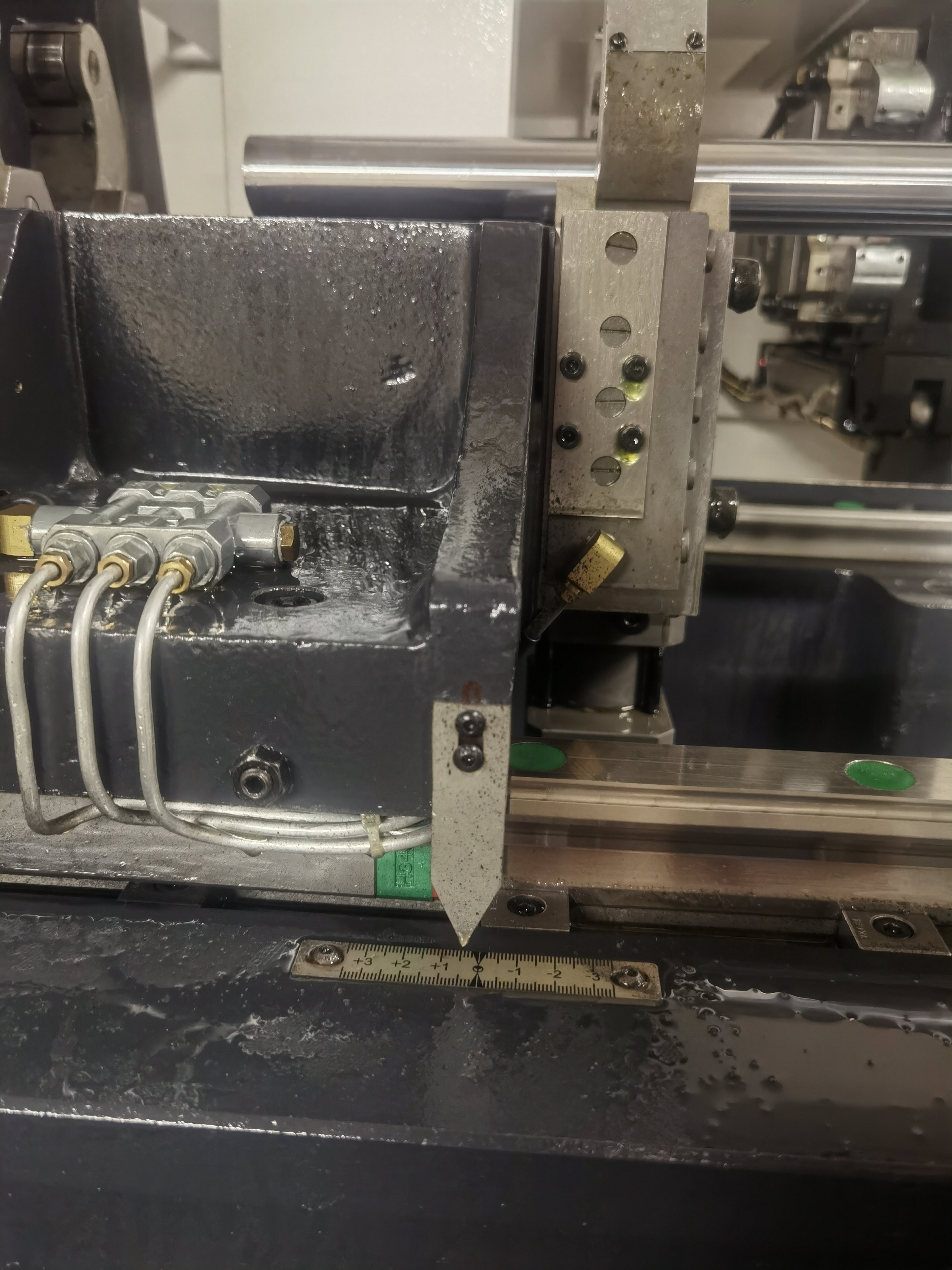
Deep hole drilling machines have specific safety requirements due to the high-pressure coolant, rotating parts, and cutting forces involved. I’ve worked with machines that met modern safety standards and with older machines that had minimal safety features.
Here’s what I’ve seen matter in practice.
The Main Hazards
Deep hole drilling machines present several hazards:
- High-pressure coolant. Coolant at 2000 psi can inject through the skin. This is the most serious hazard specific to deep hole drilling.
- Rotating parts. The spindle, drill tube, and workpiece rotate at high speeds. Entanglement is a risk.
- Chips. Hot, sharp chips with enough force to cause burns and cuts.
- Heavy parts. Workpieces can weigh hundreds of kilograms. Handling them requires proper lifting equipment.
- Noise. Machines running at high RPM and high coolant flow generate significant noise.
Safety Features I Look For
| Feature | Purpose | Required? |
|---|---|---|
| Interlocked doors | Prevent access to the work zone while the machine is running | Yes |
| Coolant pressure relief | Prevents over-pressurization of the coolant system | Yes |
| Emergency stop | Stops all machine motion immediately | Yes |
| Light curtain | Stops the machine if the operator reaches into the work zone | Recommended |
| Chip shield | Protects the operator from flying chips | Yes |
| Coolant splash guard | Contains high-pressure coolant spray | Yes |
| Spindle brake | Stops the spindle quickly after an emergency stop | Recommended |
| Fire suppression | Extinguishes coolant mist fires | Recommended |
The most important safety feature for deep hole drilling is the interlocked door and the coolant pressure monitoring. A machine that runs with the door open is a danger to the operator.
CE Certification
CE certification is required for machines sold in the European Union. It covers safety, health, and environmental protection.
For a deep hole drilling machine, CE certification typically requires:
- Risk assessment documentation
- Safety circuit design meeting EN 13849 (safety of machinery)
- Emergency stop circuits meeting EN 13850
- Guard interlock systems meeting EN 14119
- Noise level testing meeting EN 11202
I’ve seen machines from non-European builders that didn’t meet CE requirements. The main gaps were usually in the safety circuit design and documentation. Adding CE-compliant safety circuits to a machine that wasn’t designed for them is expensive and difficult.
Practical Safety
Beyond compliance, here’s what I do practically to keep operators safe:
- Keep doors closed. The interlock exists for a reason. I don’t bypass it.
- Check coolant hoses. High-pressure hoses wear and can burst. I inspect them regularly.
- Use proper lifting equipment. A heavy workpiece that falls during loading will injure someone.
- Wear PPE. Safety glasses, hearing protection, and coolant-resistant gloves. High-pressure coolant can cause eye injuries.
- Lockout/tagout. Before any maintenance, lock out the machine’s energy sources.
Retrofitting Safety
Older machines often lack modern safety features. Retrofitting them is possible:
- New interlocked doors: $5,000-$15,000
- Light curtain: $2,000-$5,000
- Emergency stop upgrade: $1,000-$3,000
- Coolant splash guard: $2,000-$8,000
- Complete safety system: $15,000-$40,000
The cost of retrofitting safety systems is worthwhile. A preventable accident costs more than any safety system.
Key Takeaways
Safety isn’t just compliance. A machine with good safety features is also a more reliable machine. The same sensors and interlocks that protect the operator also protect the machine from damage.
I’ve seen operators bypass safety interlocks to save time. That’s always a mistake. The seconds saved aren’t worth the risk of a life-altering injury.
Safety Audits
I conduct safety audits on every machine annually. The audit covers:
- Interlock function: every door switch is tested to confirm it stops the machine when opened
- Emergency stop: every E-stop button is tested from each operator position
- Coolant hose condition: high-pressure hoses are inspected for wear and replaced if any damage is found
- Light curtain alignment: light curtains are checked for proper coverage and response
- Fire suppression system: if installed, the system is inspected per the manufacturer’s schedule
The audit findings are documented and any issues are fixed before the machine returns to production. I have found broken interlock switches, worn coolant hoses ready to burst, and light curtains that had been knocked out of alignment during these audits. For more on machine safety during installation, see Machine Installation and Foundation Requirements.
Key Takeaways
- High-pressure coolant at 2000 psi is the most serious hazard specific to deep hole drilling.
- Interlocked doors, coolant pressure relief, and emergency stops are required safety features.
- CE certification requires risk assessment and safety circuits meeting EN 13849, 13850, and 14119.
- Retrofitting safety systems to older machines costs $15,000-$40,000 for a complete system.
- Conduct annual safety audits to catch broken interlocks and worn hoses before they cause accidents.
- Never bypass safety interlocks – the time saved is not worth the risk.