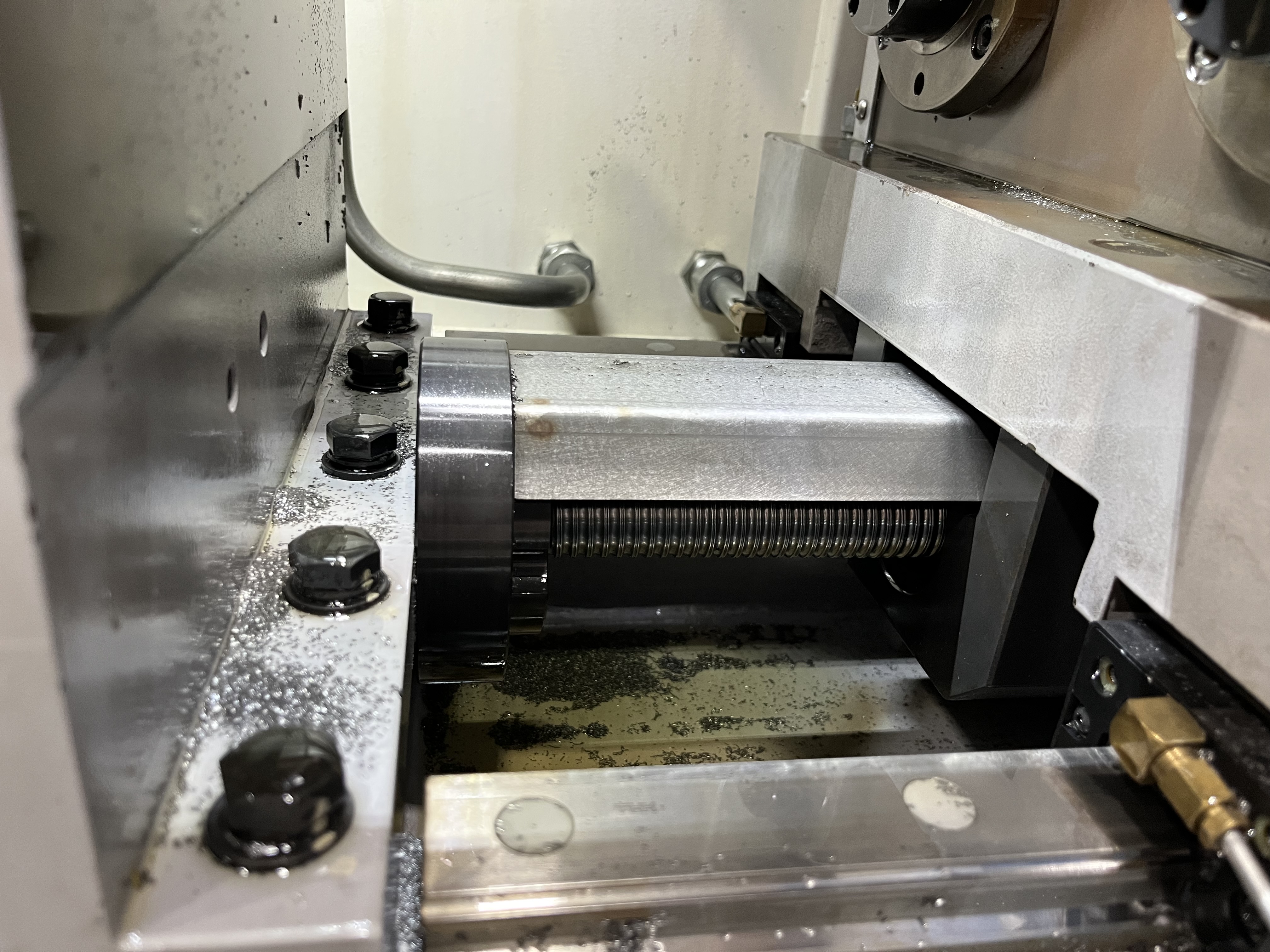
Deep hole drilling machines have specific safety requirements beyond standard machine tools. The high-pressure coolant, fine chip mist, and continuous operation create hazards that need specific safety systems. I’ve dealt with a few safety incidents over the years, and I’ve developed a set of practices that keep machines and operators safe.
Emergency Stop Systems
Every deep hole drilling machine needs emergency stop buttons at multiple locations. The requirements are more extensive than a standard machine tool because of the coolant system and the continuous operation mode.
My minimum e-stop locations:
- At the operator station (primary location)
- At the rear of the machine near the coolant system
- At any secondary loading station
- At the coolant pump control panel
The emergency stop should stop all machine motion within 0.5 seconds, shut off the coolant pump, and disengage the spindle drive. On machines with automated part loading, the e-stop should also stop the loader.
I test emergency stops at the start of every shift. The test takes 30 seconds: press the button, confirm the machine stops, reset, and repeat for each e-stop location. A stuck emergency stop button or a failed contactor can mean the difference between a near-miss and an injury.
I also check that the e-stop circuit fails safe. If a wire breaks in the e-stop circuit, the machine should stop — not keep running. I test this by disconnecting one e-stop at a time during the annual safety inspection.
Coolant Fire Risk
Coolant mist from deep hole drilling is flammable under certain conditions. The fine mist of oil-based coolant can ignite if it contacts a hot surface or spark. The risk is highest with oil-based coolants used in BTA drilling.
The fire triangle conditions that exist in deep hole drilling:
- Fuel. Oil-based coolant mist at a concentration of 50-500 mg/m3 can ignite. A machine running at 2000 psi generates mist levels well within this range.
- Oxygen. Plenty of oxygen in the machine enclosure atmosphere.
- Ignition source. Electrical faults, hot chips, or friction sparks from a drill crash.
I’ve seen two coolant fires in deep hole drilling shops. Both were caused by:
- A build-up of coolant mist in the machine enclosure (the mist extraction system was not working)
- An electrical fault in the coolant level sensor that sparked
- The mist igniting and spreading quickly through the enclosure
Both fires were contained by automatic fire suppression systems. Without the suppression system, both fires could have destroyed the machines and the building.
Fire Suppression Systems
For machines running oil-based coolants, fire suppression is essential. The system should include:
| Component | Function |
|---|---|
| Heat sensors | Detect rapid temperature rise in the machine enclosure |
| Flame detectors | Optical sensors that detect flame within milliseconds |
| Suppression agent | CO2 or dry chemical — CO2 is preferred for electrical equipment |
| Automatic shutoff | Stops coolant pump, spindle, and closes coolant valves |
| Alarm | Audible and visual alarm to alert operators |
I test the fire suppression system monthly. The test involves triggering each sensor individually and confirming the system responds correctly. A system that is not maintained may not work when needed.
The suppression agent needs to be sized for the machine enclosure volume. For a typical gun drilling machine with a 10 cubic meter enclosure, the CO2 requirement is about 40 kg. The cost for a complete system is $3,000-$8,000 depending on the machine size.
Coolant Return Flow Safety
A blocked coolant return is a safety hazard that is specific to deep hole drilling. If the return line is blocked, pressure builds up in the machine enclosure. When the door is opened, the pressurized coolant sprays out at high velocity.
I check that the coolant return is clear before each job. A blocked return is usually caused by chip accumulation in the return line. On machines with long return lines, I install a sight glass so I can see if coolant is flowing freely.
I also install pressure relief vents on the machine enclosure. If the return line blocks and pressure builds, the vent opens before the pressure exceeds the door seal rating. This prevents a coolant blast when the door opens.
Chip Handling Safety
Chips from deep hole drilling come out at high temperature — often 200-300 degrees Celsius at the cutting zone. They can cause burns if they contact the skin. Chip conveyors should be guarded, and the chip discharge point should be inaccessible during operation.
I’ve seen operators burned by chips that accumulated on the machine bed and came out when the door was opened. A chip conveyor that continuously removes chips prevents this. I make sure the conveyor runs a full cycle after each part to clear the bed completely.
For machines that run long cycles (30+ minutes), I check chip buildup periodically through the window. If chips are accumulating faster than the conveyor can remove them, I stop the machine and clear the bed before resuming.
Pressure Relief
High-pressure coolant systems need pressure relief valves. If the pump runs against a closed valve — for example, if the drill blocks and coolant cannot flow — the pressure can exceed the hose rating. A burst hose at 2000 psi is dangerous.
I check the pressure relief valve annually. A stuck relief valve will not protect the system if pressure builds. I replace relief valves every five years regardless of condition.
The relief valve should be set to open at 110% of the system’s rated pressure. For a 2000 psi system, the relief valve opens at 2200 psi. The relief line should discharge back to the coolant tank, not into the work area.
Operator Training
The most important safety practice in deep hole drilling is operator training. I train every operator on the specific safety systems of the machine they are running.
Training covers:
- Location and operation of all emergency stops
- How to identify coolant mist accumulation
- What to do if a fire starts (don’t open the enclosure — hit the e-stop and evacuate)
- How to check coolant return flow
- Safe chip handling procedures
- What to do if a high-pressure hose bursts
A trained operator who knows what to do in an emergency is the best safety device on the machine. I run a safety refresher every six months and after any safety incident.
Key Takeaways
- Emergency stops at multiple locations are required — test them at the start of every shift
- Coolant mist from oil-based coolants is flammable and requires fire suppression on any machine running oil-based coolant
- A blocked coolant return creates a pressure hazard — check it before every job
- Chip conveyors must clear hot chips continuously to prevent burns
- Operator training on specific safety systems is the best safety investment you can make