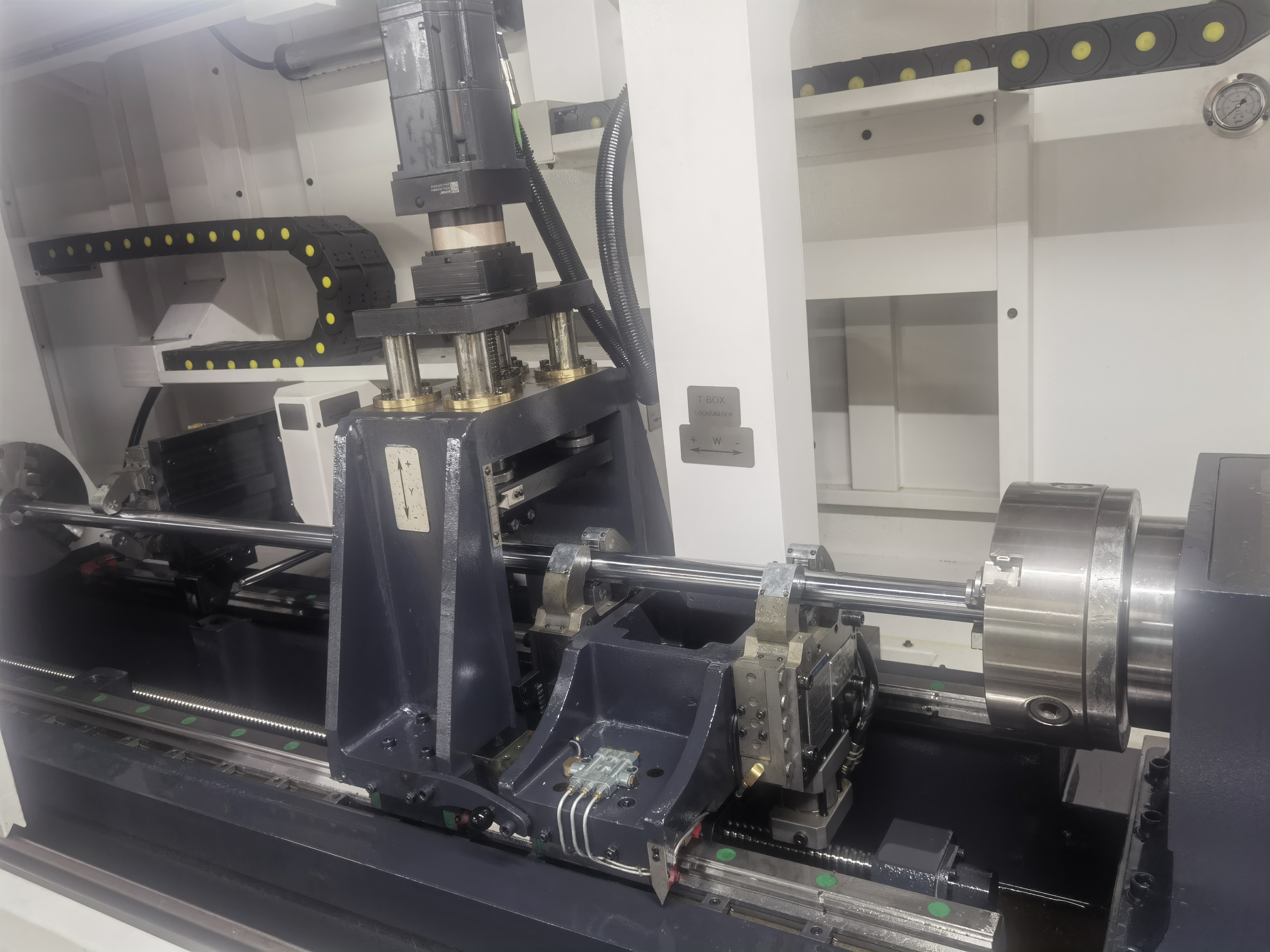
Deep hole drilling machines are not the most energy-intensive machines in a shop, but they use significant power. The main energy consumer is the coolant pump, which runs continuously during the drilling cycle. I’ve found several ways to reduce energy consumption without affecting cycle time or hole quality. I cut my own shop’s energy bill by 18% over two years by implementing the measures described below.
Where the Energy Goes
On a typical deep hole drilling machine, the energy breakdown looks like this:
| Component | Share of Total Energy | Typical Power Draw |
|---|---|---|
| Coolant pump | 60-70% | 10-25 kW |
| Spindle drive | 15-20% | 5-10 kW |
| Feed axis | 5-10% | 1-3 kW |
| Controls and auxiliary | 5-10% | 1-2 kW |
The coolant pump is the biggest energy user by far. A 20-hp pump running at 2000 psi draws about 15 kW of electrical power. Over a 2000-hour operating year, that is 30,000 kWh for the pump alone.
I tracked pump runtime on my machines and found the pump was running 30% longer than actual cut time. The pump ran during part loading, unloading, and idle periods between cycles. That is wasted energy.
Pump Types and Efficiency
The type of coolant pump affects energy consumption significantly. There are two main types used in deep hole drilling:
Centrifugal pumps. These are common on older machines and lower-pressure systems. They are less efficient at the high pressures needed for deep hole drilling. A centrifugal pump running at 2000 psi operates at 50-60% efficiency. The rest of the energy turns into heat that must be removed by the chiller.
Positive displacement pumps. These are more efficient for deep hole drilling applications. A positive displacement pump at the same pressure operates at 75-85% efficiency. The higher efficiency means less energy consumption and less heat load on the chiller.
I’ve seen shops replace centrifugal pumps with positive displacement pumps and reduce energy consumption by 15-20%. The payback period was about 18 months. The pump replacement also reduced coolant temperature because less energy was converted to heat.
Variable Frequency Drives
A variable frequency drive (VFD) on the coolant pump can reduce energy consumption when the machine is not drilling. This is the most effective single energy-saving measure I’ve implemented.
During the drilling cycle, the pump runs at full speed. Between cycles — during part loading and unloading — the pump can run at reduced speed. A VFD reduces the pump speed to 50% during idle times, cutting energy use by 80% during those periods because pump power is proportional to the cube of speed.
A machine with a 15 kW pump running 2000 hours per year might have 600 hours of idle time. Running the pump at 50% speed during idle time saves about 4,500 kWh per year — about $450 at $0.10/kWh.
I’ve seen VFDs pay for themselves in 12-18 months on machines that run multiple shifts. The installation cost is $2,000-$5,000 depending on the pump motor size. The VFD also provides soft-start capability, which reduces mechanical stress on the pump and motor.
Coolant Temperature Optimization
Coolant temperature affects energy consumption more than most people realize. Cold coolant has higher viscosity, which requires more pump power to push through the drill’s internal passages.
The relationship works like this:
| Coolant Temperature | Viscosity (relative) | Pump Power (relative) |
|---|---|---|
| 20 C | 1.0x (baseline) | 1.0x (baseline) |
| 25 C | 0.85x | 0.97x |
| 30 C | 0.72x | 0.95x |
| 35 C | 0.62x | 0.93x |
I set the coolant temperature to 25-30 degrees Celsius. This temperature gives good chip evacuation without excessive pump power. Running at 20 degrees uses about 5% more pump power than running at 30 degrees. Over a year, that 5% adds up to about 1,500 kWh on a large machine.
The coolant temperature also affects the chiller energy consumption. A chiller set to 25 C uses less energy than one set to 20 C because the temperature difference between the coolant and ambient is smaller.
Spindle Power Efficiency
The spindle drive uses less energy than the coolant pump, but efficiency still matters. The spindle motor efficiency varies with speed and load.
I’ve found that running the spindle at 70-80% of maximum rated RPM gives the best power efficiency. Running at very low RPM wastes energy because the drive operates in a less efficient range. Running at maximum RPM improves efficiency but may not be optimal for tool life.
The spindle load also matters. A spindle running at 30% load is less efficient than one running at 70% load. If the machine is oversized for the work — a 20 kW spindle driving a 6mm drill that needs only 2 kW — the drive efficiency is poor.
Idle Time Reduction
The biggest energy waste on deep hole drilling machines is idle time. If the machine is left running between jobs — coolant pump on, spindle idling — it is wasting energy.
I train operators to shut off the coolant pump and reduce spindle speed to zero when the machine will be idle for more than 5 minutes. Over a year, this practice saves significant energy.
I also installed automatic pump shutdown on my machines. If the machine has not started a cycle within 10 minutes of the last cycle end, the controller shuts off the pump. The pump restarts automatically when the next cycle starts.
I’d estimate that automatic pump shutdown saves about $600 per year per machine in electricity on a two-shift operation.
Energy Savings Summary
| Action | Energy Saving | Implementation Cost | Payback |
|---|---|---|---|
| VFD on coolant pump | 15-25% | $2,000-$5,000 | 12-18 months |
| Pump replacement (centrifugal to PD) | 15-20% | $8,000-$15,000 | 18-24 months |
| Reduced idle time | 5-10% | Free (operator training) | Immediate |
| Optimal coolant temperature | 3-5% | Free (adjust chiller setpoint) | Immediate |
| Efficient spindle speed | 2-5% | Free (parameter adjustment) | Immediate |
The easiest energy-saving measure is reducing idle time. It costs nothing to implement and saves 5-10% of energy immediately. The VFD on the coolant pump is the next best investment — it pays for itself within two years on most machines.
Key Takeaways
- The coolant pump accounts for 60-70% of total machine energy use
- Replacing a centrifugal pump with a positive displacement pump saves 15-20% energy
- A VFD on the coolant pump is the most effective single upgrade, with a 12-18 month payback
- Running coolant at 25-30 C instead of 20 C saves 5% pump power
- Training operators to shut off the pump during idle periods costs nothing and saves immediate energy