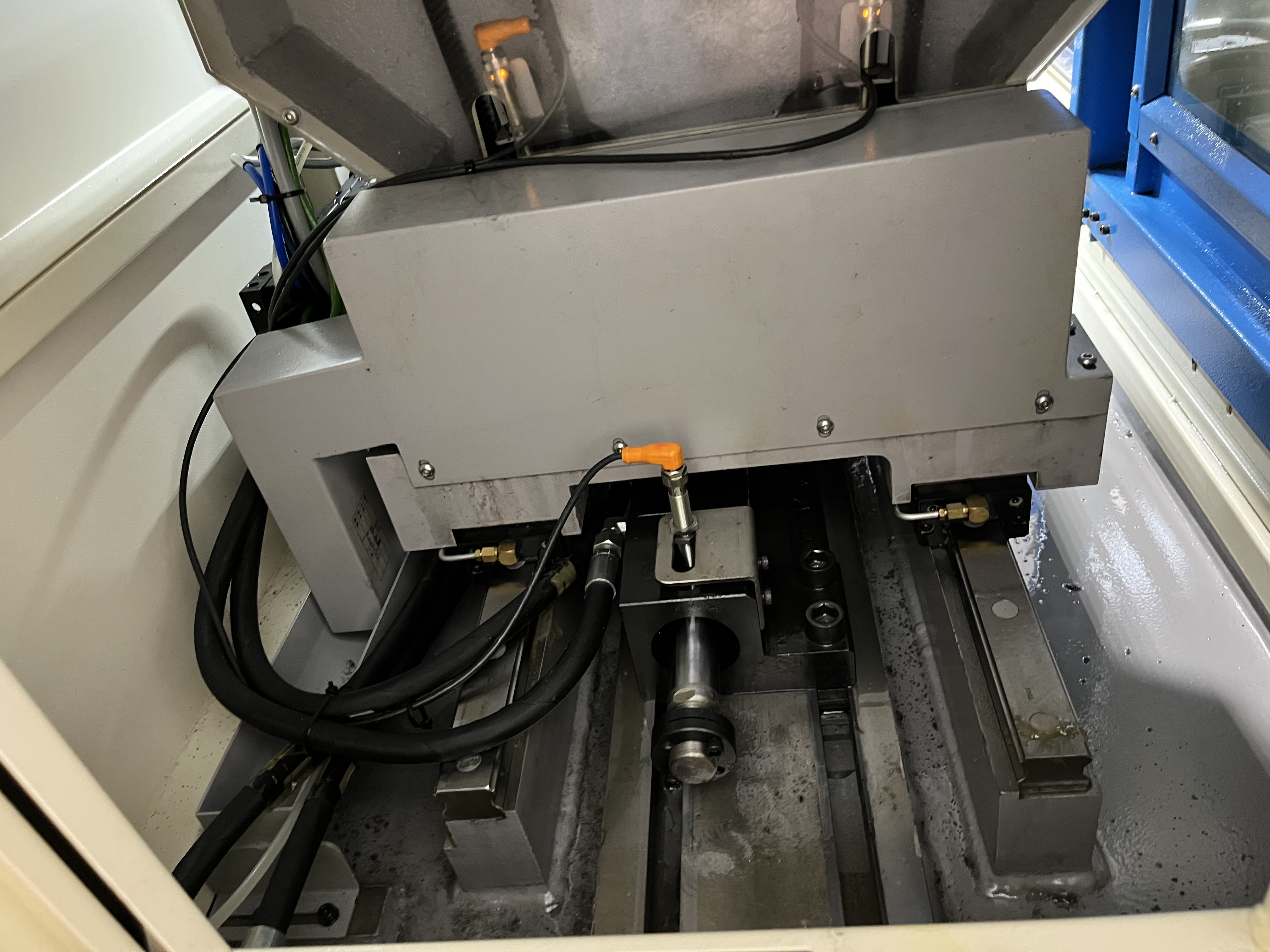
Based on what I have seen at trade shows like IMTS and EMO, in new machine introductions, and in conversations with machine builders, several trends are shaping the future of deep hole drilling technology. The industry is moving toward more automation, better data integration, and higher performance machines. I have been tracking these developments because they affect the decisions shop owners make about equipment investments.
Automation and Lights-Out Manufacturing
Automation is the biggest change in deep hole drilling over the last five years. Robotic part loading and unloading is becoming standard on new machines above a certain price point. I have seen cells that run unattended for hours, loading parts, drilling, checking them with in-process gauges, and sorting them by size.
| Automation Level | Description | Labor Reduction | Investment Range | Typical Payback |
|---|---|---|---|---|
| Level 0 | Manual load/unload | 0% | $0 | N/A |
| Level 1 | Automatic part loader (gantry) | 50% | $30,000 - $60,000 | 12 - 18 months |
| Level 2 | Robot cell with single machine | 70% | $80,000 - $150,000 | 18 - 24 months |
| Level 3 | Robot cell with multiple machines | 80% | $150,000 - $300,000 | 24 - 36 months |
| Level 4 | Full lights-out manufacturing | 90%+ | $300,000+ | 36 - 48 months |
The automation trend is driven by the shortage of skilled operators. I have talked to shop owners who cannot find operators willing to run deep hole drilling machines. Automation solves this problem by reducing the number of operators needed per machine.
Level 1 automation — a simple gantry loader that picks parts from a pallet and places them in the workholding — is the most cost-effective entry point. I have seen gantry loaders pay for themselves in 12 to 18 months on production jobs with cycle times under 5 minutes per part.
Higher levels of automation require more integration and more maintenance skill. I recommend Level 3 or 4 only for shops that have a maintenance team capable of troubleshooting the automation system. The automation uptime is critical — if the robot goes down, the entire cell stops producing.
Digital Monitoring and Predictive Maintenance
Digital monitoring is the second major trend. Modern machines collect data on coolant pressure, spindle load, temperature, vibration, feed force, and cycle times. The data is used to predict tool wear, detect problems before they cause scrap, and optimize the drilling parameters.
I have worked with machines that use spindle load trending to predict when a gun drill needs replacement. The system tracks the baseline spindle load for a new drill and monitors the increase in load as the drill wears. When the load increases by a preset percentage — typically 15 to 20 percent — the system alerts the operator to change the drill.
Machine builders are integrating vibration sensors into the spindle housing and the guide bushing holder. The vibration data is analyzed for frequency patterns that indicate bearing wear, tool chatter, or workpiece resonance. The system can shut down the machine when the vibration exceeds safe limits.
The data from multiple machines is aggregated in a cloud-based platform for comparison across the shop floor. I have seen a dashboard that shows the real-time status of every machine in the shop, including the current job, the cycle time, the tool life remaining, and any alarm conditions.
Higher Pressures and Better Coolant Technology
Coolant technology continues to improve. Higher pressures — 3000 psi and above — are becoming common on new machines. The higher pressure improves chip evacuation in deep holes and allows higher feed rates.
| Coolant Pressure | Maximum L/D Ratio | Typical Feed Rate Improvement | Tool Life Impact | Machine Cost Impact |
|---|---|---|---|---|
| 1000 psi | 30:1 | Baseline | Baseline | Baseline |
| 1500 psi | 50:1 | +15% | +10% | +$5,000 - $10,000 |
| 2000 psi | 80:1 | +25% | +15% | +$10,000 - $20,000 |
| 3000 psi | 120:1 | +35% | +20% | +$20,000 - $40,000 |
I have tested machines with 3000 psi coolant systems and the chip evacuation is dramatically better than 1000 psi systems. The chips come out of the bore as fine particles rather than long strings that clog the chip conveyor. The higher pressure also allows drilling deeper holes without intermediate retraction cycles.
The downside of higher pressure is the increased energy consumption and the higher stress on seals and hoses. A 3000 psi system uses 50 to 70 percent more pump power than a 1000 psi system. The seals on the drill and the coolant system must be rated for the higher pressure, which increases the tooling cost.
Better filtration and temperature control systems are also becoming standard. Machines with integrated chillers and 5-micron filtration produce more consistent results than machines with basic coolant systems. The investment in coolant system technology pays off through longer tool life and fewer scrapped parts.
Machine Design Improvements
The machines themselves are becoming more rigid and more accurate. Spindle designs have improved with better bearing arrangements and thermal compensation. Guide bushing systems are more precise with hydraulic clamping and automatic alignment. Controls are more capable with integrated monitoring and data collection.
Machine builders are using finite element analysis to optimize the machine structure for stiffness and vibration damping. The newer machines have box-section cast iron bases with internal ribbing that provides better vibration damping than older designs. I have compared the surface finish from a 2020s machine with a 1990s machine on the same drilling parameters, and the newer machine produces consistently better surface finish.
Linear guide systems are replacing box ways on some smaller machines. Linear guides have lower friction and allow higher rapid traverse rates. The tradeoff is that linear guides are less resistant to coolant contamination than box ways. For machines that run water-based coolants, box ways are still the preferred choice for long-term reliability.
Shop Floor Integration
I expect to see more integration between the machine control and the shop management system. The machine will report its status, tool life, and production counts automatically to the shop floor system.
The MTConnect standard is becoming the communication protocol of choice for deep hole drilling machines. MTConnect allows the machine control to publish data that any shop system can read without proprietary interfaces. I have implemented MTConnect on several machines and the integration with the shop ERP system was straightforward.
The integration allows the shop scheduler to see real-time machine status and adjust the schedule based on actual production. The tool crib can see which tools need resharpening and prepare the replacements before the machine runs out. I expect the next generation of machines to include standard MTConnect interfaces as a default feature rather than an option, making integration accessible even for small shops.
The ability to track overall equipment effectiveness (OEE) through this data is a benefit I have seen shops leverage to justify new machine purchases. A machine running at 85 percent OEE vs 60 percent OEE makes a strong case for upgrading.
Key Takeaways
- Automation is the dominant trend, with Level 1 gantry loaders paying for themselves in 12 to 18 months on production jobs with sub-5-minute cycle times.
- Digital monitoring systems using spindle load trending predict gun drill wear at 15 to 20 percent load increase above baseline, preventing unplanned tool failures.
- Coolant pressures of 3000 psi improve feed rates by 35 percent and enable L/D ratios of 120:1, but require 50 to 70 percent more pump power than 1000 psi systems.
- Newer machine designs with finite element analysis optimized structures and better vibration damping produce consistently better surface finish than 1990s-era machines.
- MTConnect communication protocol enables direct integration between machine controls and shop management systems for real-time production monitoring.
- I recommend investing in Level 1 automation and digital monitoring as the first steps toward modernizing a deep hole drilling operation, with higher automation levels reserved for shops with dedicated maintenance teams.