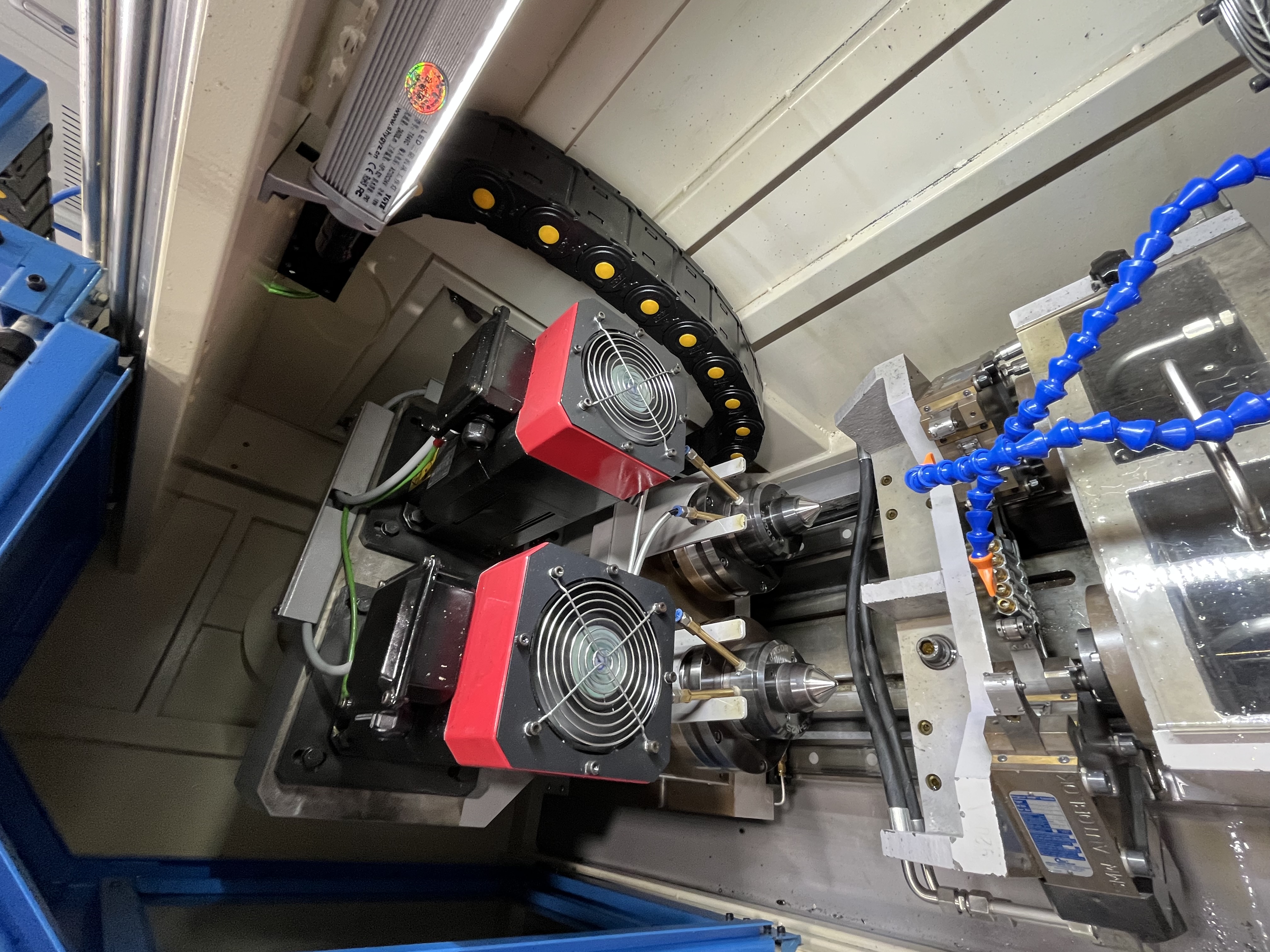
The guide bushing is one of those parts that nobody thinks about until the holes start coming out wrong. It’s a simple component — a precision-ground tube that supports the gun drill at the entry point. But when it’s worn or incorrectly sized, it causes more problems than any other single component I’ve dealt with.
What a Guide Bushing Does
The guide bushing supports the gun drill right where it enters the workpiece. The drill passes through the bushing before contacting the material. The bushing prevents the drill from whipping or wandering during the first few millimeters of engagement.
Without a guide bushing, a gun drill entering a workpiece would deflect off the surface. With a properly fitted bushing, the drill is held in position until it has enough depth to stabilize itself.
The clearance between the drill OD and the bushing ID is typically 0.005-0.015mm total. That’s tight. A bushing that’s worn beyond 0.02mm clearance produces inconsistent results.
Symptoms of a Worn Bushing
I’ve learned to recognize the signs of a worn guide bushing before it causes a problem:
- Inconsistent hole start position. The hole entry point shifts from part to part.
- Drill breakage at entry. The drill catches on the worn edge and snaps.
- Bell-mouthed holes. The entry of the hole is larger than the rest of the bore.
- Poor surface finish at entry. The first few millimeters of the bore show scoring or chatter marks.
- Reduced tool life. The drill wears faster because it’s not entering cleanly.
When I see any of these, the first thing I check is the guide bushing. More often than not, that’s the problem.
Bushing Materials
Guide bushings are made from different materials depending on the application:
| Material | Wear Life | Best For |
|---|---|---|
| Hardened tool steel | Good | General purpose, moderate production |
| Carbide | Excellent | High production, abrasive materials |
| Ceramic | Excellent but brittle | Very high production, non-ferrous materials |
| Bronze | Low | Low-production, soft materials |
I use carbide bushings for production work in steel. They last 5-10 times longer than steel bushings and hold their clearance tighter. The initial cost is higher, but the per-part cost is lower.
Bushing Clearance
The right clearance depends on the drill diameter:
| Drill Diameter | Recommended Clearance (total) |
|---|---|
| Under 3mm | 0.003-0.005mm |
| 3-10mm | 0.005-0.010mm |
| 10-25mm | 0.008-0.015mm |
| 25-50mm | 0.010-0.020mm |
These are total clearance values — the difference between the bushing ID and the drill OD. Tighter clearance gives better support but requires better alignment. Looser clearance is more forgiving but gives less support.
I’ve seen shops run bushings with 0.05mm clearance because they didn’t know better. The holes were wandering by 0.3mm at 100mm depth. Replacing the worn bushings with correctly sized ones fixed the problem overnight.
Bushing Length
The bushing length is typically 2-4 times the drill diameter. A bushing that’s too short doesn’t provide enough support. A bushing that’s too long creates friction that heats the drill.
For a 10mm drill, I use a bushing 25-35mm long. That’s about 2.5-3.5 times the diameter. I’ve found this range gives good support without excessive friction.
When to Replace
I replace guide bushings on a schedule based on the number of holes drilled:
- Steel bushing on steel parts: Replace every 500-1000 holes
- Carbide bushing on steel parts: Replace every 3000-5000 holes
- Carbide bushing on aluminum: Replace every 5000-10000 holes
These numbers are guides, not rules. I check the bushing condition regularly and replace sooner if I see wear.
The cost of a replacement bushing is small — typically $50-$200 depending on material and size. The cost of a scrapped part from a worn bushing is much larger. I’ve learned to be aggressive about bushing replacement.
What I Check During Setup
Every time I set up a gun drilling job, I check:
- The bushing ID matches the drill OD within the recommended clearance
- The bushing is clean — no chips or debris in the bore
- The bushing face is square to the spindle axis
- The bushing is tight in its holder — no movement
These checks take 2 minutes. They’ve saved me hours of troubleshooting when holes start coming out wrong.
Key Takeaways
- The guide bushing is the most overlooked component — worn bushings cause bell-mouthed holes, drill breakage, and poor surface finish
- Clearance between the bushing ID and drill OD should be 0.003-0.020mm depending on drill diameter
- Carbide bushings last 5-10 times longer than steel bushings and are worth the higher cost for production work
- Replace bushings on a schedule: steel bushings every 500-1000 holes, carbide every 3000-5000 holes
- A 2-minute bushing check during setup saves hours of troubleshooting later