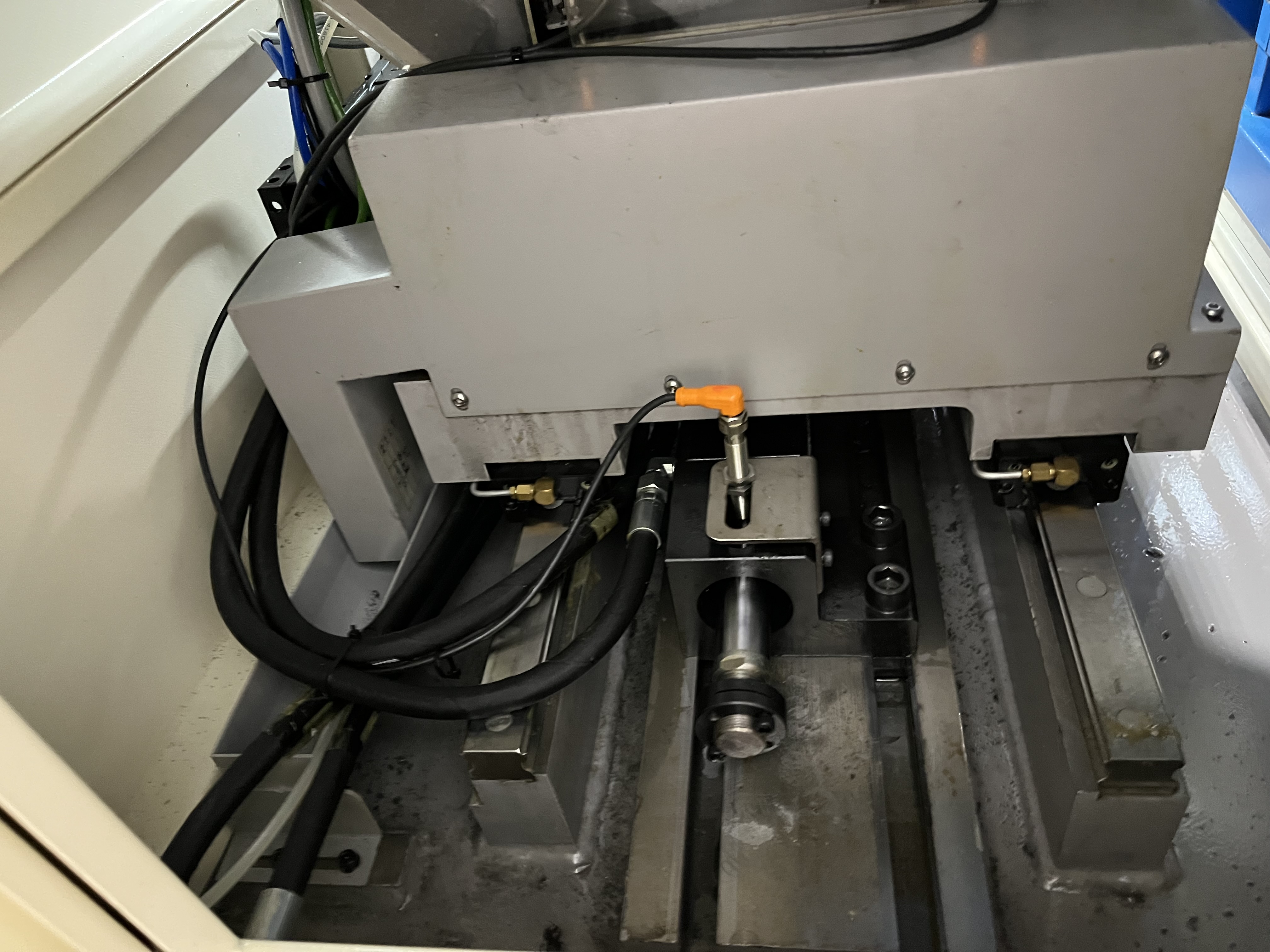
High-pressure coolant seals are the weak link in every deep hole drilling machine. They operate at the boundary between rotating and stationary components, exposed to abrasive coolant, high pressure, and continuous wear. I have seen seal failures cause coolant leaks that damaged spindle bearings, contaminated gearboxes, and flooded machine enclosures. A single seal failure at the wrong time can cost $15,000 in repairs and three days of downtime.
Where Seals Are Used
The primary seal locations in a deep hole drilling machine are the rotating union (coolant inducer), the spindle draw tube connections, the coolant pump shaft seal, and the high-pressure hose fittings. Each location has different operating conditions and requires a different seal type.
| Seal Location | Pressure Range | Speed Range | Coolant Type | Typical Seal Design |
|---|---|---|---|---|
| Rotating union | 500–1,500 psi | 1,000–6,000 RPM | Oil-based or synthetic | Mechanical face seal |
| Pump shaft seal | 200–1,500 psi | 1,750–3,600 RPM | Oil-based or synthetic | Mechanical or lip seal |
| Draw tube connection | 500–1,500 psi | Stationary or slow rotation | Oil-based or synthetic | O-ring or quad ring |
| Hose end fitting | 500–1,500 psi | Stationary | Oil-based or synthetic | O-ring face seal |
| Guide bushing coolant | 200–1,000 psi | Stationary | Oil-based or synthetic | Lip seal or U-cup |
Seal Types and Their Characteristics
Mechanical Face Seals
These are the standard for rotating unions. A rotating face (typically silicon carbide or tungsten carbide) runs against a stationary face (carbon or ceramic) with a thin coolant film providing lubrication and cooling. The seal faces are lapped flat to within 0.0001 mm. Mechanical face seals handle 2,000 psi continuous operation when properly selected.
| Seal Face Material | Hardness | Wear Resistance | Cost | Best For |
|---|---|---|---|---|
| Carbon vs Silicon Carbide | Soft/Hard | Good | $ | General purpose, moderate pressure |
| Silicon Carbide vs Silicon Carbide | Hard/Hard | Excellent | $$ | High pressure, abrasive coolant |
| Tungsten Carbide vs Carbon | Hard/Soft | Excellent | $$$ | High speed, high pressure |
| Diamond-like Carbon (DLC) coated | Very hard | Superior | $$$$ | Extreme conditions, long life |
I run silicon carbide vs silicon carbide face seals on all our high-pressure rotating unions above 800 psi. The seal life is 12 to 18 months compared to 6 to 9 months for carbon vs silicon carbide in the same application. The seal set costs 40% more but lasts twice as long.
Lip Seals and U-Cups
These are elastomeric seals that work at lower pressures, typically under 500 psi. They are common on pump shafts and guide bushings. The sealing lip rides directly on the shaft or bore surface. Lip seals are inexpensive and easy to replace but wear faster than mechanical seals in dirty coolant.
I use polyurethane (TPU) lip seals on our BTA guide bushings. They handle the abrasive chip-laden coolant better than nitrile or Viton. The TPU bush seals last about 300 hours at 400 psi before needing replacement.
O-Rings and Quad Rings
These are static or slow-motion seals used at flange connections and draw tube joints. Quad rings (x-rings) provide better sealing than standard O-rings in dynamic applications because the four-lip design reduces spiral failure.
| Elastomer | Max Temperature | Coolant Compatibility | Relative Cost |
|---|---|---|---|
| Nitrile (Buna-N) | 120°C (250°F) | Good with oil-based | $ |
| Fluoroelastomer (FKM/Viton) | 200°C (400°F) | Excellent with oil-based and synthetic | $$ |
| Perfluoroelastomer (FFKM) | 315°C (600°F) | Universal chemical resistance | $$$$ |
| Polyurethane (TPU) | 80°C (175°F) | Excellent abrasion resistance | $$ |
| Ethylene Propylene (EPDM) | 150°C (300°F) | Not for oil-based, good for synthetics | $ |
I had a coolant system that was eating O-rings every three weeks. The coolant was a semi-synthetic with a pH of 9.5. The standard Buna-N O-rings were swelling and extruding. I switched to EPDM and the O-rings lasted 18 months.
Seal Failure Modes
Wear
Abrasive particles in the coolant wear the seal faces or lips. The wear rate depends on the particle size and concentration. With 20 µm filtration, a mechanical face seal in a rotating union should last 12 months. With 50 µm filtration, the same seal may fail in 4 months.
Extrusion
Elastomeric seals fail when the gap between the mating parts exceeds the seal’s ability to bridge it. The seal material extrudes into the gap and tears. Back-up rings or anti-extrusion rings prevent this. I always specify back-up rings on any O-ring seal above 500 psi.
Heat
Friction generates heat at the seal interface. If the coolant flow across the seal face is insufficient, the temperature rises and the seal fails. A mechanical face seal requires a minimum of 2 L/min of coolant flow across the face for cooling.
I monitored the temperature of a rotating union with a thermocouple taped to the housing. The temperature rose from 90°F to 185°F over two hours during a heavy drilling cycle. The high-temperature alarm saved the seal before it failed. The cause was a partially clogged coolant line that reduced flow across the seal face.
Installation Best Practices
Cleanliness during seal installation determines the service life. A single particle of contamination caught between the seal faces creates a leak path that never heals. I use lint-free wipes, clean gloves, and a clean work surface for every seal installation.
Lubricate the seal during installation. The lubricant should be compatible with both the seal material and the coolant. For O-rings, I use a thin film of the system coolant rather than petroleum-based grease, which can swell some elastomers.
Check the shaft surface finish before installing a lip seal. Lip seals require a shaft finish of 0.2 to 0.4 µm Ra. A rough shaft will wear the seal rapidly. A polished shaft may not retain the lubricating film. I have rejected rebuilt pump shafts because the shaft surface was too smooth.
Key Takeaways
- Mechanical face seals with silicon carbide faces provide the longest life for high-pressure rotating unions.
- Seal material must match the coolant chemistry; Buna-N fails quickly in high-pH synthetic coolant.
- Filtration quality directly affects seal life; 20 µm filtration doubles seal life over 50 µm.
- Back-up rings are required for O-ring seals above 500 psi to prevent extrusion.
- Clean installation practices are critical for seal service life.
- Monitor rotating union housing temperature as an early indicator of seal distress.