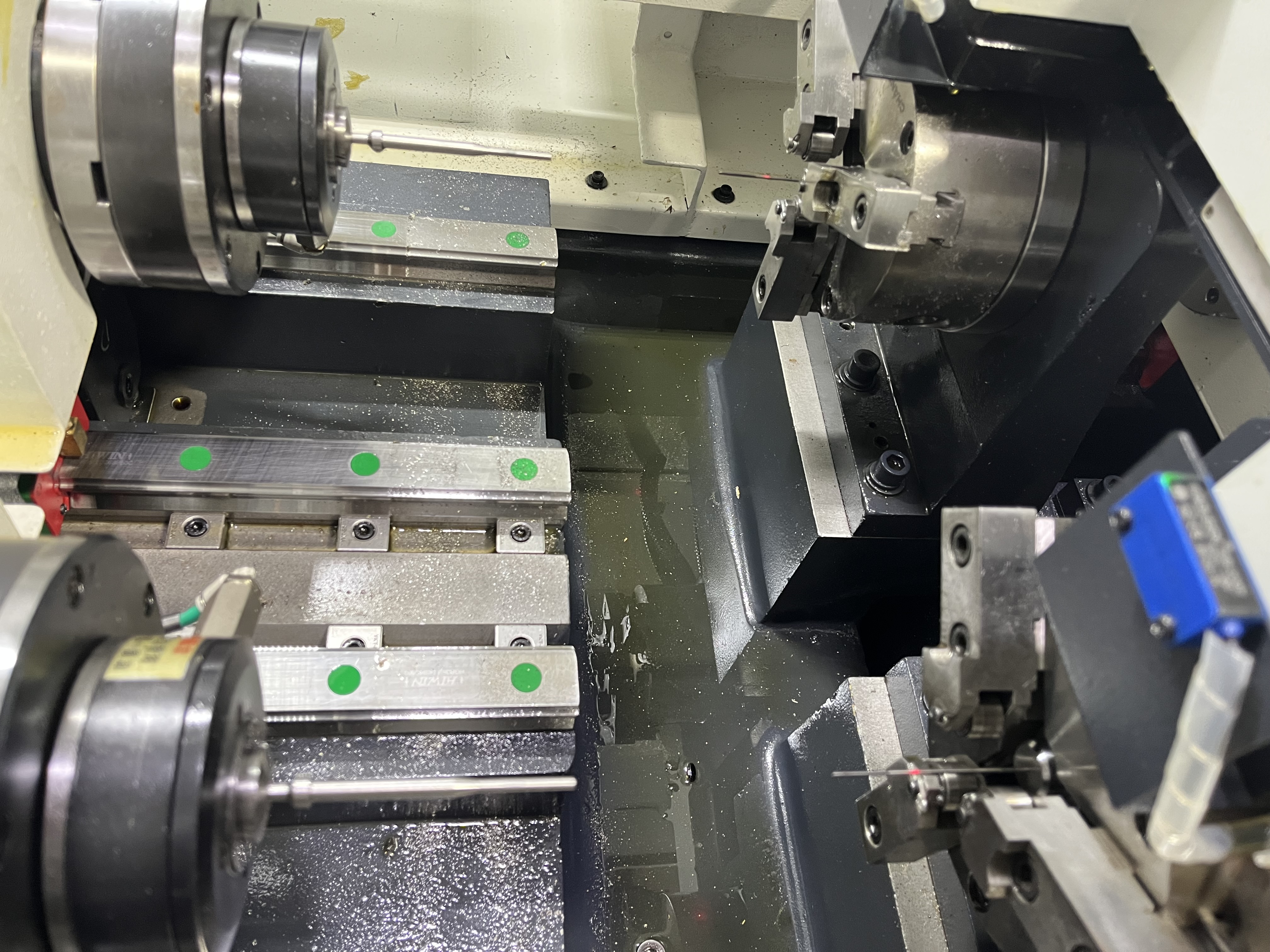
Deep hole drilling machines are built in horizontal and vertical configurations, and each has distinct advantages depending on the work. I have operated both types extensively and have helped shops choose between them based on their part mix, floor space, and production requirements. I have helped over a dozen shops make the selection and the decision always comes down to the parts they drill most often, not which configuration is theoretically superior. The choice is rarely about which is technically better and more about which fits the specific application.
Physical Configuration and Footprint Comparison
Horizontal machines have the workpiece oriented horizontally and the drill advances horizontally. Vertical machines have the workpiece oriented vertically with the drill advancing downward. The physical differences affect the machine footprint, part handling, and chip evacuation.
| Characteristic | Horizontal Machine | Vertical Machine |
|---|---|---|
| Floor footprint | 4m x 3m (for 1m stroke) | 2.5m x 2.5m (for 1m stroke) |
| Machine height | 2m - 2.5m | 3.5m - 5m (depending on stroke) |
| Weight | 5 - 15 tons | 4 - 10 tons |
| Typical stroke range | 500 - 4000 mm | 300 - 1500 mm |
| Maximum part weight | Limited by machine bed capacity | Limited by vertical lift capacity |
| Chip evacuation | Gravity + coolant flow | Gravity-assisted (downward) |
| Coolant containment | Splash guards, chip conveyor | Gravity drain, simpler containment |
The floor footprint of a vertical machine is smaller because the machine occupies a smaller area. For a 1-meter stroke machine, the horizontal machine needs about 12 square meters while the vertical machine needs about 6 square meters. The vertical machine needs more height, typically 3.5 to 5 meters depending on the stroke length.
Part Loading and Workholding
Part loading is one of the biggest practical differences between horizontal and vertical machines. I have found that the part loading method often determines which configuration is more efficient for a given application.
Horizontal machines are easier to load with an overhead crane or roller conveyor. The operator slides the part onto the machine bed or into a fixture from the side. Long shafts and cylinders are naturally supported in the horizontal position. I can load a 1-meter shaft on a horizontal machine in about 2 minutes using a roller conveyor.
Vertical machines require the part to be lifted into position and lowered onto the workholding. For parts under 20 kg, manual loading is straightforward. For heavier parts, a hoist or a robotic loader is needed. I have seen vertical machines used for thick plates where the part is lifted by a crane and positioned on a fixture table.
Workholding for horizontal machines typically includes a chuck at the spindle end and a steady rest or tailstock at the free end. The steady rest supports the workpiece close to the drill entry point. For vertical machines, the workholding is a fixture table or a chuck at the bottom, with optional steady rests for long parts.
Chip Evacuation and Coolant Management
Chip evacuation is better in vertical machines because gravity assists the chip removal. The coolant flows downward through the bore and carries the chips out with gravity. In horizontal machines, the chips must be pushed out of the bore by the coolant pressure alone, which requires higher pressure for deep holes.
I have measured the coolant pressure required for chip evacuation in both configurations. For the same drill diameter, depth, and material, a vertical machine needs about 15 to 20 percent less coolant pressure than a horizontal machine to achieve the same chip evacuation. The gravity assistance reduces the pressure requirement.
Coolant containment is simpler on vertical machines because the coolant drains downward into a tank below the work area. Horizontal machines need splash guards and chip conveyors to contain and direct the coolant flow. The coolant system on a horizontal machine is more complex and has more components that can leak.
For deep holes with high L/D ratios, the vertical configuration has a significant advantage because the chips do not have to travel against gravity. I have seen vertical machines drill 50:1 L/D holes at 2000 psi that would require 2500 to 3000 psi on a horizontal machine.
Typical Applications by Industry
The choice between horizontal and vertical depends on the parts you drill most often. I have compiled a list of typical applications for each configuration based on what I have seen in different industries.
| Industry | Typical Part | Preferred Configuration | Reason |
|---|---|---|---|
| Hydraulic cylinders | Long shafts, piston rods | Horizontal | Long parts, easy crane loading |
| Oilfield equipment | Drill pipe, tool joints | Horizontal | Very long parts, conveyor loading |
| Automotive | Connecting rods, crankshafts | Horizontal | Medium production, transfer line integration |
| Aerospace | Landing gear components | Vertical | Short heavy parts, small footprint |
| Mold and die | Thick plates, cooling channels | Vertical | Gravity chip evacuation, plate workholding |
| Medical | Bone screws, implants | Vertical | Small diameters, precision work |
| Heavy equipment | Hydraulic blocks, valve bodies | Vertical | Short heavy blocks, gravity chip evacuation |
For long shafts and cylinders, horizontal is the clear choice. The part is naturally supported and easy to handle. For short, heavy blocks and plates, vertical works well because the part sits on a table and gravity helps chip evacuation.
I prefer horizontal for most job shop work because the setup is more flexible. The machine can handle different part lengths without significant changeover. With a steady rest adjustment, a horizontal machine can go from a 200mm shaft to a 1000mm shaft in 10 minutes.
Cost Comparison
The machine price is similar for both configurations at the same capacity. I have compared prices from multiple builders and the cost difference is typically less than 10 percent. The installation cost can differ because the vertical machine needs more ceiling height and may require a pit or platform for the operator to access the work area.
The tooling cost is similar for both configurations. The same gun drills, guide bushings, and holders work on either machine type. The coolant system cost is slightly lower for vertical machines because the simpler coolant containment reduces the amount of piping and guarding required. I have also found that the resale value is similar for both configurations, which matters when planning a machine replacement cycle.
The operator training cost is also similar. An operator trained on a horizontal machine can learn a vertical machine in about one week, and vice versa. The machine controls and operating principles are the same regardless of the machine orientation.
Key Takeaways
- Vertical machines have a smaller floor footprint (about 50 percent of horizontal) but require more height — 3.5 to 5 meters for a 1-meter stroke machine.
- Chip evacuation in vertical machines needs 15 to 20 percent less coolant pressure than horizontal because gravity assists the chip removal from the bore.
- Part loading is faster on horizontal machines for long parts using roller conveyors — about 2 minutes for a 1-meter shaft — while vertical works better for short heavy parts lifted by hoist.
- Horizontal machines are better for long shafts and cylinders with L/D over 30:1; vertical machines excel at drilling thick plates and short heavy blocks.
- The machine price is within 10 percent between configurations at the same capacity, but installation costs differ due to height and operator access requirements for vertical machines.
- I prefer horizontal for general job shop work because the setup is more flexible for different part lengths, but vertical is the right choice for applications where gravity chip evacuation provides a clear advantage.