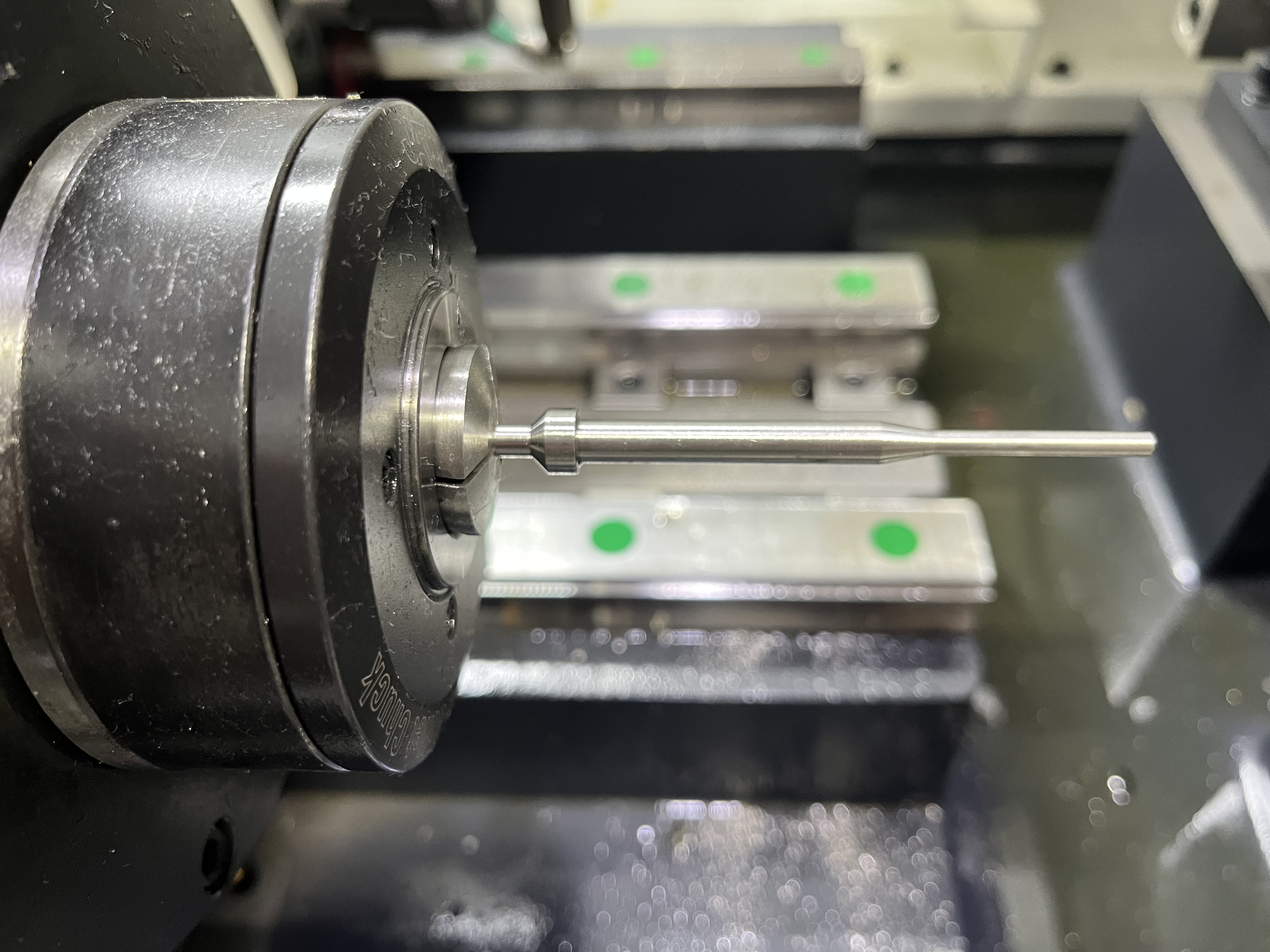
A cold machine does not drill straight holes. The thermal expansion of the spindle, bed, and coolant changes the machine geometry during the first few hours of operation. I’ve learned to account for thermal effects in every job, and I’ve developed a warm-up procedure that eliminates the guesswork.
Why Warm-Up Matters
As a machine warms up, several changes happen simultaneously:
- The spindle bearings expand, changing the spindle position by 0.01-0.03mm
- The bed expands, changing the alignment between headstock and tailstock
- The coolant warms up, changing its viscosity and flow characteristics
- The ball screws expand, changing the positioning accuracy
These changes are not small. I measured a 0.15mm drift in hole position on a large BTA machine over the first 90 minutes of operation. The first hole of the day was in a different location than the holes drilled two hours later. The operator had been chasing this by adjusting offsets — compensating for a problem that thermal stability would have solved.
A hole drilled when the machine is cold will be in a different position than a hole drilled when the machine is at operating temperature. On a long job requiring multiple setups, the first and last holes can be in different locations if the machine is still warming up.
Warm-Up Time by Machine Size
The warm-up time depends on the machine size, the ambient temperature, and the thermal mass of the components.
| Machine Size | Warm-Up Time | Notes |
|---|---|---|
| Small gun drill (under 5 tons) | 30-60 minutes | Faster warm-up, less thermal mass |
| Mid-size gun drill (5-10 tons) | 60-90 minutes | Typical deep hole drilling machine |
| Large BTA machine (10+ tons) | 90-180 minutes | High thermal mass, cast iron bed |
| Multi-spindle machine | 60-120 minutes | Depends on number of spindles and machine mass |
These times assume the machine is in a climate-controlled shop at 20-25 C. In a shop that is not climate-controlled, the warm-up time can be 50% longer on cold days.
I run the machine at operating speed during warm-up with the coolant circulating. The spindle rotation and coolant flow generate the heat needed to stabilize the machine. A static warm-up — spindle not rotating — is much less effective because the heat is not distributed through the machine.
My Warm-Up Procedure
I follow a structured warm-up procedure that has worked well across multiple machine types:
- Start the coolant pump and let it circulate (5 minutes). The coolant carries heat from the pump to the rest of the system. This is the fastest way to warm the machine evenly.
- Start the spindle at low speed, 500 RPM (5 minutes). Low-speed rotation warms the spindle bearings gently. Avoid high-speed starts on a cold spindle — the bearings expand too quickly and can skid.
- Increase spindle speed to operating speed (10 minutes). Run at the speed you will use for the production job. If the job runs at 4000 RPM, warm up at 4000 RPM. The spindle reaches thermal equilibrium fastest at its operating speed.
- Run all axes through their full travel range (10 minutes). Move each axis through the full range of travel at the feed rates you will use in production. This warms the ball screws and way surfaces.
- Check spindle alignment with a test bar (if doing tight-tolerance work). After warm-up, I check that the spindle is at the expected position relative to the table. If the position has shifted from the previous day, I note it and check the first part.
The total warm-up time is typically 45-60 minutes. I start the warm-up before the shift begins so the machine is ready when production starts.
Checking Thermal Stability
I check the machine’s thermal stability by drilling a test hole at the start of the shift and at 1-hour intervals. If the hole position changes by more than 0.02mm between checks, the machine has not stabilized yet.
On machines with significant thermal issues, I’ve seen the hole position drift by 0.1mm over the first 2 hours of operation. The drift stops once the machine reaches thermal equilibrium.
I document the thermal behavior of each machine. After a few checks, I know how long each machine takes to stabilize. For a machine I’ve characterized, I can predict when the first stable hole will be drilled.
Ambient Temperature Effects
The ambient temperature in the shop affects warm-up time and thermal stability. In winter, a machine that was at 10 C overnight takes longer to warm up than in summer when the shop is at 25 C.
I track ambient temperature alongside my warm-up data. In winter, I increase warm-up time by 30-50%. I also check that the machine is at a consistent temperature before starting production.
A shop that fluctuates by more than 5 C during the day will have thermal stability problems regardless of warm-up. The machine expands and contracts as the shop temperature changes. Climate control in the machining area is important for tight-tolerance work.
Coolant Temperature Management
The coolant temperature affects the machine’s thermal stability more than the ambient temperature in some cases. The coolant flows through the spindle, the drill, and over the workpiece, carrying heat throughout the system.
If the coolant chiller is set too cold — below 20 C — the coolant cools the machine below ambient temperature. The bed contracts, the spindle shrinks, and the machine geometry shifts. The coolant temperature must be stable.
I set the coolant chiller to maintain the coolant at 25-30 degrees Celsius. This temperature is above ambient in most shops and provides stable thermal conditions. When the coolant temperature stabilizes, the machine geometry stabilizes.
Key Takeaways
Machine warm-up is one of the most overlooked factors in deep hole drilling accuracy. I’ve seen shops scrap the first few parts of every shift because the machine was not warm. The operators adjusted offsets, changed tools, and blamed the material — but the problem was thermal.
The solution is simple: warm up the machine before production starts. Thirty minutes of warm-up at the beginning of the shift saves hours of rework. On a machine that runs 16 hours per day, a 45-minute warm-up is 5% of the operating time. The productivity gain from eliminating scrap and rework more than compensates for the warm-up time.
I also keep the machine warm during breaks. If the machine is idle for less than 30 minutes, I leave the coolant pump running and the spindle rotating at low speed. This maintains thermal equilibrium and eliminates the need for re-warm-up after the break.
Key Takeaways
- Thermal drift during warm-up can shift hole position by 0.1-0.15mm on large machines
- Warm-up time ranges from 30 minutes for small machines to 180 minutes for large BTA machines
- My warm-up procedure includes coolant circulation, spindle rotation, and axis movement — a static warm-up is insufficient
- Track ambient temperature and adjust warm-up time up to 50% in winter conditions
- Keep the machine warm during short breaks to avoid re-warm-up delays
- The productivity gain from eliminating thermal-related scrap far exceeds the warm-up time cost