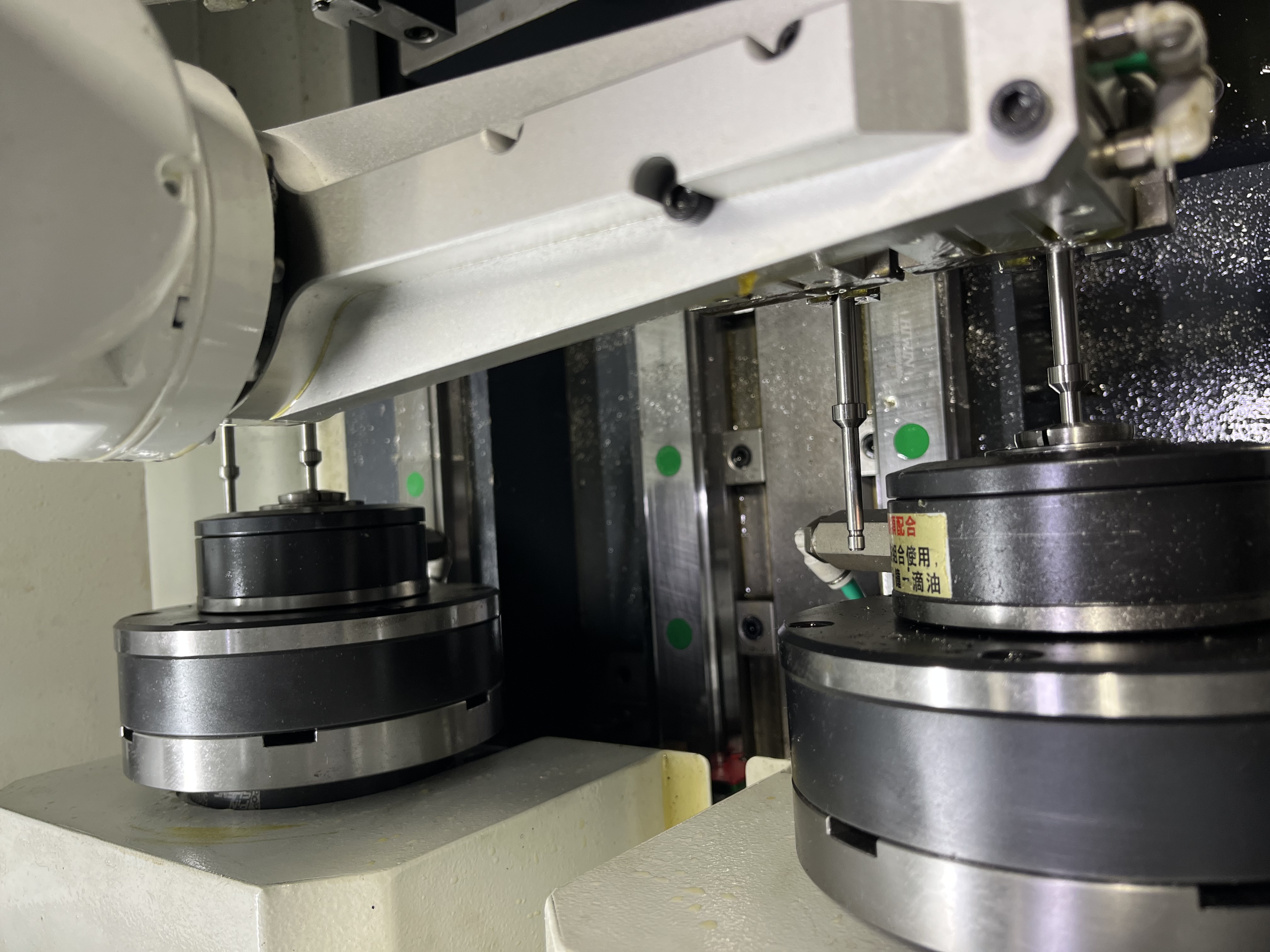
Leveling and aligning a deep hole drilling machine after installation is one of the most important steps in setting up the machine for production. A machine that isn’t properly leveled and aligned will produce holes that are off-center and non-straight.
Here’s the procedure I use.
Tools Needed
- Precision level (0.02mm per meter sensitivity)
- Test bar (precision-ground, fits the spindle)
- Dial indicators (0.001mm resolution)
- Feeler gauges
- Wrenches for leveling pads
Step 1: Rough Leveling
Place the precision level on the machine bed ways near the headstock end. Adjust the leveling pads until the bed is within 0.1mm per meter of level in both the longitudinal and transverse directions.
Move the level to the tailstock end and repeat the adjustment. The bed should be within 0.1mm per meter at both ends.
Step 2: Fine Leveling
With the machine roughly level, go back to the headstock end and fine-level. Adjust until the bed is within 0.02mm per meter.
Move to the tailstock end and repeat. The bed should be within 0.02mm per meter at both ends in both directions.
Step 3: Check Twist
Place the level at the headstock end and note the reading. Move the level to the tailstock end. The reading should be the same. If it’s different, the bed has twist.
Bed twist is corrected by adding shims under the low corner of the machine base. Adjust the shims until the level reading is the same at both ends.
Step 4: Spindle Alignment
Mount the test bar in the spindle. Set up a dial indicator to read the top of the test bar. Move the test bar along the bed travel. The reading should not vary by more than 0.02mm over the full travel.
Repeat with the indicator reading the side of the test bar. The variation should be within 0.02mm.
If the variation exceeds 0.02mm, the spindle needs to be adjusted. Some machines have adjustable spindle mounts. Others require shimming the headstock.
Step 5: Guide Bushing Alignment
Mount the guide bushing holder and install a test bushing. Set up a dial indicator to read the bushing ID. The bushing should be concentric with the spindle within 0.02mm TIR.
Adjust the bushing holder if needed. The holder should have adjustment in both the horizontal and vertical directions.
Step 6: Recheck After Warm-Up
Run the machine for at least an hour at operating speed. Repeat the leveling and alignment checks. Thermal expansion can change the alignment.
If the alignment has changed by more than 0.02mm, the machine needs more warm-up time or the foundation has an issue.
What to Expect
A properly leveled and aligned machine should:
- Level within 0.02mm per meter in both directions
- Bed twist less than 0.02mm over the full length
- Spindle alignment within 0.02mm over full travel
- Guide bushing concentric within 0.02mm TIR
These tolerances are for a mid-size gun drilling machine. Larger machines may have slightly looser tolerances. Higher-precision machines may have tighter tolerances.
Here’s a reference table for leveling and alignment tolerances by machine type:
| Machine Type | Leveling Tolerance | Alignment Tolerance | Check Frequency |
|---|---|---|---|
| Small gun drilling (under 3m bed) | 0.01 mm/m | 0.01 mm TIR | Monthly |
| Mid-size gun drilling (3-8m bed) | 0.02 mm/m | 0.02 mm TIR | Quarterly |
| Large gun drilling (8-15m bed) | 0.03 mm/m | 0.03 mm TIR | Semi-annually |
| BTA / ejector drilling | 0.05 mm/m | 0.04 mm TIR | Annually |
| Deep hole retrofitted lathe | 0.02 mm/m | 0.05 mm TIR | Quarterly |
Common Leveling Mistakes
The mistakes I see most often during leveling:
Skipping the rough leveling step. Some installers go straight to fine leveling without rough-leveling first. The fine-leveling adjustments cannot compensate for a machine that is severely out of level. The adjustment range on leveling pads is limited.
Leveling on a warm machine without checking thermal effects. The machine expands as it warms up. A machine that is leveled cold and never rechecked will be out of alignment when it reaches operating temperature.
Not checking bed twist. A machine can be level at both ends but twisted along its length. The level readings at the headstock and tailstock should be the same. If they differ, the bed has twist that needs to be corrected with shims.
Assuming the foundation is flat. Even a properly poured foundation has variations. Leveling pads and grout exist to compensate for foundation irregularities. I have seen installers try to shim a machine on a foundation that was out by 5mm over 3 meters — too much for leveling pads to handle. The foundation needed to be reground.
For the foundation requirements that support proper leveling, see Machine Installation and Foundation Requirements.
Key Takeaways
Leveling and alignment take time but are essential for accurate drilling. I spend a full day on leveling and alignment when installing a new machine. The time is an investment that pays for itself in consistent hole quality.
- Use a precision level with 0.02mm per meter sensitivity for all leveling work.
- Rough-level first (0.1mm/m), then fine-level (0.02mm/m) at both headstock and tailstock.
- Check bed twist by comparing level readings at both ends; correct with shims if different.
- Align the spindle to the bed axis within 0.02mm TIR over full travel using a test bar.
- Recheck leveling after at least one hour of warm-up at operating speed.
- A properly leveled machine delivers level within 0.02mm/m, spindle alignment within 0.02mm, and bushing concentricity within 0.02mm TIR.