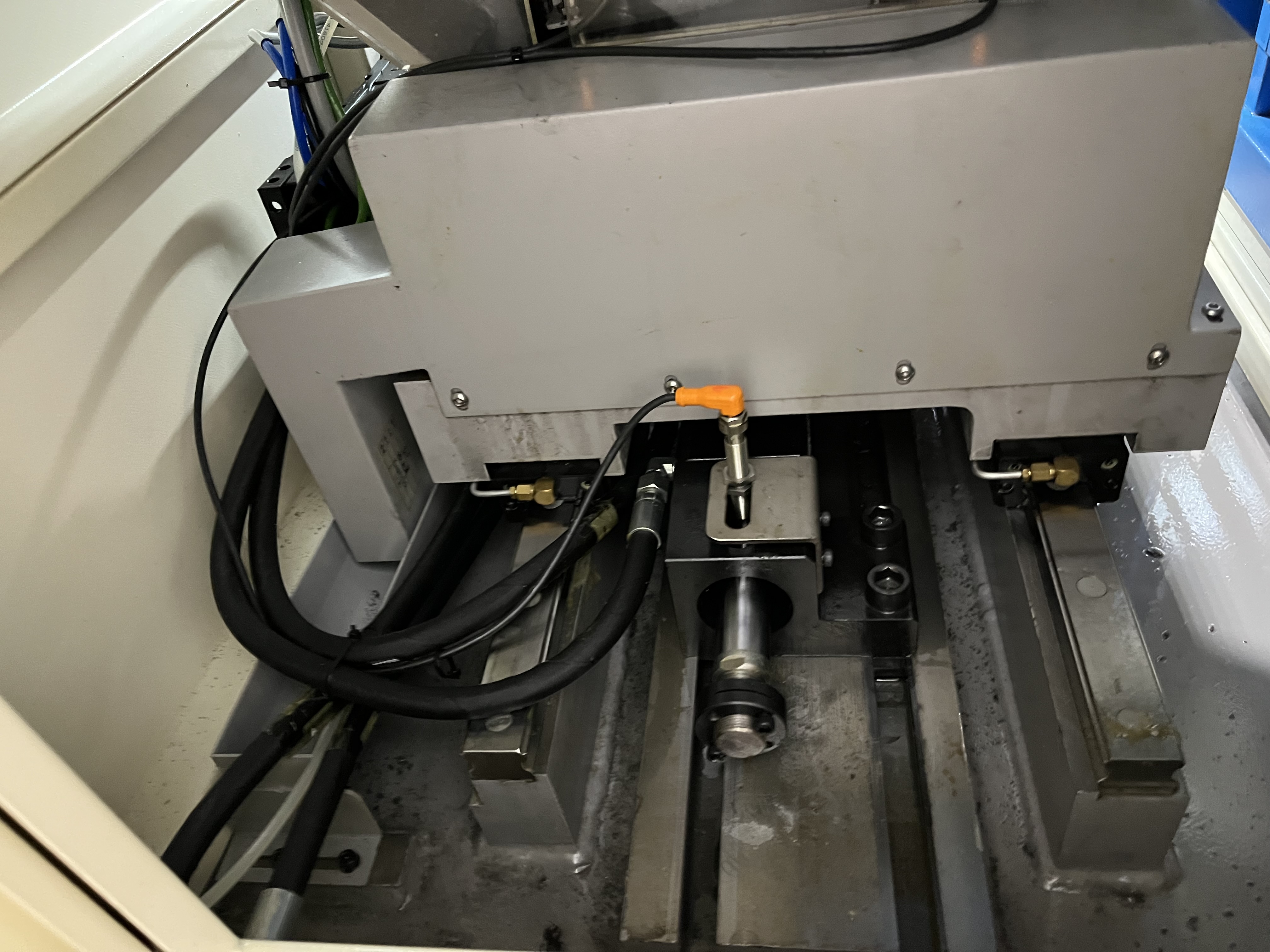
Choosing between linear guides and box ways on a deep hole drilling machine is one of those decisions that looks simple on paper but gets complicated fast once you factor in real-world cutting conditions. I’ve been through this debate on more installations than I can count, and the answer rarely comes down to a single specification.
What Each System Brings
Box ways have been the backbone of heavy-duty machine tools for decades. The dovetail or square-profile design with Turcite or similar lining material gives you a massive contact surface that dampens vibration naturally. In my experience, box way machines consistently hold tighter bore straightness when you’re pushing a BTA tool past 50 diameters depth.
Linear guides, on the other hand, use recirculating ball bearings running on hardened rails. The friction coefficient is roughly one-tenth that of box ways, which means smaller servomotors can move the same mass. Modern linear guides from manufacturers like THK, NSK, and Bosch Rexroth have closed the gap significantly in terms of load capacity.
Performance Comparison
| Parameter | Box Way | Linear Guide |
|---|---|---|
| Static stiffness | 8–12 N/µm (typical) | 3–6 N/µm (typical) |
| Coefficient of friction | 0.08–0.15 | 0.003–0.005 |
| Maximum traverse speed | 15–25 m/min | 60–120 m/min |
| Typical service interval | 12–18 months | 6–12 months |
| Damping ratio (relative) | 1.0 (baseline) | 0.3–0.5 |
| Initial cost per axis | Reference | 60–80% of box way |
| Replacement cost | 150–200% of linear | 40–60% of box way |
I’ve run side-by-side tests where a box way machine held 0.02 mm straightness over 800 mm depth on a 30 mm diameter hole, while the linear guide machine showed 0.035 mm under identical parameters. That extra 0.015 mm matters when you’re working to tight tolerances on hydraulic components.
When Box Ways Win
For deep hole drilling, box ways still dominate in several scenarios. Heavy interrupted cuts, like drilling through cross-holes or keyways, transmit shock loads that linear guides handle poorly over time. The stick-slip behavior of box ways is a real issue at low feed rates below 0.02 mm/rev, but modern Turcite materials and proper way lubrication mitigate the worst of it.
I’ve seen box way machines maintain geometry for fifteen years without a re-scrape, while linear guide machines in the same shop needed rail replacement at the eight-year mark. That said, a box way re-scrape costs anywhere from $8,000 to $15,000 per axis and takes a qualified technician a full week. Rail replacement on a linear guide machine runs $2,000 to $5,000 per axis and takes one to two days.
When Linear Guides Make Sense
Linear guides shine in high-speed applications. If you’re running small-diameter gun drilling below 10 mm at spindle speeds over 8,000 RPM and need rapid traverse rates above 30 m/min to minimize cycle time, box ways become a liability. The stick-slip phenomenon at low speeds is less of an issue with micro-lubrication systems available on modern linear guides.
Another area where I’ve switched to linear guides is on secondary operation machines. When the deep hole drilling is one of several operations in a process chain and you need fast positioning between stations, the speed advantage is undeniable. A coolant system piping design that matches the machine dynamics is essential regardless of guideway type.
Lubrication Differences
Box ways require a continuous oil film on the sliding surfaces. The oil consumption on a typical box way machine is 50 to 150 mL per hour per axis, depending on the way width and travel speed. Linear guides use grease-packed bearings that need regreasing every 500 to 2,000 hours of operation. The difference matters for maintenance planning and for coolant contamination. Box way oil that leaks into the coolant alters the coolant chemistry and requires more frequent skimming. Linear guide grease stays contained in the bearing block and rarely reaches the coolant.
I switched one machine from way oil to a food-grade vegetable-based oil because the standard way oil was creating tramp oil in the coolant that promoted bacterial growth. The vegetable-based oil cost 2.5 times more but eliminated the tramp oil problem. Linear guide machines do not have this issue.
Cost Analysis Over a Decade
The total cost of ownership for guideways includes the initial machine purchase premium, lubrication costs, maintenance labor, and downtime. I ran a ten-year cost projection for a two-axis deep hole machine comparing box ways to linear guides.
| Cost Category | Box Way (10 years) | Linear Guide (10 years) |
|---|---|---|
| Initial premium (vs baseline) | $0 (baseline) | -$8,000 to -$15,000 |
| Lubrication cost | $4,000–$8,000 | $600–$1,200 |
| Wiper/seal replacements | $2,000–$3,000 | $1,000–$2,000 |
| One re-scrape or rail replacement | $8,000–$15,000 | $2,000–$5,000 |
| Downtime for maintenance | 40–80 hours | 8–16 hours |
| Total 10-year cost | $14,000–$26,000 | $3,600–$8,200 |
The linear guide machine saves roughly $10,000 to $18,000 over ten years in direct maintenance costs. But that calculation does not include the value of tighter bore tolerances from the box way machine if you are selling precision.
Hybrid Approaches
Some machine builders offer a hybrid design with box ways on the Z-axis (the drilling axis where thrust loads are highest) and linear guides on the X and Y axes. This combines the damping of box ways where it matters most with the speed of linear guides for positioning moves. I have ordered two machines with this configuration and the results have been excellent for medium-diameter BTA work in the 30 to 60 mm range.
Operator Training Implications
Machine operators need different skills depending on the guideway type. Box way maintenance requires understanding of way oil viscosity grades, wiper replacement procedures, and gib adjustment. Linear guide maintenance involves regreasing schedules, rail inspection, and bearing block replacement. I have found that operators trained on box way machines often overlook the regreasing requirements of linear guides, leading to premature bearing failure.
The lubrication interval for linear guide bearings is typically 500 to 2,000 operating hours depending on the guide size and travel speed. I label each axis with the regrease interval and the grease type. The daily machine inspection checklist includes a regrease verification step for linear guide machines.
Retrofit Considerations
If you’re retrofitting an older machine, the guideway conversion requires careful evaluation. The mounting surfaces, bolt patterns, and ball screw alignment all change. I’ve done three box-way-to-linear conversions, and in each case we had to re-machine the saddle and base casting interfaces. The machine rigidity improvements from leveling and aligning the machine foundation matter just as much as the guideway choice itself.
Key Takeaways
- Box ways provide superior damping and long-term geometric stability for heavy BTA drilling applications.
- Linear guides offer higher speed, lower friction, and lower replacement cost but less inherent vibration damping.
- The choice depends on hole diameter, depth ratio, production volume, and required tolerance band.
- Retrofit between types is possible but requires significant machine bed rework.
- Regular way wiper replacement and proper lubrication are critical regardless of guideway type.