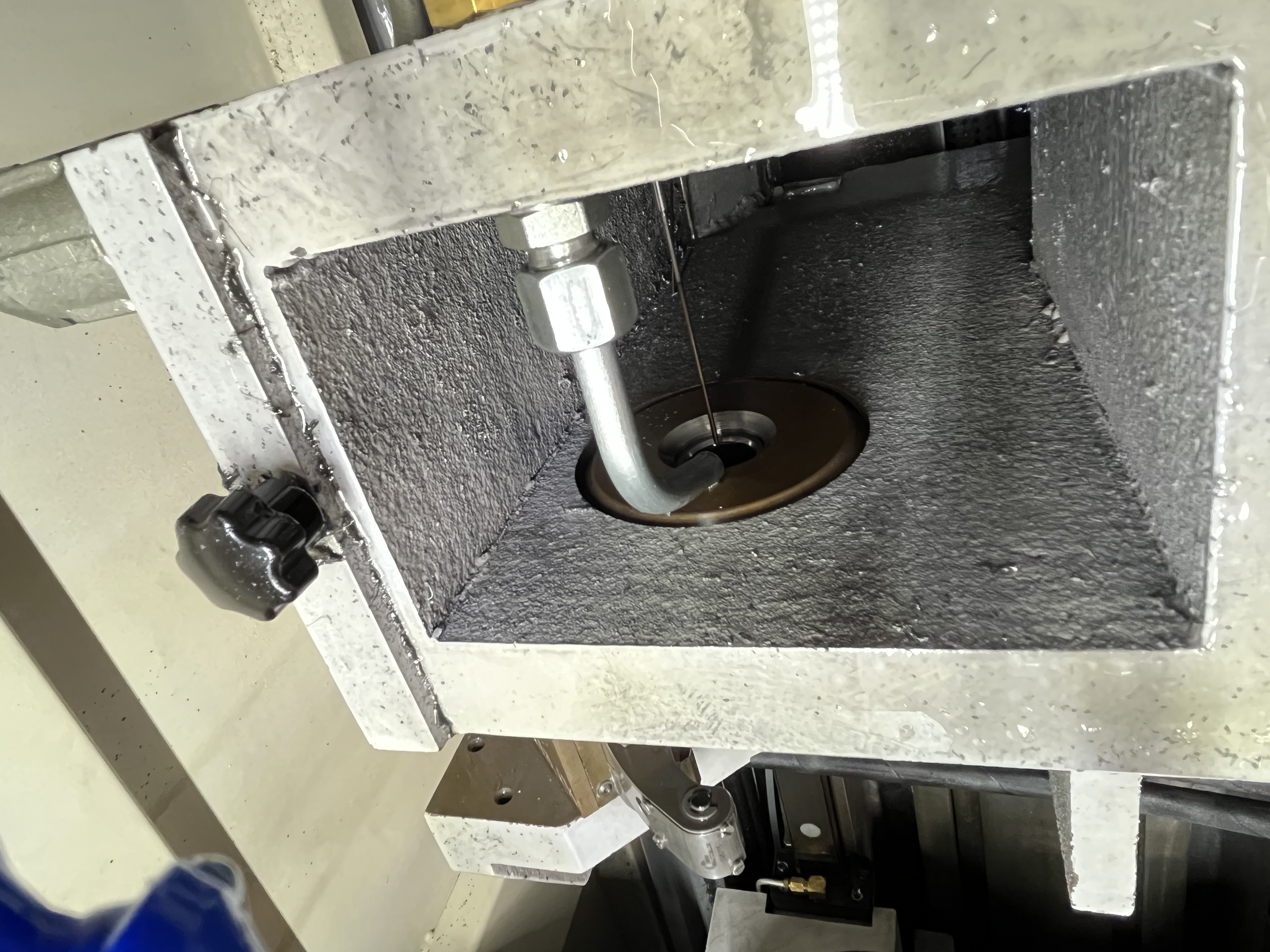
Machine rigidity is the foundation of deep hole drilling quality. You can have the best drill, the right parameters, and the perfect coolant setup, but if the machine isn’t rigid, the holes won’t be straight.
I’ve worked on machines ranging from light-duty job shop gun drills to massive BTA production machines. The difference in rigidity shows up in every hole they produce.
How Rigidity Affects the Hole
A machine that lacks rigidity flexes under cutting forces. The flex causes:
- Chatter. The tool vibrates against the workpiece, leaving a pattern on the bore surface.
- Tapered bores. The machine flexes at the start of the cut and relaxes at the end, producing a bore that’s larger at the entry than the exit.
- Poor straightness. The drill follows the path of least resistance, which is wherever the machine flexes.
- Reduced tool life. The vibration from a non-rigid machine chips the cutting edge.
I’ve diagnosed more quality problems as rigidity issues than as tool problems. The machine is always the first thing I check when holes start coming out wrong.
What Makes a Machine Rigid
Machine rigidity comes from several design factors:
Bed construction. A rigid machine has a heavy, well-braced bed. I’ve seen beds made from cast iron, fabricated steel, and polymer concrete. Cast iron beds damp vibration better than fabricated steel. Polymer concrete beds are the best for vibration damping but are less common.
Column design. The column that carries the spindle needs to be rigid in all directions. A C-frame column is stiffer in one plane than another. A box column with diagonal bracing is more uniform.
Spindle support. The spindle bearing arrangement determines how much the spindle can deflect under load. A spindle with widely spaced bearings is more rigid than one with closely spaced bearings.
Guide way type. Box ways are more rigid than linear rails. Box ways have more surface contact and damp vibration better. Linear rails are faster but less rigid.
Machine weight. All else being equal, a heavier machine is a more rigid machine. I’ve compared machines of similar capacity where one weighed 40% more than the other. The heavier machine consistently produced better holes.
What I’ve Seen on Different Machine Types
| Machine Type | Relative Rigidity | Typical Results |
|---|---|---|
| Light-duty CNC gun drill | Moderate | Good for diameters under 10mm, moderate depths |
| Heavy-duty CNC gun drill | High | Consistent holes up to 25mm diameter |
| BTA production machine | Very high | Handles large diameters and high feeds |
| Combination drill/mill | Moderate | Compromised design for multiple operations |
| Retrofit machine | Varies | Depends on original build quality |
The light-duty machines are fine for small diameters and moderate depths. But I’ve seen shops try to push them beyond their capability — drilling 20mm holes on a machine designed for 10mm work. The results are consistently poor.
Diagnosing Rigidity Problems
I use these signs to identify rigidity problems:
- Chatter marks at the same frequency on every hole. The machine has a natural frequency that’s excited by the cutting forces.
- Bow-shaped holes. The hole is straight at the entry and exit but curved in the middle. The machine flexes under load and relaxes as the drill passes through.
- Diameter variation that correlates with the machine’s structure. Larger diameter at mid-span where the machine flexes most.
- Different results on different machines running the same parameters. If machine A produces straight holes and machine B produces curved holes with the same drill, the problem is machine B’s rigidity.
Improving Rigidity
You can improve the effective rigidity of a machine without rebuilding it:
- Shorten the tool overhang. Every millimeter of tool stickout reduces rigidity.
- Use a larger diameter drill tube. A stiffer drill tube transmits feed forces more directly.
- Reduce the feed rate. Lower feed reduces cutting forces, which reduces deflection.
- Support the workpiece closer to the drill point. Adding a steady rest or support bracket reduces workpiece deflection.
- Check the machine anchors. A machine that isn’t bolted down securely will flex under load.
I’ve seen a machine that was producing tapered bores because it wasn’t level. Realigning and re-anchoring the machine fixed the problem completely.
When Rigidity Limits Production
Every machine has a rigidity limit. When that limit is reached, pushing harder doesn’t help. The machine flexes, the quality drops, and the tool breaks.
The signs that you’ve reached the rigidity limit:
- Increasing feed causes more deflection, not more material removal
- Reducing speed doesn’t eliminate chatter
- Holes are consistently out of spec regardless of parameter changes
At that point, the solution is either to move the job to a more rigid machine or to accept the production rate that the machine can deliver.
I’ve seen shops spend months trying to optimize parameters on a machine that was structurally incapable of meeting the spec. The right answer was to buy a more rigid machine. The wrong answer was to keep adjusting parameters that would never solve the problem. For a detailed comparison of how different machine types handle rigidity demands, see BTA vs Gun Drill Machine Design.
Key Takeaways
- Machine rigidity is the foundation of hole quality. Check the machine first when holes come out wrong.
- Cast iron beds damp vibration better than fabricated steel; polymer concrete is best.
- Box ways are more rigid than linear rails for deep hole drilling applications.
- Heavier machines consistently produce better holes – weight correlates with rigidity.
- Shortening tool overhang and supporting the workpiece closer to the drill point improves effective rigidity.
- When the rigidity limit is reached, no amount of parameter adjustment will solve the problem.