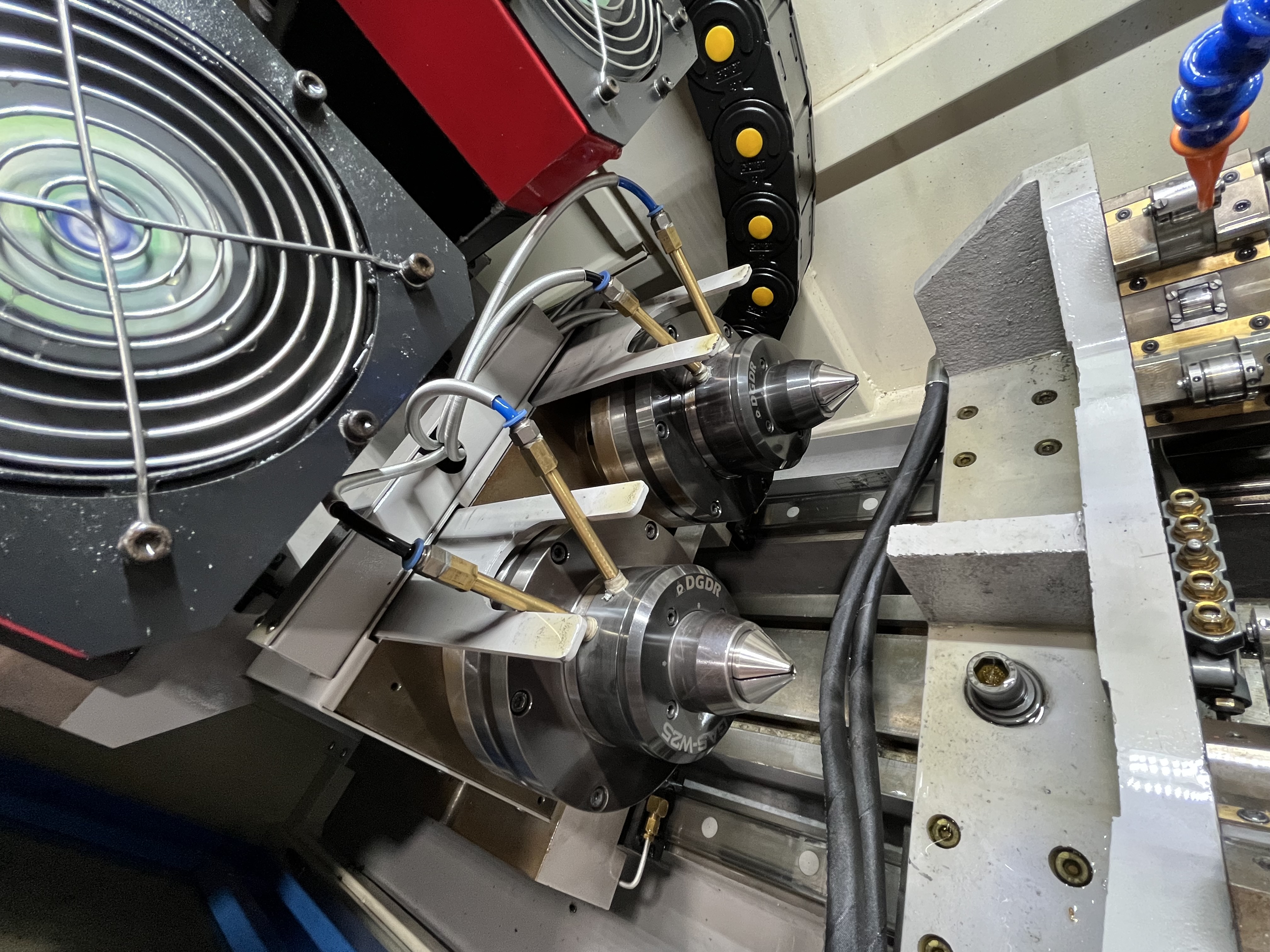
I have been through enough machine purchases to know how easy it is to get the decision wrong. A deep hole drilling machine is a six-figure capital investment that will shape your shop’s capacity, quality, and cost structure for the next decade. Over the years I have been involved in several acquisitions – some that paid for themselves in eighteen months and others that became expensive lessons. The difference was almost always how rigorously we evaluated the options before signing. This article walks through the framework I now use every time.
Defining Your Requirements First
Before you look at a single machine spec sheet, lock down what you actually need. I have seen shops buy a machine capable of drilling 2-meter bores when their longest part is 400 mm, simply because the deal looked good. That premium follows you in every cost line.
Start with these parameters:
Hole diameter range. What are your current and projected hole sizes? Gun drilling typically covers 1.5 mm to 40 mm; BTA / STS starts around 16 mm and goes up past 500 mm. If your production mix spans both regimes, you may need a hybrid machine or two separate platforms.
Depth and depth-to-diameter ratio. A 20:1 ratio part runs differently from a 100:1 part. Higher ratios demand better coolant pressure, guide bushing arrangements, and spindle stability. Over-specifying depth capacity adds cost; under-specifying limits your job mix.
Materials. Hard steels, inconel, titanium, aluminum, and cast iron each impose different torque, thrust, and coolant requirements. If you regularly machine difficult materials, factor that into spindle power and coolant system design – it is much cheaper to spec it at purchase than to retrofit later.
Production volume. Annual part count drives everything from automation level to spindle utilization. Low-volume job shop work might justify a manual-load machine with quick-change tooling. High-volume production demands automated part handling, tool monitoring, and possibly multi-spindle configurations.
Tolerances and surface finish. IT6-IT8 holes require different machine stiffness and guide bushing precision than IT10-IT12. If your prints call for tight straightness or surface finish below 1.6 Ra, the machine’s spindle alignment, guide bushing system, and coolant filtration all become critical.
Write these down as minimum acceptable specs, not targets. Every machine option gets compared against this baseline before any financial analysis begins. If a machine cannot meet the requirements at all, it is out of the running.
New vs. Used vs. Retrofit
Once you know what you need, the first fork in the road is whether to buy new, buy used, or retrofit an existing machine. I have done all three, and each has its place.
New machine. Full warranty, latest control technology, known maintenance history from day one, and the manufacturer’s full support during commissioning. The downside is the highest upfront cost and the longest lead time – typically 6 to 12 months for a purpose-built deep hole drilling machine.
Used machine. Lower purchase price and faster delivery. You may find a well-maintained machine that still has years of productive life. The risks are unknown maintenance history, worn guideways or spindles, outdated controls, and potentially limited parts availability. Always budget for a full mechanical and electrical inspection before committing.
Retrofit / rebuild. Take an existing machine – sometimes one you already own – and upgrade the spindle, coolant system, controls, or fixturing. This can deliver modern performance at a fraction of new-machine cost. The catch is that the base casting and mechanical structure limit what you can achieve, and retrofits almost always take longer and cost more than the initial estimate.
I tend to recommend new machines when the production requirements are demanding and the operation runs 24/7. Used machines can work well for job shops with moderate volumes. Retrofits are most attractive when you have a mechanically sound machine whose control or coolant system is the bottleneck.
Total Cost of Ownership Calculation
Purchase price is a poor proxy for cost. When I evaluate machines I build a five-year total cost of ownership (TCO) model. Here are the categories I include:
Purchase price and installation. The machine itself, rigging, foundation work, electrical service upgrades, and coolant system integration. Installation alone can run 10-15% of the purchase price for a deep hole machine.
Tooling. Gun drills, BTA heads, guide bushings, and consumables. A new machine often comes with a starter tooling package, but you need to model ongoing consumption at your projected volumes.
Coolant system. High-pressure coolant is the lifeblood of deep hole drilling. Factor in pumps, filtration media, oil separators, chillers, and coolant chemistry. Coolant-related operating costs can exceed $15,000 per year on a heavily utilized machine.
Maintenance and repairs. Planned maintenance (way oil, filters, spindle bearing greasing, seal replacement) and unplanned repairs. I use 3-5% of machine value annually for new machines and 8-12% for used machines.
Operator and setup labor. Fully burdened labor rates times estimated hours per part, including setup, teardown, and inspection.
Below is a representative five-year TCO comparison for three options configured for a mid-range production scenario – 20 mm diameter holes, 400 mm depth, 15,000 parts per year in 4140 steel.
| Cost Category | New Machine (5-yr TCO) | Used Machine (5-yr TCO) | Retrofit (5-yr TCO) |
|---|---|---|---|
| Purchase & Installation | $375,000 | $155,000 | $195,000 |
| Tooling & Consumables | $97,500 | $112,500 | $105,000 |
| Coolant System Operation | $62,500 | $75,000 | $67,500 |
| Maintenance & Repairs | $67,500 | $135,000 | $90,000 |
| Operator & Setup Labor | $337,500 | $375,000 | $352,500 |
| 5-Year Total | $940,000 | $852,500 | $810,000 |
| Annual Average | $188,000 | $170,500 | $162,000 |
The retrofit scenario shows the lowest total cost on paper, but it carries the highest uncertainty – the labor and maintenance estimates are less predictable. The used machine closes the gap with new because of higher maintenance costs and lower efficiency. The new machine has the highest absolute cost but the lowest variance in estimates.
Throughput Analysis
TCO tells you what you will spend, but not what you will produce. Throughput analysis fills that gap.
Break down the per-part timeline:
Cycle time. Actual spindle running time based on your cutting parameters. For deep hole drilling, cycle time is largely a function of feed rate and depth. A machine with higher spindle power and better coolant pressure may allow aggressive feeds that cut cycle time by 20-30%.
Setup time. How long it takes to change tooling, adjust guide bushings, and fixture the part. Machines with automated tool changers, quick-change bushing systems, and hydraulic fixturing reduce this significantly.
Changeover time. Switching between different part numbers. Modular fixturing, programmable coolant pressure, and CNC program management all affect changeover speed.
Uptime / availability. Scheduled maintenance, breakdowns, and tool changes. Real-world machine availability for deep hole drilling is typically 75-85% on well-maintained equipment. Used machines at end of life may run below 65%.
Multiply the total time per part by your annual volume and divide by available hours to determine how many machines you actually need. I have seen shops buy one machine thinking it would cover their volume, only to discover they needed two, because they underestimated setup and changeover. Run this analysis for each option – a slower machine with faster changeover can sometimes beat a fast machine with a lengthy setup.
Payback Period Calculation
Payback period is the simplest financial metric and the one I present to ownership first. It answers: how long until the cumulative savings equal the initial investment?
Compute the annual cost difference between your current method and the proposed machine, considering reduced cycle time, lower tooling cost, improved quality (less scrap), and reduced subcontracting. Then divide the total investment (purchase price + installation + initial tooling) by that annual savings.
A few rules of thumb from my experience:
- Payback under 18 months: automatic green light in most shops.
- 18 to 36 months: requires confidence in volume projections and market stability.
- Over 36 months: the decision needs strategic justification beyond pure ROI.
For the numbers we looked at above, if the current process costs $220,000 per year to operate and the new machine reduces that to $188,000, the annual savings is $32,000. Against a $375,000 purchase, that is nearly 12 years – clearly not justifiable on cost savings alone. But if that same machine enables taking work in-house that was previously subcontracted at $120,000 per year, the combined savings jumps to $152,000, giving a payback of about 2.5 years. Always calculate both the direct efficiency gain and the revenue enablement.
Risk Factors
No financial model survives contact with reality unchanged. Here are the risks I flag in every machine purchase decision:
Technology change. Deep hole drilling technology evolves – higher pressure coolant systems, real-time process monitoring, predictive maintenance integration. A machine bought today could look dated in five years. Mitigate by choosing modular architectures and controls that can be upgraded.
Market shifts. The parts you are buying the machine for may not be the parts you are running next year. A machine that is too specialized (single diameter, single material) is a liability if your product mix changes. I favor machines with some adjustability – variable speed spindles, programmable coolant pressure, and a range of guide bushing sizes.
Support availability. This is the risk I have seen sink the most purchases. If the manufacturer or distributor has limited presence in your region, a critical breakdown can mean weeks of downtime. Verify spare parts availability, response times, and local service technician coverage before buying. For used machines, check whether the original manufacturer still supports the control and drive systems.
Installation surprises. Foundation requirements, electrical service upgrades, and coolant system integration often cost more than quoted. I add a 15% contingency to installation budgets for new machines and 25% for retrofits.
Operator training gap. Deep hole drilling is specialized. A machine that requires a different skill set than your current team has will incur a ramp-up period of reduced throughput and increased scrap. Factor training costs and a 3-6 month productivity curve into your model.
For a deeper look at evaluating machine features beyond the financial side, see my article on what to look for in a deep hole drilling machine. For a more detailed breakdown of operating costs, see the TCO deep dive for deep hole drilling machines.
Decision Criteria Scoring Matrix
Beyond the numbers, I use a weighted scoring matrix to compare machine options across qualitative and quantitative factors. This keeps the evaluation objective and prevents any single impressive feature from dominating the decision.
| Criteria | Weight | New Machine | Used Machine | Retrofit |
|---|---|---|---|---|
| Capital Cost | 20% | 3 (0.60) | 8 (1.60) | 6 (1.20) |
| Performance vs. Requirements | 25% | 9 (2.25) | 5 (1.25) | 6 (1.50) |
| Maintenance Cost Predictability | 10% | 8 (0.80) | 3 (0.30) | 4 (0.40) |
| Lead Time / Availability | 10% | 3 (0.30) | 7 (0.70) | 5 (0.50) |
| Manufacturer Support | 15% | 9 (1.35) | 4 (0.60) | 4 (0.60) |
| Flexibility / Upgrade Path | 10% | 8 (0.80) | 3 (0.30) | 7 (0.70) |
| Operator Familiarity | 10% | 5 (0.50) | 7 (0.70) | 8 (0.80) |
| Weighted Total | 100% | 6.60 | 5.45 | 5.70 |
Scores are out of 10. The weight column reflects what matters most for a typical mid-volume production shop. Adjust the weights for your specific situation – a job shop with variable work should weight flexibility higher; a high-volume production line should weight performance and support higher.
This is the step where I have seen emotional attachment to a particular machine get overruled by objective data. It is worth the time.
Key Takeaways
Define your requirements in writing before evaluating any machine. Minimum acceptable specs for hole size, depth, material, volume, and tolerance must be established first.
Build a five-year TCO model that includes tooling, coolant, maintenance, and labor. Purchase price alone can mislead you by 2x or more.
Run a throughput analysis for each option, accounting for setup and changeover time. The cheaper machine may produce fewer parts per shift.
Calculate payback period two ways: direct efficiency savings and revenue enablement. The strategic case (taking work in-house, winning new business) often dwarfs the operational savings.
Use a weighted decision matrix to balance financial and non-financial factors. Assign weights that match your shop’s priorities and score every option dispassionately.
Flag the key risks – technology change, market shifts, support availability – and have a mitigation plan for each. The best financial model is useless if the machine sits idle waiting for a service technician.
I have made both good and bad machine purchases, and the framework above is what separates them. It is not fancy, but it works. Take the time to run the numbers and challenge your assumptions before you commit to a six-figure investment.