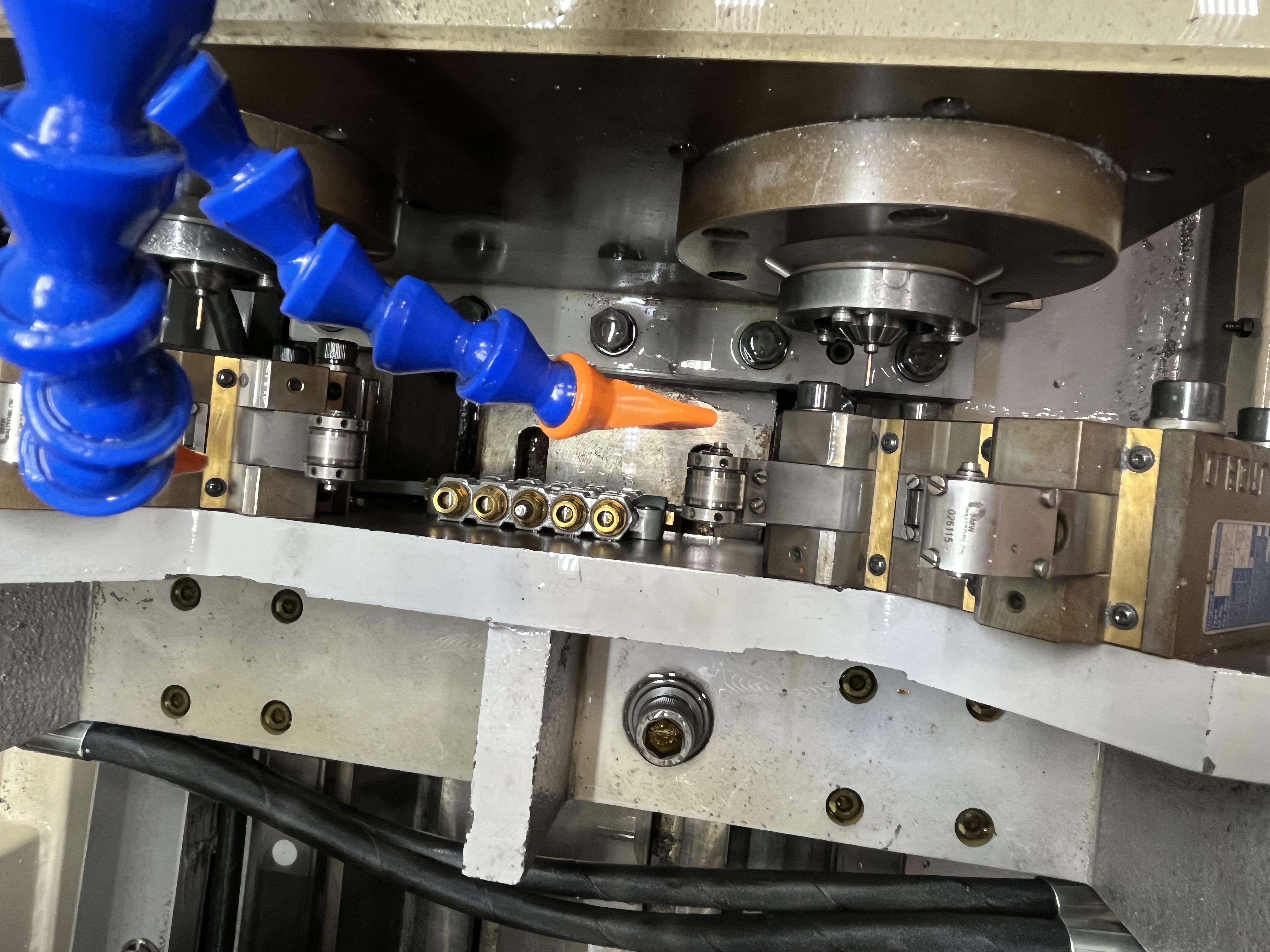
Machine spec sheets for deep hole drilling machines are written by marketing departments. Some numbers are meaningful indicators of real performance. Others are chosen to make the machine look better than it is on paper. I have evaluated a dozen deep hole drilling machine brands over twenty years, and I have learned which specs predict actual drilling performance and which ones are just numbers on a page.
Here is how I separate the two when I read a spec sheet for a deep hole drilling machine.
Meaningful Specs — What I Actually Look At
These numbers tell you something real about the machine’s capability in production deep hole drilling:
- Spindle power at the tool, not at the motor. Belt and gear losses reduce power by 10-20% between the motor and the cutting zone. A 15 kW motor might deliver only 12 kW at the spindle nose. I ask for the power measured at the tool tip under load.
- Coolant pressure at the tool tip, not at the pump. Line losses through hoses, swivel joints, and the drill shaft can reduce pressure by 20-30%. A pump rated at 3000 psi might deliver only 2000 psi at the drill tip. I install a pressure gauge at the drill holder to verify.
- Machine weight. Heavier machines are generally more rigid. A 10,000 kg deep hole drilling machine is almost always more rigid than a 6,000 kg machine with similar spindle specs. Weight indicates the quality of the cast iron structure and the size of the guideway system.
- Guide bushing runout. The actual alignment tolerance at the bushing, not the design spec. I measure this with a dial indicator at the bushing bore before accepting a machine. Anything above 0.01 mm TIR at the bushing causes problems on long holes.
- Coolant flow rate at operating pressure. High pressure means nothing if the volumetric flow rate is too low to move chips. I need both numbers — pressure and flow — to evaluate the coolant system.
Marketing Specs — Numbers That Sound Good but Mean Little
These specs are technically true on the brochure but do not predict how the deep hole drilling machine will perform in production:
- Maximum drilling diameter. The machine can mechanically drill that diameter, but maybe not at a useful feed rate or depth. The effective maximum for productive deep hole drilling is usually 50-70% of the stated maximum. A machine that claims 50 mm max diameter will drill 50 mm at 0.05 mm/rev, not at 0.15 mm/rev.
- Rapid traverse rate. High traverse rates sound impressive but do not affect drilling cycle time. The drilling feed itself is the slow part. Whether the machine rapids at 15 m/min or 30 m/min changes total cycle time by less than 5% on most deep hole drilling jobs.
- Positioning accuracy as stated on the brochure. The positioning accuracy of a deep hole drilling machine is less important than the alignment between the spindle, guide bushing, and workpiece support. A machine with 5 micron positioning accuracy but 0.02 mm bushing misalignment drills worse holes than a machine with 20 micron positioning and perfect alignment.
- Controller brand. The brand of CNC controller matters less than how the machine builder has programmed the deep hole drilling cycles. I have seen Fanuc, Siemens, and Heidenhain controllers all produce excellent holes — and all produce terrible holes — depending on the machine builder’s implementation.
Spec Sheet Reality Check Table
Here is the table I use when evaluating a new deep hole drilling machine:
| Spec Category | What The Brochure Says | What To Verify |
|---|---|---|
| Spindle power | 15 kW motor rating | Measure power at spindle under load — expect 10-20% loss |
| Coolant pressure | 3000 psi at pump | Install gauge at tool tip — expect 2000-2400 psi |
| Max drilling diameter | 50 mm | Test at 30-35 mm for practical production feed rates |
| Positioning accuracy | 0.005 mm | Measure guide bushing alignment — this matters more |
| Rapid traverse | 20 m/min | Compare to drilling feed — traverse is <5% of cycle time |
| Machine weight | 8500 kg | Heavier is better for deep hole drilling rigidity |
| Guide bushing runout | “Precision ground” | Measure with dial indicator — demand <0.01 mm TIR |
| Coolant flow rate | 80 L/min | Verify at operating pressure, not idle |
Machine Specifications by Application
Different deep hole drilling applications prioritize different machine specs. Here is how I prioritize specs for common applications:
| Application | Critical Specs | Secondary Specs | Don’t Overpay For |
|---|---|---|---|
| Small gun drilling (1-6 mm) | Spindle speed (8000+ RPM), guide bushing alignment, coolant filtration | Machine weight, rapid traverse | High torque, large coolant pump |
| Medium gun drilling (6-25 mm) | Coolant pressure (2000+ psi), spindle power (7.5-15 kW), feed force rating | Positioning accuracy, controller brand | Ultra-high rapid traverse |
| Large BTA drilling (25-100 mm) | Spindle torque, coolant flow rate (150+ L/min), machine rigidity/weight | Surface finish specs, cycle time claims | Sub-micron positioning |
| Aerospace superalloys | Coolant pressure (3000 psi), machine rigidity, feed force with margin | Spindle speed range | Multi-axis capability |
| High-volume production | Coolant filtration system, chip conveyor integration, automation-ready | Spindle power reserve, traverse rate | Premium controller options |
How To Read a Machine Spec Sheet in Five Steps
When I receive a spec sheet from a deep hole drilling machine builder, I go through this checklist:
- Find the spindle power at the tool. If the sheet only lists motor power, I ask for the power at the spindle nose. A 20% discount between motor and tool is normal. If the builder cannot provide tool-tip power, they have not tested it.
- Find the coolant pressure AND flow rate. Both numbers matter. A machine with 3000 psi but only 40 L/min cannot clear chips from a 25 mm hole. I need at least 80 L/min for medium gun drilling and 150 L/min for BTA drilling.
- Find the machine weight and bed construction. Cast iron box-section beds are better than fabricated steel. A machine that weighs less than 5000 kg for medium drilling is likely underbuilt.
- Find the guide bushing specifications. Look for the bushing bore tolerance and the alignment adjustment range. The bushing mount should have at least 0.5 mm of X-Y adjustment to align the bushing with the spindle.
- Find the feed drive ratings. The feed motor torque and thrust bearing capacity matter more than the positioning resolution. For a medium gun drilling machine, I want at least 10 kN of continuous feed force.
For more on how coolant system specs affect drilling performance, see the articles on coolant temperature and chip management.
What I Have Seen on the Shop Floor
I have evaluated machines from different manufacturers that had nearly identical spec sheets but very different drilling performance. In every case, the machine that drilled better holes was the one with better build quality — heavier castings, more robust guide bushing mounts, and better alignment adjustment — not the one with better numbers on paper.
The spec sheet is a starting point. The machine demonstration is the real test. I always bring a test workpiece with the actual L/D ratio and material I plan to run and measure the hole quality, cycle time, and tool wear on the show floor.
Key Takeaways
- The most important spec rarely listed is machine rigidity — two machines with similar specs can produce very different holes because one is more rigid.
- Verify coolant pressure at the tool tip, not the pump — expect 20-30% line loss in deep hole drilling machines.
- Machine weight correlates with rigidity — a heavier machine with lower power specs often drills better holes.
- Guide bushing alignment to <0.01 mm TIR is more important than the brochure positioning accuracy.
- Effective maximum drilling diameter is 50-70% of the stated maximum at productive feed rates.
- Spindle power at the tool is 10-20% less than the motor rating due to drive train losses.
- For small gun drilling prioritize spindle speed; for BTA prioritize torque and coolant flow.
- Bring your own workpiece to the machine demonstration — the spec sheet is not the final answer.