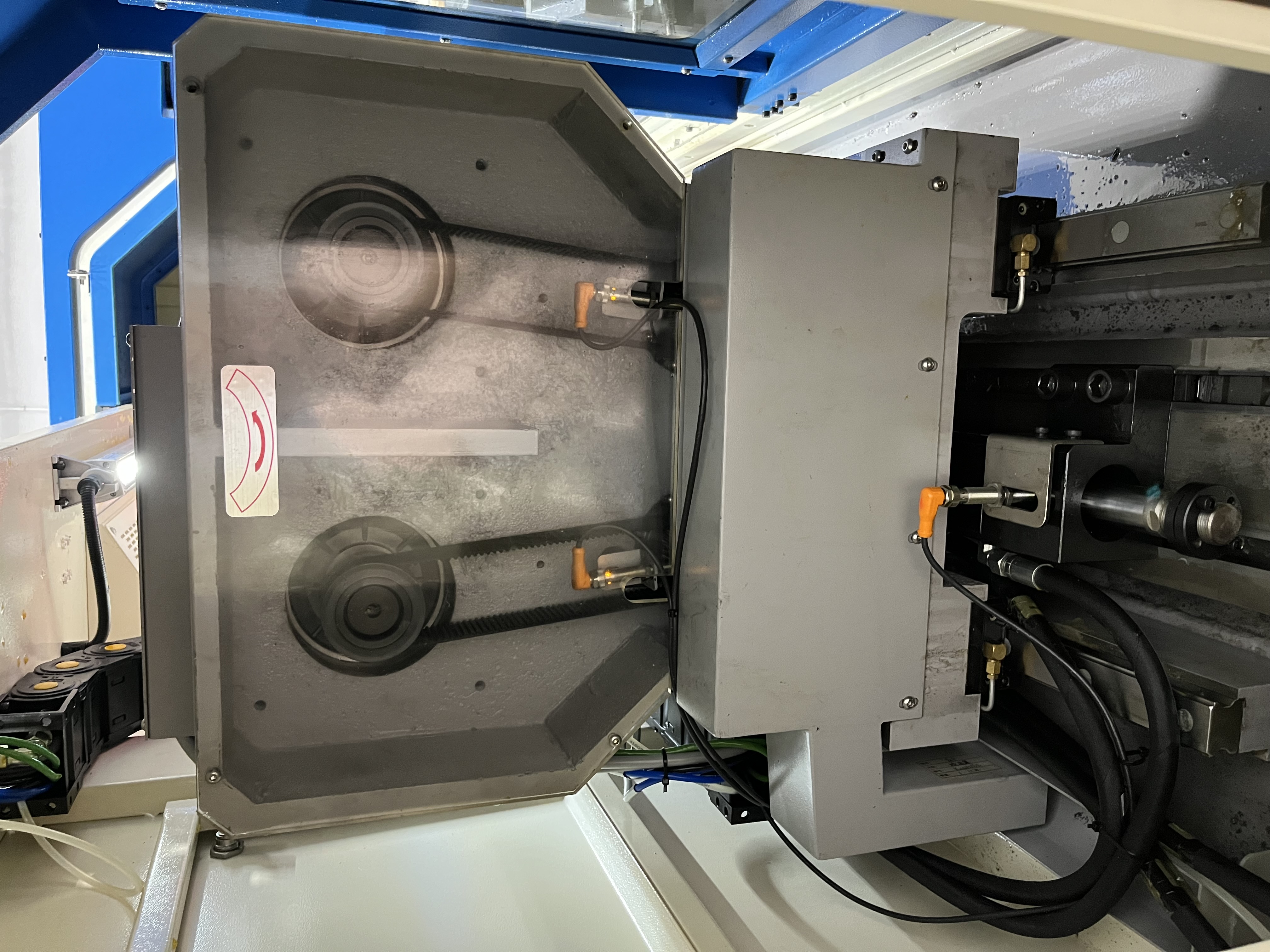
Deep hole drilling generates coolant mist like few other machining operations. The high coolant pressures, often exceeding 1,000 psi (70 bar) on gun drilling machines or 500 psi (35 bar) on BTA systems, atomize the coolant into a fine aerosol that hangs in the air and settles everywhere. I’ve walked into shops where a 0.5 µm particle haze is so thick you can taste the oil. A properly sized mist collection system is not optional.
Why Deep Hole Drilling Creates So Much Mist
The physics are straightforward. Coolant exits the drill head at high velocity, impacts the chip surface and bore wall, and shears into droplets. The smaller the droplet, the longer it stays airborne. Droplets below 10 µm can remain suspended for hours in still air. With typical coolant flow rates of 30 to 120 liters per minute per spindle, the volume of aerosol generated is substantial.
| Coolant Pressure | Droplet Size Range | Mist Generation Rate |
|---|---|---|
| 500 psi (35 bar) | 5–50 µm | 200–400 ml/hr per spindle |
| 1,000 psi (70 bar) | 2–30 µm | 350–600 ml/hr per spindle |
| 1,500 psi (105 bar) | 1–20 µm | 500–800 ml/hr per spindle |
I have measured mist levels as high as 12 mg/m³ above a gun drilling machine, well above the OSHA permissible exposure limit of 5 mg/m³ for mineral oil mist. That is a health hazard and a housekeeping disaster.
Types of Mist Collectors
Electrostatic Precipitators (ESP)
These units charge the mist particles and collect them on oppositely charged plates. ESPs handle fine submicron mist well and have low pressure drop, typically 0.1 to 0.3 inches of water gauge. The downside is that the collection plates need cleaning every two to four weeks in heavy coolant applications. I’ve found ESPs work best on machines running synthetic coolant where the mist is less sticky.
Media Filter Collectors
These use fiberglass or polyester media in cartridge or bag form. They capture 99.5% or more of particles above 0.5 µm when maintained properly. The operating cost is higher because media needs replacement every three to six months, depending on usage. A typical cartridge costs $40 to $120 and a machine with four spindles might go through six to eight cartridges per year.
| Collector Type | Initial Cost (per 2,000 CFM) | Annual Operating Cost | Filter Efficiency (0.5 µm) |
|---|---|---|---|
| Electrostatic | $6,000–$10,000 | $400–$800 | 90–95% |
| Media cartridge | $4,000–$7,000 | $1,200–$2,400 | 99.5%+ |
| Cyclone + HEPA | $8,000–$14,000 | $800–$1,500 | 99.97%+ |
| Centrifugal | $2,500–$5,000 | $200–$400 | 70–85% |
Cyclone + HEPA Combination
For heavy-duty deep hole drilling shops, this is what I recommend most often. A cyclone pre-separator removes the larger droplets, and a HEPA final stage handles the fine aerosol. The HEPA filters last longer because the cyclone does the heavy lifting. I installed a system like this on a six-spindle BTA line and the HEPA filters lasted 14 months between changes.
Sizing and Placement
Capture velocity at the machine enclosure opening should be at least 100 feet per minute. That translates to roughly 800 to 1,200 CFM per cubic meter of enclosure volume per minute. I use a rule of thumb: 800 CFM per spindle for gun drilling, 1,200 CFM per spindle for BTA.
Duct design matters more than most people realize. Keep duct velocities between 2,000 and 3,500 feet per minute to prevent coolant from settling in the ducts. Slope the ducts toward a drain point. I’ve seen a perfectly good mist collection system fail because the ductwork had low spots where coolant pooled and grew bacteria.
Maintenance Requirements
Each mist collector type has different maintenance demands that affect your operating cost and technician workload. I have found that the maintenance burden is often underestimated when selecting a system.
ESP collectors need the collection plates cleaned every two to four weeks. The cleaning procedure involves removing the plate pack, washing it in a hot water and detergent bath, drying it, and reinstalling. This takes one technician about two hours per unit. If you have ten machines with individual collectors, that is twenty hours of maintenance every month. I switched to self-cleaning ESP units on our high-production machines and the labor dropped to four hours per month.
Media cartridge collectors require filter changes every three to six months. The operator pops out the old cartridge, disposes of it, and installs a new one. The whole process takes fifteen minutes per collector. The annual media cost at $80 per cartridge with four changes per year is $320 per machine.
HEPA filters in cyclone combination systems last 12 to 18 months in deep hole drilling applications. A replacement HEPA cartridge costs $200 to $500. The cyclone section has no consumable media but needs the collection hopper drained weekly.
I keep a log of filter change dates and pressure drop readings for every collector. A rising pressure drop trend indicates the media is loading and needs replacement soon. A sudden pressure drop increase means the media has saturated and needs immediate replacement.
Regulatory Compliance
OSHA set the permissible exposure limit for mineral oil mist at 5 mg/m³ as an eight-hour time-weighted average. NIOSH recommends a lower limit of 0.5 mg/m³ for carcinogenic effects. Many shops I work with target 1 mg/m³ or below to maintain a clean working environment regardless of regulatory minimums.
| Standard | Limit (mineral oil mist) | Notes |
|---|---|---|
| OSHA PEL | 5 mg/m³ | Legal limit in the US |
| NIOSH REL | 0.5 mg/m³ | Recommended, not enforced |
| ACGIH TLV | 2 mg/m³ (inhalable) 0.2 mg/m³ (respirable) | Professional guideline |
| Typical deep hole shop (before mitigation) | 5–15 mg/m³ | Common measured range |
| Typical deep hole shop (with good collection) | <1 mg/m³ | Achievable with proper system |
I conduct quarterly air quality monitoring using a real-time aerosol monitor. The data goes into a log that tracks long-term trends. When I see a gradual rise in airborne concentration over several months, it usually means the mist collector performance is degrading and needs maintenance.
Integration with Machine Enclosures
The machine enclosure design plays a big role in mist containment. Full enclosures with sliding doors and rubber seals around the spindle area keep mist from escaping at the source. I’ve retrofitted partial enclosures on older machines by adding polycarbonate panels and magnetic seals, and the difference in shop air quality was immediate.
Key Takeaways
- Deep hole drilling generates 2–10x more coolant mist than conventional machining due to high pressures.
- Media cartridge collectors offer the best filtration efficiency but highest consumable cost.
- Cyclone + HEPA systems are the most cost-effective for heavy-duty deep hole shops.
- Capture velocity at the enclosure opening should be at least 100 ft/min.
- Duct design and slope matter as much as the collector itself.
- Regular maintenance intervals for ESP plates and media filters are critical to sustained performance.