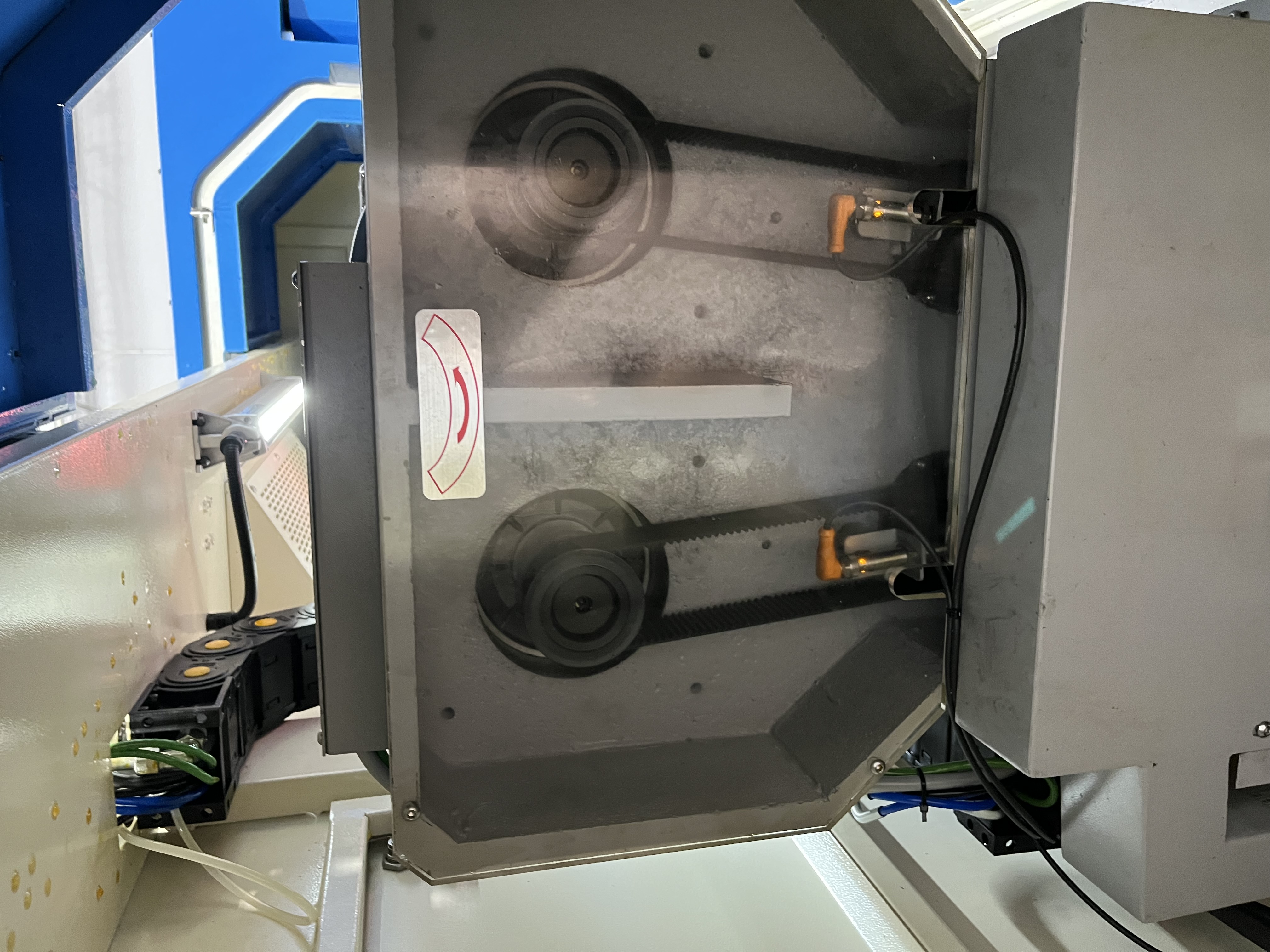
The simplest way to increase deep hole drilling output is to add more spindles. Two spindles drilling at once theoretically doubles the throughput. Four spindles quadruple it.
But multi-spindle machines aren’t simple. The spindles need to be synchronized, the tooling needs to be matched, and the setup is more complex than a single-spindle machine. Here’s what I’ve learned running them.
When Multi-Spindle Works
Multi-spindle drilling makes sense when three conditions are met:
- Same hole pattern on every part. If every part has 4 holes in the same positions, a 4-spindle machine drills all 4 in one cycle.
- High enough volume to justify the machine cost. A multi-spindle machine costs more than a single-spindle. The volume needs to be there to pay back the investment.
- The parts are consistent enough that all spindles can run the same parameters. If one hole is through a forging skin and another is through a machined surface, the different cutting conditions make it hard to optimize feed for all spindles at once.
I’ve seen multi-spindle machines work well on transmission valve bodies, tube sheets, and fuel injection components. These are parts with consistent hole patterns and high production volumes.
The Setup Challenge
Setting up a multi-spindle machine takes longer than a single-spindle. Each spindle needs:
- A drill of the correct diameter and length
- A guide bushing that matches the drill
- Coolant flow verified at the tool tip
- Feed and speed verified for the material
On a 4-spindle machine, that’s 4 drills, 4 bushings, and 4 coolant checks. A setup change that takes 30 minutes on a single-spindle machine might take 2 hours on a 4-spindle.
I’ve learned to standardize tooling sizes across spindles when possible. If all 4 spindles use the same drill diameter, I only need to stock one size of drill and bushing. If every spindle is a different diameter, the tool inventory multiplies.
Spindle Synchronization
The spindles on a multi-spindle machine don’t always start and end at the same time. If one drill reaches full depth before another, the machine waits for the slowest spindle. This can waste cycle time if the hole depths are different.
The fix is to pair holes of similar depth on the same spindles. On a valve body with 4 holes of different depths, I group the two shallow holes on spindles 1-2 and the two deep holes on spindles 3-4. This minimizes the wait time between cycles.
Coolant Distribution
Coolant delivery gets trickier on multi-spindle machines. The coolant pump needs to supply all spindles simultaneously, and the pressure drop varies depending on how many are running.
I use individual flow control valves on each spindle to balance the coolant distribution. Without them, the coolant takes the path of least resistance, and the spindle with the smallest drill gets less flow than it needs.
For a 4-spindle machine running 8mm drills, I set each spindle’s flow to about 25 L/min and adjust the valves until all spindles are within 10% of the target flow.
Tool Breakage Detection
Breaking one drill on a multi-spindle machine is a bigger problem than on a single-spindle. On a single-spindle, the machine stops when the drill breaks. On a multi-spindle, the other spindles keep running while the broken drill is spinning against the part.
I run load monitoring on every spindle. If any spindle’s load drops below a threshold (indicating a broken drill), the machine stops all spindles immediately. The load sensors need to be sensitive enough to catch a broken drill but not so sensitive that they trigger false stops.
Production Example
On a transmission valve body line with a 4-spindle machine:
| Factor | Single-Spindle | 4-Spindle |
|---|---|---|
| Holes per cycle | 1 | 4 |
| Cycle time per part | 40 seconds | 20 seconds |
| Parts per hour | 90 | 180 |
| Setup time | 30 min | 2 hours |
| Tool cost per part | Baseline | Higher (4 drills vs 1) |
The multi-spindle machine produces twice as many parts per hour but with longer setup times and higher tool costs. For a production run of 10,000 parts, the multi-spindle pays off. For a run of 100 parts, the single-spindle is more economical.
Key Takeaways
Multi-spindle drilling is a production tool, not a job shop tool. It works when the part design is stable, the production volume is high, and the setup can be amortized over a large batch.
The shops that use multi-spindle machines most effectively have standardized their part designs to minimize the number of different hole patterns they need to set up for. That lets them run longer batches and change setups less often.
Tooling Strategy for Multi-Spindle
Tooling management becomes more critical as spindle count increases. With four spindles running simultaneously, a single worn drill can scrap four holes before anyone notices. I run tool life counters on each spindle independently and stagger the tool changes so they do not all need replacement at the same time.
I also standardize drill diameters across spindles whenever the part design allows. If all four holes on a valve body are the same diameter, I use the same drill and bushing across all spindles. That reduces the tool inventory from four different sizes to one. For a comparison of machine types and their production capabilities, see Automation Options and ROI.
Key Takeaways
- Multi-spindle machines work best for high-volume parts with consistent hole patterns.
- Setup time multiplies with each spindle — plan for 2+ hours on a 4-spindle machine.
- Standardize tooling sizes across spindles to reduce inventory and setup complexity.
- Use individual flow control valves to balance coolant distribution across spindles.
- Run independent load monitoring on every spindle for breakage detection.
- Multi-spindle pays off for runs of thousands of parts; single-spindle is more economical for short runs.