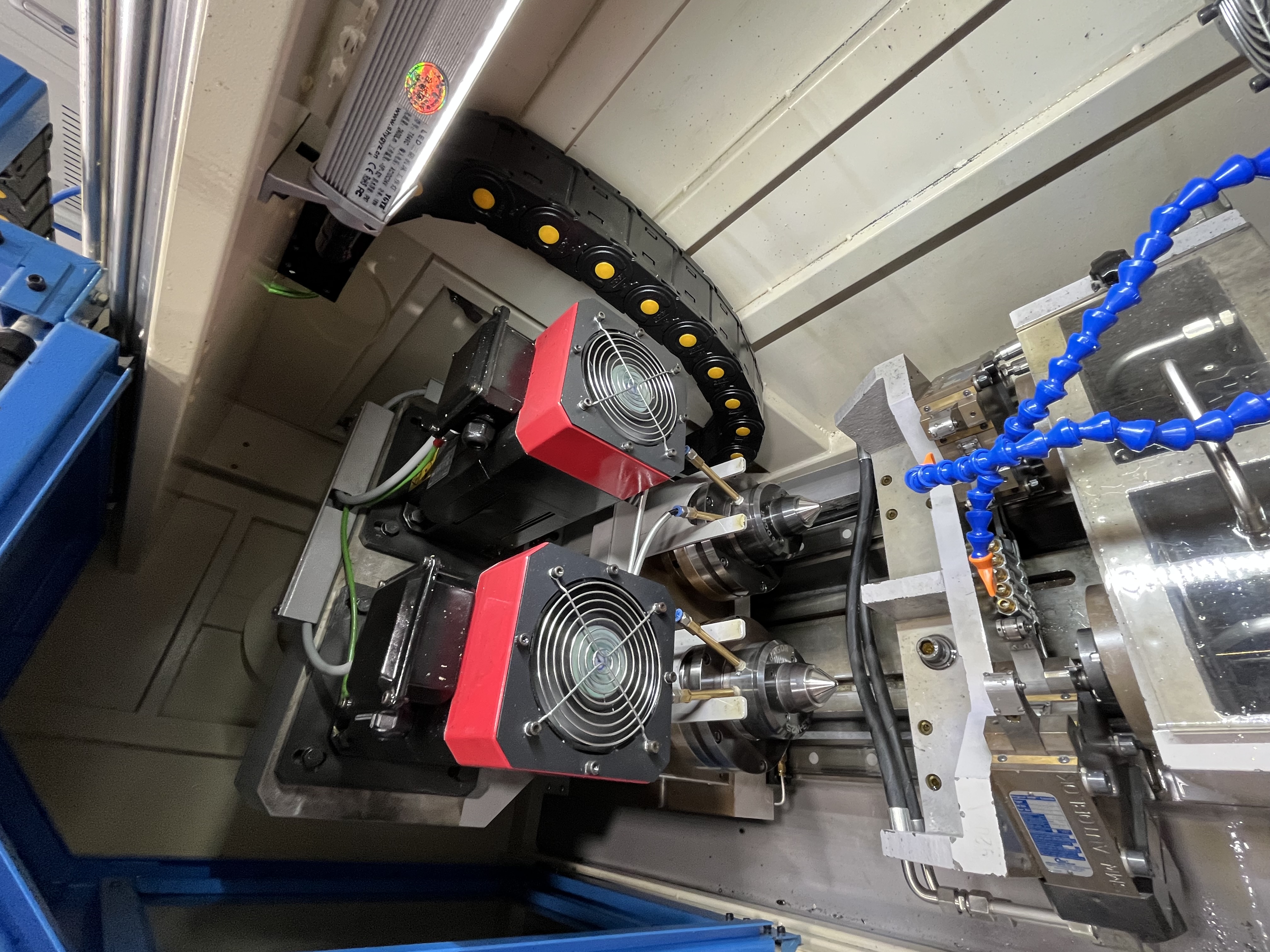
Coolant filtration is critical for deep hole drilling. Chips that recirculate through the coolant will damage the drill edge and score the bore surface, causing poor surface finish and short tool life. The two common filter types for deep hole drilling coolant systems are paper band filters and cartridge filters. I have used both extensively and each has strengths depending on the application.
Filter Comparison: Paper Band vs Cartridge
Paper band filters use a continuous roll of filter paper that advances as the filter media loads up with chips. The paper catches particles down to 20 to 50 microns. The dirty paper is discarded and clean paper feeds in automatically. Cartridge filters use replaceable filter elements with ratings down to 5 to 20 microns.
| Characteristic | Paper Band Filter | Cartridge Filter |
|---|---|---|
| Filtration rating | 20 - 50 microns | 5 - 20 microns |
| Initial cost (50 L/min system) | $3,000 - $6,000 | $2,000 - $5,000 |
| Operating cost per year | $500 - $1,500 (paper rolls) | $1,000 - $3,000 (cartridges) |
| Maintenance frequency | Paper roll change every 1-4 weeks | Cartridge change every 2-8 weeks |
| Chip handling capacity | High (handles high chip volume) | Moderate (clogs faster with high volume) |
| Automation level | Automatic paper advance | Manual or automatic change |
| Pressure drop (clean) | 2 - 5 psi | 3 - 8 psi |
| Pressure drop (change point) | 10 - 15 psi | 10 - 15 psi |
Paper band filters are simpler and more reliable for handling the high chip volumes common in deep hole drilling. The paper advances automatically when the pressure drop across the filter reaches the set point. The operator only needs to monitor the paper roll level and replace it when it runs out.
Cartridge filters provide finer filtration. The 5 to 20 micron rating removes finer particles than the 20 to 50 micron rating of paper band filters. The finer filtration provides better surface finish and longer drill life, but the cartridge cost is higher and the filter clogs faster when the chip load is high.
Application-Specific Recommendations
I use paper band filters for general gun drilling work and cartridge filters for precision work. The choice depends on the chip volume, the required surface finish, and the drill diameter.
| Application | Recommended Filter Type | Reason |
|---|---|---|
| General gun drilling (10-25mm dia) | Paper band | Handles high chip volume, lower operating cost |
| Precision gun drilling (under 6mm) | Cartridge (10 micron) | Fine filtration needed for small drills |
| BTA drilling (over 25mm dia) | Paper band (heavy duty) | Very high chip volume would clog cartridge quickly |
| Aerospace alloys | Cartridge (5 micron) | Surface finish requirements demand fine filtration |
| High-production steel parts | Paper band | Lower cost per hole at high volumes |
| Small shop, low volume | Cartridge | Lower initial cost, flexibility |
Paper band filters are better for applications with high chip volume because the paper handles the chip load without clogging. The paper advances automatically and the dirty paper is discarded. A paper band filter can handle chip volumes that would clog a cartridge filter within hours.
Cartridge filters are better for applications where surface finish is critical and chip volume is moderate. The finer filtration removes smaller particles that would score the bore surface. I use 10-micron cartridges for precision work and 5-micron cartridges for aerospace-grade surface finishes.
Operating Cost Comparison
The operating cost of the filter system depends on the chip volume, the filtration rating, and the coolant flow rate. I have tracked the operating costs for both filter types on similar machines running the same jobs.
| Cost Category | Paper Band Filter | Cartridge Filter |
|---|---|---|
| Filter media cost per year | $800 (12 rolls at $67 each) | $2,000 (40 cartridges at $50 each) |
| Disposal cost per year | $200 | $100 |
| Maintenance labor per year | $500 (2 hours per month at $25/hr) | $1,000 (4 hours per month at $25/hr) |
| Coolant replacement savings | $0 (baseline) | $300 (finer filtration extends coolant life) |
| Total annual operating cost | $1,500 | $2,800 |
The paper band filter has a lower annual operating cost in this comparison. The cartridge filter costs about $1,300 more per year to operate. However, the finer filtration can provide longer tool life and better surface finish, which offsets the higher operating cost.
I have measured tool life differences between paper band and cartridge filtration on the same job. Drilling 12mm holes in 4140 steel, the tool life with paper band (20 micron) was 400 holes per drill. With cartridge filtration (10 micron), the tool life was 520 holes per drill. The 30 percent improvement in tool life partially offset the higher filter cost.
System Integration and Maintenance
Both filter types need a differential pressure gauge to monitor the filter condition. I install a gauge with a visible dial and an alarm contact that signals the machine control when the filter needs changing.
For paper band filters, the paper advance mechanism should be checked monthly. The paper drive rollers accumulate oil and residue that can cause the paper to slip. I clean the rollers with a solvent and check the paper tension.
For cartridge filters, the housing seal should be checked at every cartridge change. A leaking seal bypasses the filter and sends unfiltered coolant to the drill. I replace the seal O-rings annually.
Both filter types benefit from a magnetic separator installed upstream. The magnetic separator removes ferrous chips before they reach the filter, extending the filter life by 50 to 100 percent. I consider the magnetic separator a required component, not an option, for any deep hole drilling coolant system.
Filter Change Procedure
The filter pressure drop indicates when the filter needs changing. I change the filter when the pressure drop exceeds 10 psi (0.7 bar) over the clean filter reading. Running the filter beyond this point reduces the coolant flow and can cause chip evacuation problems.
For paper band filters, the paper advances automatically in response to the pressure drop. If the paper is advancing more frequently than normal, the chip load is higher than usual or the paper quality has changed. I investigate when the paper consumption rate changes.
For cartridge filters, I change the cartridges when the pressure drop reaches the change point. I always change all cartridges at the same time, not just the clogged ones. Cartridge filters use multiple elements in parallel and replacing only the clogged ones leaves the remaining cartridges with different flow characteristics.
Key Takeaways
- Paper band filters (20-50 micron) handle high chip volumes better and have lower annual operating costs ($1,500 vs $2,800 for a 50 L/min system) compared to cartridge filters.
- Cartridge filters (5-20 micron) provide finer filtration that improves tool life by 30 percent in my tests on 12mm holes in 4140 steel — 520 holes per drill vs 400 holes with paper band.
- I recommend paper band filters for general gun drilling and BTA work, and cartridge filters for precision work with small drills under 6mm diameter or aerospace surface finish requirements.
- A magnetic separator upstream of either filter type extends filter life by 50 to 100 percent and should be considered a required component.
- I change filters when the differential pressure exceeds 10 psi over the clean reading, regardless of the filter type, to maintain adequate coolant flow for chip evacuation.
- The filter type choice depends on the balance between operating cost and tool life improvement — the 30 percent tool life improvement with cartridge filters partially offsets their higher cost.