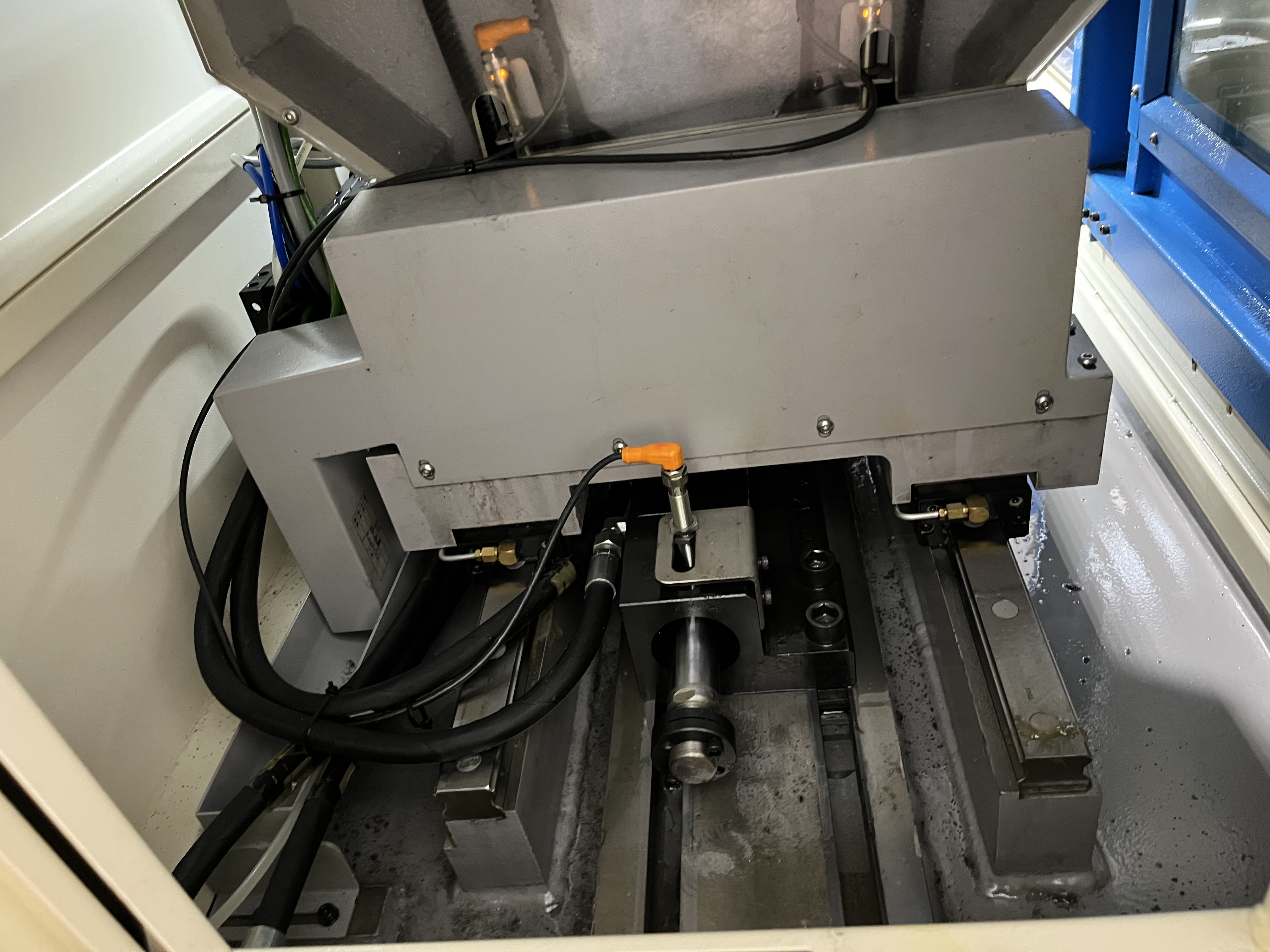
Remote diagnostics allow a machine builder or service technician to connect to a deep hole drilling machine from a remote location and check its real-time status. I have used remote diagnostics on several deep hole drilling machines across different shops, and the technology has saved me days of downtime. When a machine stops producing at 2 AM on a second shift, remote diagnostics often get it running again within minutes instead of waiting for a morning service call.
The technology has evolved beyond simple remote desktop access. Modern deep hole drilling machines come with integrated sensor networks that stream real-time data on spindle load, coolant pressure, vibration, and temperature — enabling predictive maintenance and process optimization from anywhere.
How Remote Diagnostics Work
The machine’s CNC control is connected to the internet through the shop network, typically through a dedicated remote access module that is isolated from the main IT network. A remote technician can log into the control and see the same screens as the operator — programs, parameters, alarms, and sensor readings.
Advanced systems go further. They continuously stream sensor data to a cloud platform where algorithms analyze the information for patterns that indicate developing problems. The system sends alerts before the machine faults, so the operator can address issues during planned downtime instead of reacting to emergency stops.
Sensor Types for Deep Hole Drilling Monitoring
I have deployed the following sensors on deep hole drilling machines for remote diagnostics and predictive monitoring:
| Sensor Type | What It Monitors | Placement | Purpose | Alert Threshold |
|---|---|---|---|---|
| Spindle power sensor | Motor current draw | Motor drive | Detect tool wear, material changes | 120% of baseline |
| Coolant pressure sensor | Pressure at tool tip | Near drill holder | Chip blockage detection, pump health | 15% drop from setpoint |
| Coolant flow meter | Flow rate in return line | Return line | Chip evacuation monitoring | 20% drop from setpoint |
| 3-axis accelerometer | Machine vibration | Spindle housing | Predictive bearing failure detection | 150% of baseline RMS |
| Temperature sensor | Coolant temperature | Return line | Chiller performance, thermal stability | ±2°C from setpoint |
| Linear axis power sensor | Feed force consumption | Feed drive | Tool wear progression, chip packing | 125% of baseline |
| RPM sensor | Actual spindle speed | Spindle | Speed verification, drive health | 5% deviation from commanded |
Data Transmission Architecture
The data flow from the deep hole drilling machine sensors follows a layered path:
- Edge processor on the machine: Sensors feed into a local edge processor that performs real-time analysis. This allows the machine to react instantly to critical events — like a coolant pressure drop — without waiting for the cloud.
- Local data storage: The edge processor stores raw data for the last 30 days. This history is available for troubleshooting even if the internet connection goes down.
- Cloud upload: Summary data and alerts are uploaded to the cloud platform every 60 seconds. Raw high-frequency data (vibration, for example) is uploaded in 10-second bursts when an anomaly is detected.
- Remote access portal: The technician accesses the data through a web portal or mobile app that shows dashboards, trends, and alert history.
I prefer this edge-cloud hybrid approach because it keeps the deep hole drilling machine operational even during network outages. A machine that stops drilling because it cannot reach the cloud is not a machine I want on my floor.
Alert Thresholds and Response
Setting the right alert thresholds is critical. Too sensitive and the system generates false alarms that operators ignore. Too tolerant and the system misses the warning signs of impending failure.
Here are the thresholds I have established through production experience on deep hole drilling machines:
| Parameter | Normal Range | Warning (Yellow) | Alarm (Red) | Recommended Action |
|---|---|---|---|---|
| Spindle load (% of rated) | 25-50% | 60-75% | Above 75% | Yellow: check tool condition. Red: stop and inspect. |
| Coolant pressure (bar) | Within 10% of setpoint | 10-20% below setpoint | 20%+ below setpoint | Yellow: check for blockage. Red: immediate stop. |
| Coolant temperature | Setpoint ±1°C | Setpoint ±2°C | Setpoint ±3°C | Yellow: check chiller. Red: stop and investigate. |
| Vibration (g RMS) | Baseline to 1.5x baseline | 1.5x to 2x baseline | Above 2x baseline | Yellow: schedule bearing check. Red: stop immediately. |
| Feed force (N) | Baseline to 1.2x baseline | 1.2x to 1.5x baseline | Above 1.5x baseline | Yellow: plan tool change. Red: retract drill. |
The system I use has a green-yellow-red threshold system. Green means normal operation with no action needed. Yellow triggers an automatic feed reduction to preserve the tool until the operator checks the situation. Red triggers an immediate machine stop with an audible and visual alarm. The operator can override the automatic stop with a manual button if they assess the situation as safe.
ROI of Remote Monitoring for Deep Hole Drilling
I have tracked the financial impact of adding remote diagnostics to a medium gun drilling machine over 18 months. The results are clear:
| Cost Category | Before Remote Monitoring | After Remote Monitoring | Annual Savings |
|---|---|---|---|
| Machine downtime | 12 hours/month average | 4 hours/month average | $8,000 |
| Tool breakage events | 3 per month | 1 per month | $3,600 |
| Scrapped workpieces | 2 per month | 0.5 per month | $4,500 |
| Service callouts | 2 per month | 0.5 per month | $6,000 |
| Coolant pump failures | 1 per year | 0 per year | $2,500 |
| Total per machine per year | $24,600 |
The hardware cost for retrofitting a deep hole drilling machine with sensors and edge processing is approximately $3,000-5,000 depending on the sensor set. The payback period on the machine I instrumented was 2.5 months. After that, the monitoring system generated a measurable return by preventing the problems that used to be accepted as normal operating costs.
Case Study: Intersection Detection Saved a $4,000 Workpiece
One specific remote monitoring feature that has paid for itself is intersection detection. When a gun drill exits a workpiece into a pre-existing hole or cavity, the spindle load drops sharply and the drill can snap when it re-engages the far wall. The remote monitoring system detects the power drop in under a second and automatically reduces the feed rate to prevent tool breakage.
I had a job drilling a 600 mm long aerospace component with a 6 mm gun drill. The part had a cross-hole at 400 mm depth. Before remote diagnostics, the gun drill snapped at the cross-hole intersection about once every 15 parts — each event scrapping a $4,000 workpiece. After installing the power monitoring system with intersection detection, the tool breakage at the cross-hole dropped to zero over 200 parts. The system reduced feed from 0.04 mm/rev to 0.01 mm/rev for 5 mm before and after the intersection, then resumed normal feed. The cycle time impact was negligible — about 15 seconds per hole.
Security Considerations
Connecting a deep hole drilling machine to the internet introduces security risks. The machine control could be vulnerable to unauthorized access if not properly isolated. I use machines with dedicated remote access modules that are physically separate from the shop network’s data traffic. The remote access is through a secure VPN connection with two-factor authentication.
The remote access module has a hardware kill switch that physically disconnects the module from the CNC control when not in use. This prevents any unauthorized access when the remote connection is not actively needed.
Practical Use in Production
In practice, remote diagnostics work well for both simple checks and advanced monitoring:
- “Is the machine alarmed on second shift?” — Check the app on my phone.
- “What is the spindle load trend over the last week?” — Pull the graph from the cloud portal.
- “Is the coolant pressure dropping gradually?” — The trend chart shows the 2% per week decline that signals a pump seal wearing.
- “Did the machine fault at 3 AM?” — The event log shows the exact sequence of alarms.
For more on how coolant monitoring integrates with remote diagnostics, see the coolant temperature article. The temperature sensor data is one of the key inputs the remote system uses to predict chiller problems. Also see the machine specs article for how to evaluate machines with built-in remote monitoring capability.
Key Takeaways
- Remote diagnostics for deep hole drilling machines can reduce downtime by 66% — from 12 hours to 4 hours per month in my production data.
- A green-yellow-red alert system with automatic feed reduction preserves tools and prevents breakage on coolant or load anomalies.
- The payback period for retrofitting sensors and edge processing is 2-3 months on a typical deep hole drilling machine.
- Edge processors keep the machine running during internet outages — never rely on cloud-only monitoring for production equipment.
- Intersection detection using spindle power monitoring eliminates tool breakage at cross-holes, saving thousands per event.
- Use dedicated remote access modules with VPN and two-factor authentication — never connect the CNC directly to the shop network.
- Instrument at minimum: spindle power, coolant pressure, coolant temperature, and vibration sensors for comprehensive coverage.