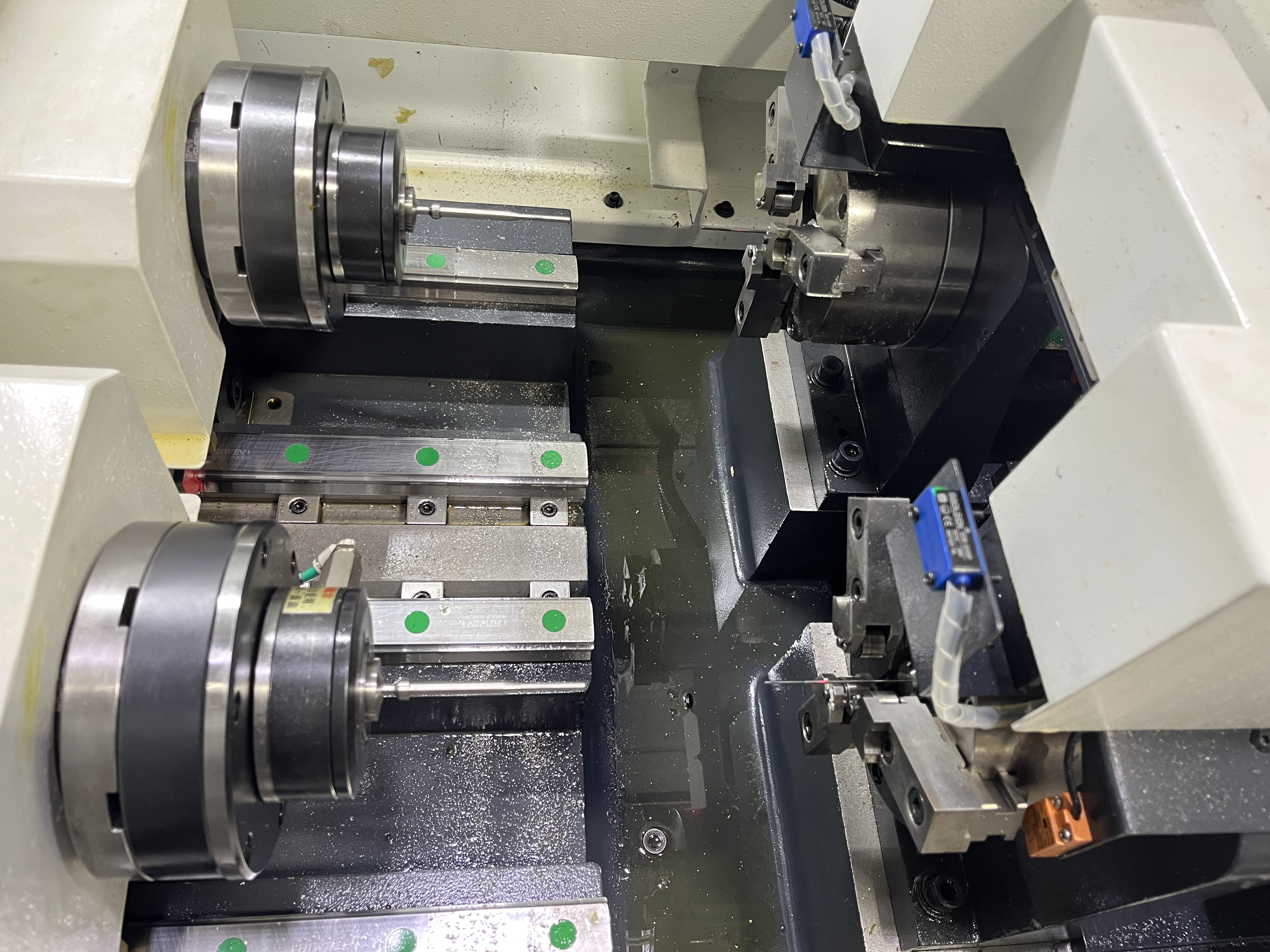
I use a tiered safety inspection checklist for every deep hole drilling machine in the shop. The inspections are divided into daily, weekly, monthly, and quarterly checks. Each level covers different aspects of machine safety, and the total time investment is about five minutes per day plus 30 minutes per week. The time is well spent — I have caught loose hoses, failing interlocks, and low coolant levels before they caused injuries or damage.
Daily Safety Inspection Checklist
The daily inspection takes about five minutes and I do it at the start of every shift. The operator performs the daily check and initials the log sheet. I review the log sheets weekly and follow up on any items that were missed.
| Check Item | What to Look For | Acceptable Condition | Action if Failed |
|---|---|---|---|
| Emergency stop buttons | Press each button, confirm machine stops | Stops within 1 second | Tag machine out, repair immediately |
| Door interlocks | Open each access door, confirm cycle stops | No cycle allowed with door open | Replace switch or adjust actuator |
| Coolant hoses | Visual inspection along full length | No cracks, bulges, or leaks | Replace hose assembly |
| Chip guards | Check all guards for damage or gaps | Full coverage with no gaps | Repair or replace guard |
| Coolant level | Sight glass or dipstick | Between min and max marks | Add coolant |
| Floor condition | Area around machine | No puddles, no tripping hazards | Clean up, find leak source |
| Fire extinguisher | Check gauge and seal | Gauge in green zone, seal intact | Replace extinguisher |
| Chip conveyor | Check for jams or debris | Runs freely, no binding | Clear obstruction |
| Spindle rotation check | Listen for unusual noise | Smooth rotation, no grinding | Report for inspection |
| Coolant pressure at startup | Observe pressure gauge rise | Reaches operating pressure within 10 seconds | Check pump and relief valve |
I train every operator on the daily inspection procedure during their first week on the job. The procedure is posted on a laminated card attached to the machine control panel. I have found that operators who do the daily inspection consistently have fewer close-call incidents than those who skip it.
Weekly Inspection Checklist
I perform the weekly inspection myself or delegate it to a lead operator who has been certified on the machine. The weekly checks take about 20 to 30 minutes and cover systems that do not need daily attention but are critical for safe operation.
| Check Item | What to Look For | Acceptable Condition | Action if Failed |
|---|---|---|---|
| Light curtain alignment | Verify beam path is uninterrupted | Machine stops when beam is broken | Realign or replace light curtain |
| Pressure relief valve test | Close outlet valve slowly, confirm opening | Opens within 5% of set pressure | Replace valve immediately |
| Fire suppression system | Manual release test | Agent discharges properly | Service system, call supplier |
| Coolant hose restraints | Check safety cables or chains | Restraints intact on all high-pressure hoses | Replace missing restraints |
| Chip guard interlock | Confirm each guard switch activates | Cycle stops when any guard opens | Adjust or replace switch |
| Coolant mist collector | Check filter condition and airflow | Airflow within 80% of rated flow | Clean or replace filters |
| Electrical cabinet vents | Check for coolant mist ingress | No visible coolant inside cabinet | Seal conduit entries and gaskets |
| Hydraulic system pressure | Check gauge against spec | Within spec | Adjust regulator or repair |
| PPE station | Verify all PPE items are stocked and clean | All required items present | Restock PPE |
The fire suppression system inspection is particularly important on machines running oil-based coolants. A coolant mist fire can spread fast and the suppression system must work the first time. I test the system by triggering the manual release and verifying that the suppression agent discharges properly.
Monthly Inspection Checklist
Monthly checks include a full safety system test, electrical panel inspection for coolant contamination, and coolant system pressure test.
| Check Item | What to Look For | Acceptable Condition | Action if Failed |
|---|---|---|---|
| Full safety system test | Every interlock, light curtain, and pressure switch in sequence | All devices function correctly | Repair or replace failed devices |
| Electrical panel coolant check | Open panel, inspect for moisture or residue | Dry, no contamination | Dry panel, seal entry points |
| Coolant system pressure test | Pressurize to max, hold for 5 minutes | Drops less than 5% in 5 minutes | Locate and repair leak |
| Hose replacement check | Document remaining life on 3-year schedule | All hoses within service life | Schedule replacement |
| Ground continuity test | Measure resistance from machine frame to ground bus | Less than 1 ohm | Repair ground connection |
| Spindle brake test | Engage brake, measure stopping time | Stops within 2 seconds from max RPM | Adjust or repair brake |
| Coolant tank cleaning | Drain and inspect | No significant sludge or settled chips | Clean tank |
| Safety signage check | Verify all warning labels are legible | All labels readable and attached | Replace worn labels |
I have found coolant contamination inside electrical panels on more than one occasion. The coolant mist gets into the cabinet through seal gaps around conduit entries and door gaskets. The contamination causes shorts that can trip the main breaker unexpectedly or, worse, create a shock hazard for the operator.
Common Hazards and PPE Requirements
Deep hole drilling machines present specific hazards that require specific PPE. Here is what I require on my shop floor:
| Hazard | Source | Required PPE | Additional Controls |
|---|---|---|---|
| High-pressure coolant injection | Coolant system up to 3000 psi | Safety glasses with side shields | Pressure relief valves, hose restraints |
| Rotating spindle entanglement | Spindle and rotating tool | No loose clothing, tie back long hair | Machine guards, interlocks |
| Hot chips and coolant | Cutting process | Heat-resistant gloves, apron | Chip guards, splash shields |
| Sharp chips and burrs | Drilled parts and swarf | Cut-resistant gloves | Proper chip handling tools |
| Coolant mist inhalation | Atomized coolant at cutting zone | Respirator if mist exceeds OEL | Mist collectors, ventilation |
| Noise exposure | Spindle, pumps, chip conveyor | Hearing protection above 85 dBA | Sound enclosures, barriers |
| Electrical shock | Control cabinet, motors | Insulated boots | Lockout/tagout, GFCI |
| Fire from oil-based coolant | Coolant ignition on hot surfaces | Fire extinguisher nearby | Fire suppression system |
Coolant System Pressure Safety
The coolant system on a deep hole drilling machine operates at pressures from 1000 to 3000 psi. A burst hose at these pressures can cause serious injury. I inspect the coolant hoses monthly for signs of wear and replace them on a preventive schedule.
The pressure relief valve on the coolant pump is a critical safety device. I test the relief valve monthly by slowly closing the outlet valve until the relief valve opens. The relief valve should open within 5 percent of its set pressure. If it does not, I replace the valve immediately.
Coolant hose assemblies have a finite service life. I replace all coolant hoses on a three-year schedule regardless of their visible condition. The hoses degrade from the inside due to chemical attack from the coolant additives, and internal degradation is not visible during an external inspection.
I also check all quick-disconnect couplings on the coolant lines. A worn coupling can blow off under pressure and whip around, which is extremely dangerous. I replace couplings that show signs of wear or leakage.
Lockout/Tagout Procedure
The lockout/tagout procedure for a deep hole drilling machine is more complex than for a standard CNC machine because of the high-pressure coolant system. The coolant pump stores energy in the accumulator even after the pump is shut off. I require operators to bleed the accumulator pressure before opening any coolant system components.
The lockout procedure covers six energy sources: main electrical disconnect, coolant pump disconnect, hydraulic power unit, compressed air supply, chip conveyor motor, and any auxiliary equipment. Each energy source must be isolated and verified before any maintenance work begins.
I verify zero energy state by attempting to start the machine after lockout. I also monitor the coolant pressure gauge to confirm the accumulator has bled down. The verification takes 30 seconds and it has prevented at least two serious incidents that I know of.
For more on safe machine operation and monitoring, see my machine monitoring guide.
Key Takeaways
- The five-minute daily safety inspection covers emergency stops, door interlocks, coolant hoses, chip guards, coolant level, and floor condition — catching these early prevents most safety incidents
- Fire suppression systems on machines running oil-based coolants must be tested weekly because a coolant mist fire can spread faster than a standard shop fire
- Coolant system pressure relief valves should be tested monthly to confirm they open within 5 percent of set pressure, especially on systems operating above 1000 psi
- I replace all coolant hoses on a three-year preventive schedule regardless of visible condition because internal chemical degradation is not externally visible
- The lockout procedure must account for the coolant accumulator pressure — bleeding the accumulator before opening any coolant system component prevents pressurized fluid injuries
- Six energy sources must be isolated during lockout on a deep hole drilling machine: main electrical, coolant pump, hydraulic unit, compressed air, chip conveyor, and auxiliary equipment
- Electrical panels should be inspected monthly for coolant mist contamination — a common hazard that can cause shorts and shock risks
- Required PPE includes safety glasses, hearing protection, cut-resistant and heat-resistant gloves, and respirator when coolant mist exceeds occupational exposure limits