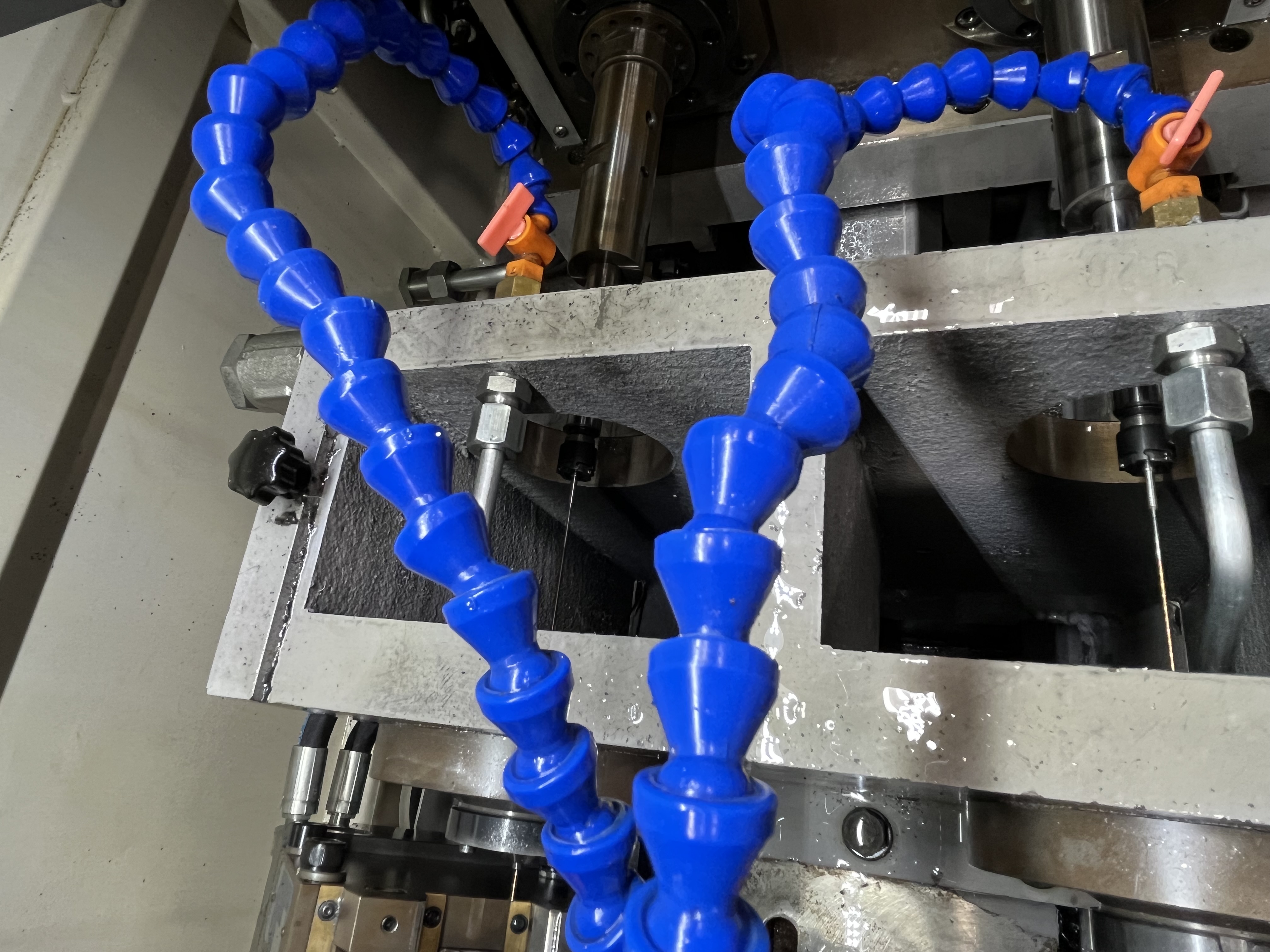
The spindle is the most critical component of a deep hole drilling machine. The cutting tool is mounted in the spindle, and the spindle’s condition determines the quality of the hole.
I’ve worked with spindles ranging from high-speed gun drilling spindles to heavy-duty BTA spindles. I’ve personally rebuilt over 30 spindles across five different machine brands. Each type has different design requirements.
Gun Drilling Spindles
Gun drilling spindles need high speed and moderate torque. A typical gun drilling spindle operates at 3000-12,000 RPM with enough torque to drive a drill from 1mm to 30mm diameter.
The spindle bearings are usually angular contact ball bearings arranged in pairs. The bearing arrangement handles the radial load from the cutting forces and the axial load from the feed thrust.
Coolant delivery through the spindle is a key design feature. The spindle has a rotating union that transfers high-pressure coolant from the stationary supply to the rotating tool. The coolant passage through the spindle center must be smooth and unobstructed.
BTA Spindles
BTA spindles need lower speed and much higher torque than gun drilling spindles. A BTA spindle might operate at 500-3000 RPM with torque high enough to drive a drill up to 300mm diameter.
The bearings are usually roller bearings that handle higher radial loads. The axial load from BTA feed forces can be several tons, requiring a substantial thrust bearing arrangement.
BTA spindles are heavier and more robust than gun drilling spindles. The spindle housing is designed to handle the higher forces without deflection.
Spindle Bearings
The bearing arrangement affects spindle performance:
| Bearing Type | Speed | Load | Typical Use |
|---|---|---|---|
| Angular contact ball | High | Moderate | Gun drilling spindles |
| Cylindrical roller | Moderate | High radial | BTA spindles |
| Tapered roller | Moderate | High radial and axial | Heavy-duty BTA spindles |
| Hydrostatic | Very high | High | Precision spindles |
Hydrostatic bearings are used on some high-end machines. They provide excellent damping and stiffness but require a continuous oil supply system. I’ve found that angular contact bearings in a back-to-back arrangement give the best results for most gun drilling spindles.
Spindle Condition
The spindle condition affects hole quality directly. A spindle with worn bearings produces:
- Chatter marks on the bore surface
- Oversized holes (the spindle wobbles)
- Poor surface finish
- Short tool life
I can detect spindle bearing wear by listening to the machine during operation. A spindle with good bearings runs quietly. A spindle with worn bearings makes a rumbling sound that’s audible over the cutting noise.
Spindle vibration measurements can detect bearing wear before it affects hole quality. I’ve seen shops that run regular vibration analysis on their spindles and replace bearings at the first sign of wear.
I’ve found that monthly vibration checks catch about 90% of bearing defects before they affect hole quality, which saves roughly $5,000 per spindle in avoided crash damage.
Coolant Delivery
The coolant delivery system through the spindle is a common problem area on older machines. The rotating union seals wear over time and leak.
Symptoms of rotating union seal wear:
- Coolant leaking from the union housing
- Pressure fluctuations at the tool tip
- Air bubbles in the return coolant
I replace rotating union seals preventively — typically every 2000 operating hours — to avoid pressure problems during production.
Spindle Alignment
The spindle must be aligned to the axis of the machine bed within tight tolerances. A misaligned spindle produces holes that drift.
The alignment should be checked after any spindle repair or machine relocation. The check involves mounting a test bar in the spindle and measuring its position relative to the machine axis at two points along the travel.
I’ve seen shops that ship a machine to a new location and start drilling without checking spindle alignment. The first part is scrap because the spindle shifted during transport.
Key Takeaways
The spindle is the most important part of a deep hole drilling machine for hole quality. A machine with a good spindle can produce good holes even if other aspects of the machine are average. A machine with a worn spindle cannot produce good holes regardless of the rest of the setup.
Spindle Drive Types
The spindle drive type affects performance, maintenance, and cost. I’ve worked with three main drive types:
Belt-driven spindles. The motor connects to the spindle through belts and pulleys. This is the most common configuration on older machines and some mid-range machines today. Belt-driven spindles provide good torque at low RPM but have more parts that can fail — belts stretch and need replacement, pulleys wear, and the tension must be checked regularly.
Advantages: Lower cost, good low-RPM torque, vibration damping from the belt. Disadvantages: Belt wear (replace every 2000-4000 hours), speed limited by belt capacity, power loss through the belt drive (typically 3-5%).
Direct-drive spindles. The motor connects directly to the spindle shaft without belts or gears. This configuration is common on modern CNC machines. The motor rotor is the spindle shaft itself, eliminating the coupling losses.
Advantages: Higher speed capability, no belt maintenance, better speed control, higher efficiency (no belt loss). Disadvantages: Higher cost, less low-RPM torque, the motor heat goes directly into the spindle.
Geared spindles. The motor drives the spindle through a gearbox that provides multiple speed ranges. This configuration is common on BTA machines and heavy-duty gun drills.
Advantages: High torque at low RPM, wide speed range through gear changes, the gearbox multiplies motor torque. Disadvantages: Complex, more maintenance (gear oil changes, bearing adjustments), gear noise, higher cost.
| Drive Type | Best For | Typical Cost Premium | Maintenance Interval |
|---|---|---|---|
| Belt-driven | Mid-range gun drills, retrofits | Baseline | Belt: 2000-4000 hours |
| Direct-drive | High-speed gun drills, precision work | +15-25% | Bearings: 5000-8000 hours |
| Geared | BTA machines, large-diameter work | +25-40% | Gearbox: 2000 hours |
I prefer direct-drive spindles for gun drilling machines running production work. The maintenance savings from not replacing belts add up over the machine’s life. For BTA machines where torque at low RPM is critical, geared spindles are the better choice.
Spindle Maintenance Schedule
I follow a preventive maintenance schedule for spindles that has worked well across multiple machines:
| Interval | Task |
|---|---|
| Daily | Listen for unusual bearing noise, check coolant union for leaks |
| Weekly | Measure spindle runout with a dial indicator |
| Monthly | Check spindle temperature with an IR thermometer during operation |
| Quarterly | Replace rotating union seals (preventive) |
| Annually | Professional vibration analysis, check spindle-to-bed alignment |
| Every 5000 hours | Replace spindle bearings (production machines) |
| Every 10000 hours | Full spindle rebuild (inspect all components) |
The preventive approach costs more upfront but prevents unplanned downtime. A bearing failure during production costs $5,000-$15,000 in lost time plus the repair cost. A preventive bearing replacement costs $2,000-$5,000 and happens during scheduled downtime.
I’ve tracked spindle maintenance costs across five machines over 10 years. The preventive approach cost $45,000 total and resulted in zero unplanned spindle downtime. The reactive approach would have cost an estimated $80,000-$120,000 including lost production.
I check the spindle condition regularly and address any issues before they affect production. A spindle rebuild costs $10,000-$30,000 depending on the machine size — small compared to the value of the parts the spindle produces over its service life.
Key Takeaways
- The spindle is the most critical component for hole quality — a worn spindle cannot produce good holes regardless of the rest of the machine
- Gun drilling spindles need high RPM (3000-12,000) while BTA spindles need high torque at lower RPM
- Direct-drive spindles offer lower maintenance than belt-driven but cost 15-25% more
- Preventive spindle maintenance costs less than half of reactive maintenance when accounting for downtime
- A spindle rebuild costs $10,000-$30,000 and should be planned at 10,000 operating hour intervals