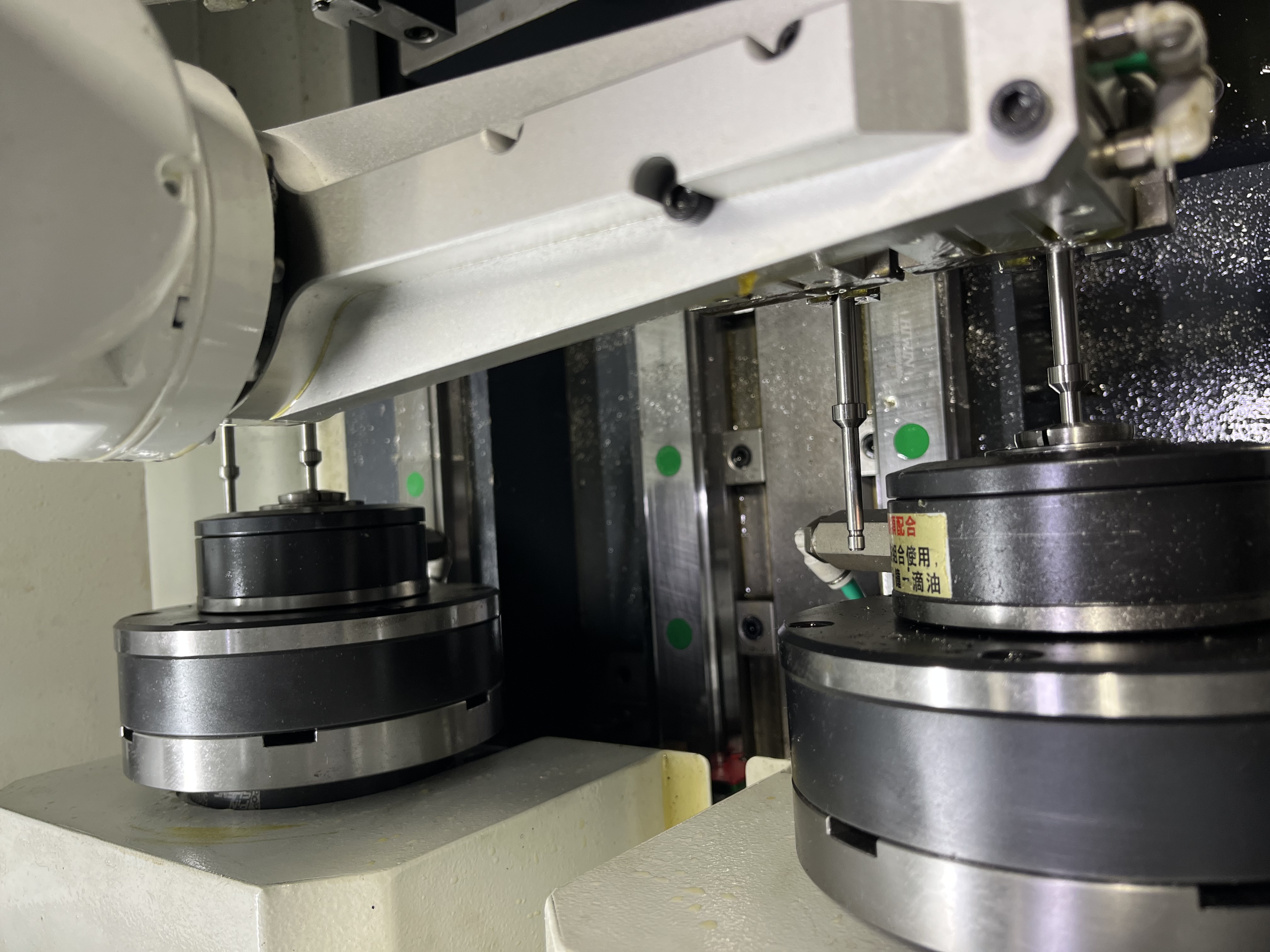
Training new deep hole drilling operators takes about 3 to 4 weeks before they can work independently. I use a structured program that builds skills gradually. In my experience, rushing the program produces operators who can push the green button but cannot diagnose a problem. That costs more in scrapped parts than the extra two weeks of training.
Week One: Machine Fundamentals
Week 1 covers the basics. The operator learns every machine component, the safety systems, the coolant system operation, and tool handling. By the end of week one, the operator can inspect a gun drill under a 10x magnifier, install a guide bushing correctly, and start and stop the machine safely.
I include these specific competencies:
| Competency | Assessment Method | Pass/Fail Criteria |
|---|---|---|
| Identify all machine axes and their travel limits | Verbal quiz with machine in front of them | 100% correct |
| Explain the coolant flow path from tank to tool tip | Draw on whiteboard | Correct routing and pressure ranges |
| Inspect a gun drill for edge damage | Visual under magnifier | Identify three example defects |
| Install a guide bushing | Hands-on with torque wrench | Within specified torque range |
| Emergency stop procedure | Simulated drill break scenario | Under 15 seconds to safe state |
I also spend half a day on coolant system safety. Deep hole drilling runs at 30 to 120 bar coolant pressure. A leak at those pressures cuts through skin. I show the operators the actual pressure relief valves and explain what happens when a seal fails.
Week Two: Setup and Workholding
Week 2 covers setup. Workholding, steady rest positioning, guide bushing selection, tool installation, and alignment. The operator sets up their first job under supervision.
I break setup into five stages:
- Workpiece clamping. The operator learns to check clamping force and workpiece runout. I teach them to indicate the bore location within 0.02 mm TIR before tightening the final clamp.
- Steady rest positioning. For long parts, the steady rest must support the workpiece close enough to the cutting zone to prevent whip. I teach the rule of thumb: no more than 4 diameters of unsupported length between the steady rest and the guide bushing.
- Guide bushing selection. The bushing bore must match the drill diameter to within 0.01 mm. I keep a gauge set and show the operator how to measure each bushing before installation.
- Tool installation. The operator centers the drill tip in the guide bushing, tightens the collet or holder, and verifies that the drill rotates without visible wobble.
- Coolant alignment. The operator verifies that the coolant supply hose connects to the correct port and that the return line is free of obstructions.
At the end of week two, the operator runs a test bar through a simulated drilling cycle with air cutting only. They must demonstrate that every step in the setup procedure is followed in the correct sequence.
Week Three: Production Running and Parameter Adjustment
Week 3 covers production. Running parts, reading chip formation, adjusting parameters, and quality inspection. The operator runs parts independently but checks with a supervisor before making parameter changes.
The most important skill I teach in week three is reading chip formation. Deep hole drilling produces distinctive chip types that tell you exactly what the tool is experiencing:
| Chip Type | What It Indicates | Action Required |
|---|---|---|
| Short, crescent-shaped chips | Normal cutting conditions | None |
| Long, stringy chips | Material is smearing, not shearing | Increase feed or reduce cutting speed |
| Needle-like chips | Tool edge microfracture | Stop and inspect tool |
| Dust or powder | Tool is rubbing, not cutting | Stop and check edge condition |
| Ribbon chips curling tight | Chip breaker not engaging | Adjust feed rate or replace insert |
The operator also learns to measure bore diameter, surface finish, and straightness using bore gauges, profilometers, and CMM reports. I teach them to plot the diameter reading at three depths and look for taper. A taper of more than 0.02 mm over 300 mm depth signals a tool alignment or guide bushing problem.
Week Four: Problem Recognition and Troubleshooting
Week 4 covers problem recognition. The operator learns what to look for and when to stop the machine. I teach them to check coolant pressure first, then chip shape, then guide bushing condition. This order matters because coolant problems cause chip evacuation failures, which then damage the tool and bushing.
I use a troubleshooting matrix that the operator follows step by step:
| Observed Symptom | Most Likely Cause | Check First | Second Check |
|---|---|---|---|
| Surface finish too rough | Feed rate too high or tool wear | Tool edge condition | Feed rate in program |
| Bore oversize | Guide bushing worn or misaligned | Bushing bore diameter | Spindle alignment |
| Bore undersize | Tool wear or material springback | Tool diameter | Material hardness test |
| Tool breakage | Chip packing or feed too high | Coolant pressure | Chip shape in flutes |
| Short tool life | Speed too high or coolant concentration low | Cutting speed | Coolant concentration % |
| Spindle load rising | Tool wear or bushing wear | Load trend over last 10 parts | Bushing inspection |
The operator drills with this matrix during week four. They run sample parts with intentionally introduced faults and must identify the correct cause and corrective action.
Post-Training Qualification Period
After the training program, the operator runs jobs independently for one month with regular quality checks. I review the first 50 parts from each new job they set up. After that, they are fully qualified. I still review their spindle load trends and quality reports weekly for another two months.
In my experience, operators who complete this program achieve a defect rate below 0.5% within the first three months. Operators trained with the previous informal method ran at 2% to 3% defect rates. The structured program pays for itself in reduced scrap alone.
Key Takeaways
- A 4-week structured training program produces competent operators. Anything shorter produces button-pushers who cannot diagnose problems.
- Reading chip formation is the single most valuable skill for a deep hole drilling operator. Teach it early and test it often.
- Use a troubleshooting matrix. Operators who follow a structured checklist catch problems faster and more reliably.
- Quality data from the first month after training tells you whether the operator is ready. Do not skip the post-training review period.