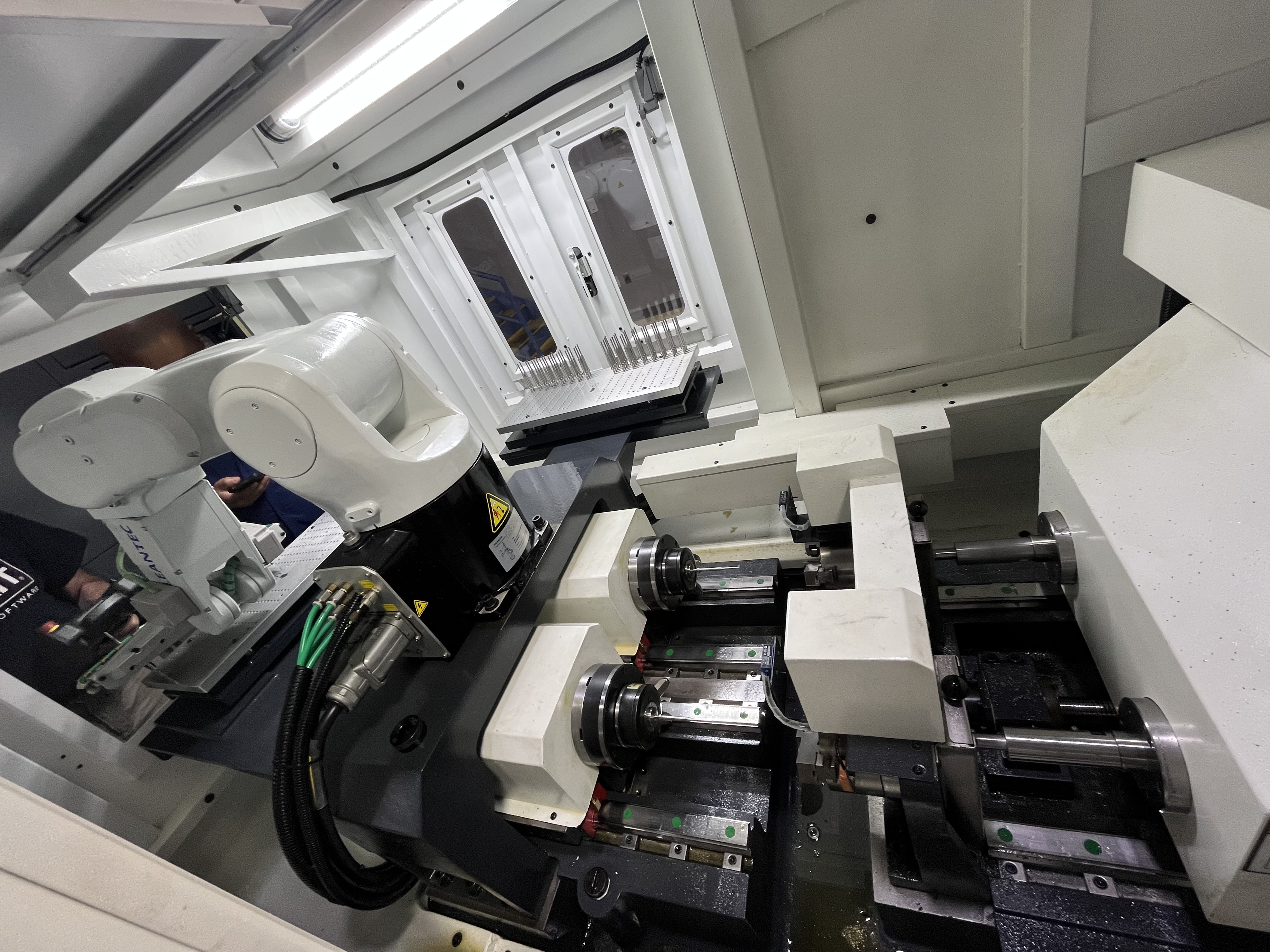
Buying a used deep hole drilling machine is a common way to save money. I have bought and sold several used machines over the years, including a 1995 gundrill that ran for another eight years after purchase and a BTA machine that needed a full spindle rebuild within six months. The difference between those two outcomes was the inspection process. Here is the checklist I use.
Spindle Inspection
The first thing I check is the spindle. I listen for bearing noise during a test run at multiple RPMs. A quiet spindle with smooth operation is a good sign. A rumbling or grinding sound means bearing replacement, which costs $5,000 to $15,000 depending on the spindle size and whether the replacement includes a new bearing cartridge or requires a full rebuild.
I run the spindle at three speeds: 500 RPM, 1500 RPM, and the machine’s maximum rated speed. At each speed, I listen for:
| Speed | What Normal Sounds Like | What Trouble Sounds Like |
|---|---|---|
| 500 RPM | Smooth hum with no vibration | Low-frequency rumble |
| 1500 RPM | Consistent whir, slight harmonics | Metallic scraping or chirping |
| Max RPM | Steady high-pitched tone | Grinding, vibration in the housing |
I also check radial runout at the spindle nose using a dial indicator. Anything above 0.005 mm TIR at the spindle taper is cause for concern. I check axial runout too. Above 0.010 mm axial movement means the thrust bearings are worn.
Coolant System Evaluation
The coolant system is the second thing I check. I run the pump and check pressure at the tool tip. Low pressure means worn pump or clogged filters. Both are fixable but the cost adds up. On a deep hole machine, the coolant system is not an accessory. It is a core system that determines whether the machine can cut at all.
I test at four points in the system:
| Test Point | Expected Pressure | Acceptable Range |
|---|---|---|
| Pump discharge | 100% of rated pressure | 90 - 100% |
| At rotating union inlet | 90 - 95% of pump pressure | 85% minimum |
| At tool tip (gun drill) | 80 - 90% of pump pressure | 75% minimum |
| Return line backpressure | 3 - 8 bar | Under 10 bar |
If the pressure at the tool tip is below 75% of the pump discharge, the machine has a restriction or bypass issue that needs repair. I also check the coolant tank for sludge buildup and the filtration system for torn filter media.
Guide Bushing Holder and Alignment
The guide bushing holder condition matters. A worn holder cannot hold the bushing securely, which causes drill wandering. I check the holder bore with a dial indicator. The bore should be round within 0.005 mm. I also check the holder face for perpendicularity to the spindle axis.
I check the concentricity between the spindle centerline and the guide bushing holder centerline. On a good machine, these align within 0.02 mm. Anything above 0.05 mm will cause oversized bores and short tool life. I use a test bar with a centering indicator mounted in the spindle and sweep the bushing holder bore.
Machine Bed and Ways
The machine bed ways show the overall wear level. I check for scoring or wear at the headstock end where most of the cutting happens. Box ways that are worn beyond 0.05 mm affect alignment. Linear guide machines are more forgiving, but I still check for play in the truck assemblies.
I perform a simple test: set a dial indicator on the spindle housing and zero it on the machine table. Then I move the spindle along the Z-axis for its full travel. If the indicator reading changes by more than 0.02 mm over 500 mm of travel, the ways or linear guides have uneven wear. This causes tapered bores when drilling deep holes.
Control System and Electrical
Older machines with Fanuc 0 or 10 series controls are reliable but parts are getting scarce. I check the control for battery alarms, servo following error, and any I/O faults. I also open the electrical cabinet and look for:
- Corrosion on terminal blocks (sign of coolant mist ingress)
- Burnt contactors or relay coils
- Missing wire labels or haphazard wiring modifications
- Oil or coolant residue inside the cabinet
I budget $3,000 to $8,000 for control system refurbishment on a machine over 15 years old. This covers new batteries, contactor replacement, and a thorough cleaning of the cabinet.
The Test Hole
I always drill a test hole when evaluating a used machine. The test hole tells me more than any inspection. If the machine drills a straight hole with good surface finish, the rest can be fixed. I bring my own tools, bushings, and a test workpiece of known material (usually 4140 or 1045 steel).
I drill a hole at least 10 diameters deep. I measure:
| Measurement | Target Value | Acceptable Limit |
|---|---|---|
| Hole straightness | 0.01 mm per 100 mm depth | 0.02 mm per 100 mm depth |
| Surface finish (Ra) | 1.6 micrometers | 3.2 micrometers |
| Diameter tolerance | H8 grade | H9 grade |
| Roundness | 0.005 mm | 0.010 mm |
| Coolant pressure stability | +- 2% | +- 5% |
If the test hole passes these checks, I proceed with the purchase. If it fails, I calculate the repair cost and subtract it from the asking price.
Key Takeaways
- Spindle condition is the highest-cost item to repair. Run the spindle at multiple speeds and check runout before buying.
- The coolant system determines whether the machine can cut. Test pressure at every stage from pump to tool tip.
- A test hole reveals problems that static inspection misses. Do not skip this step.
- Budget 10% to 20% of the purchase price for refurbishment on any used machine over 10 years old. This covers unexpected repairs that crop up in the first year.